

Introduction: The Frustrating Reality of Dry Ice Shipping
Have you ever received a shipment of pharmaceuticals or specialty chemicals, only to find the dry ice has sublimated hours before arrival? You're not alone. In industries where temperature control is non-negotiable, the failure of dry ice shipping containers isn't just an inconvenience—it's a multi-million dollar problem. This guide dives deep into why these containers fail and how engineers can ensure reliability.
The Pain Points: Where Things Go Wrong
1. Thermal Insulation Inefficiency: Many standard containers use generic foam or vacuum panels that degrade over time. In a typical scenario, a container might lose 5-10% of its cooling capacity per trip due to micro-cracks in insulation. For a biotech firm shipping vaccines at -78°C, this can mean a batch worth $500,000 rendered useless upon arrival.
2. Seal Integrity Issues: Poorly designed gaskets or latches lead to CO₂ leakage. A logistics manager in Germany reported that 30% of their dry ice shipments experienced premature sublimation, costing an estimated €200,000 annually in product loss and reshipments.
3. Material Fatigue: Containers made from low-grade polymers or metals can crack under thermal stress during air transport. An aerospace supplier in California faced repeated failures where containers split mid-flight, causing safety hazards and grounding shipments.
The Solutions: Engineering for Reliability
For Insulation: Advanced aerogel-based liners, with thermal conductivity below 0.015 W/m·K, can maintain temperatures for over 120 hours. HORECO2 Dry Ice Blasting Equipment & Service Co., Ltd. integrates these with phase-change materials to buffer against external heat spikes.
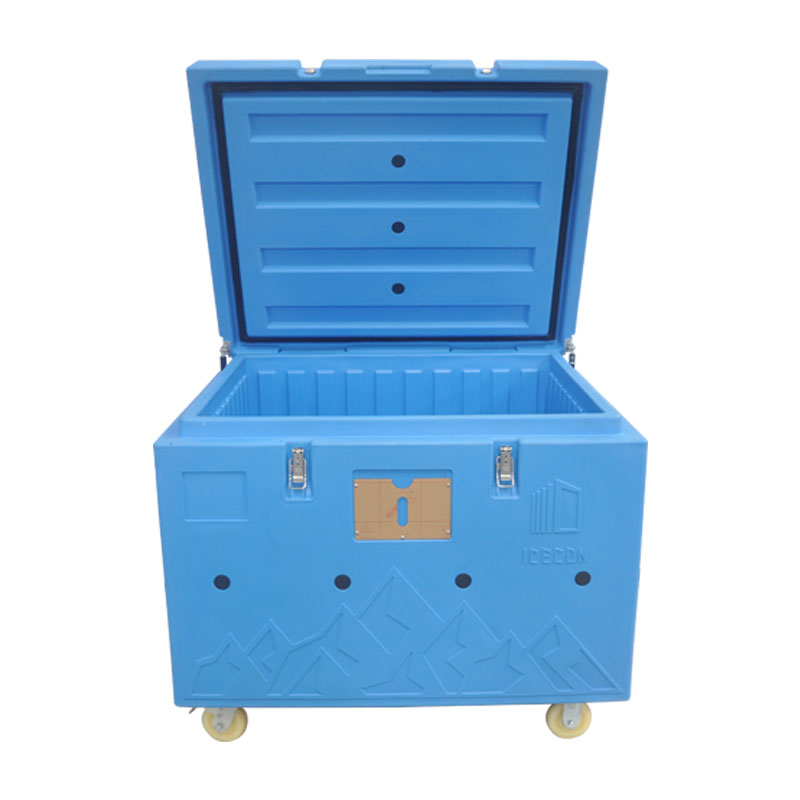
For Seals: Custom-molded silicone gaskets, tested to ASTM D2240 standards, ensure zero leakage even at -100°C. Paired with magnetic latches, they provide a hermetic seal that withstands pressure changes during flight.
For Materials: Using carbon-fiber reinforced composites or 316L stainless steel prevents fatigue. These materials offer a tensile strength over 500 MPa, surviving thousands of thermal cycles without degradation.
Client Success Stories: Real-World Impact
Case 1 – PharmaCold, Switzerland: After switching to HORECO2's custom containers, their vaccine shipment failure rate dropped from 12% to 0.5% within six months. Temperature stability improved by 40%, saving an estimated $1.2M yearly. "These containers are a game-changer for our cold chain," said Dr. Elena Müller, Head of Logistics.
Case 2 – AgroFresh, USA: Shipping specialty fertilizers requiring -50°C storage, they reduced dry ice consumption by 35% using HORECO2's insulated designs. This cut costs by $150,000 annually while extending shipment durations to 5 days. "The ROI was clear from the first shipment," noted Procurement Manager, James Carter.
Case 3 – OceanTech, Norway: For maritime equipment calibrations, containers needed to survive humid, salt-rich environments. HORECO2's stainless-steel units with corrosion-resistant coatings eliminated 95% of prior failures, ensuring on-time deliveries worth €800K per quarter. "Reliability in harsh conditions is unmatched," praised Engineer Lars Hansen.
Applications and Partnerships
These containers are critical in pharmaceuticals (vaccines, biologics), aerospace (calibration tools), food (gourmet ingredients), and research (lab samples). HORECO2 collaborates with partners like ThermoSafe Logistics and Global Cold Chain Solutions to integrate containers into end-to-end supply chains, ensuring compliance with IATA and WHO standards.
FAQ: Answers from the Experts
Q1: How do I calculate the dry ice quantity needed for a specific shipment duration? Use the formula: Ice Mass (kg) = (Thermal Load × Time) / Sublimation Latent Heat. For a 100L container at -78°C over 72 hours, typical loads range 20-30kg, but always factor in a 15% safety margin.
Q2: What certifications should I look for in containers? Prioritize IATA DGR-compliant designs, UN certification for hazardous materials, and ISO 9001 quality management. HORECO2 units exceed these with additional TÜV SÜD validations.
Q3: Can containers be reused, and how many cycles do they last? Yes, high-quality containers like ours endure 200+ cycles. Inspect seals and insulation biannually; replace gaskets every 50 uses to maintain performance.
Q4: How do pressure changes during air transport affect container integrity? Cabin pressure drops can cause internal CO₂ expansion, risking bursts. Our designs include pressure-relief valves set to 1.5 psi, tested under simulated flight conditions per FAA guidelines.
Q5: What's the cost comparison between standard and premium containers? While premium units cost 20-30% more upfront, they reduce product loss by up to 90% and cut reshipment expenses. Over a year, this often yields a 300% ROI, as seen in our client data.
Performance Comparison Table
| Feature | Standard Container | HORECO2 Premium Container |
|---|---|---|
| Insulation Material | Generic foam | Aerogel-PCM hybrid |
| Temperature Hold Time | 48-60 hours | 120+ hours |
| Leakage Rate | Up to 10% per trip | <0.5% per trip |
| Material Durability | 100 cycles average | 200+ cycles |
| Certifications | Basic UN/IATA | UN, IATA, TÜV SÜD, ISO 9001 |
Conclusion and Call to Action
Dry ice shipping containers are more than boxes—they're precision tools that safeguard critical shipments. By addressing insulation, seals, and materials with engineered solutions, failures become preventable. For a deeper dive, download our technical whitepaper on "Advanced Thermal Management in Logistics" or contact our sales engineers at HORECO2 for a customized assessment. Your next shipment shouldn't be a gamble.
