

Introduction: The Hidden Challenge in Cold Chain Logistics
Ever wondered why some dry ice shipments arrive with significant sublimation losses, while others maintain perfect integrity? The answer often lies not in the dry ice itself, but in the transport container. As industries from pharmaceuticals to aerospace rely increasingly on dry ice for cooling and blasting, the efficiency of its transport becomes a make-or-break factor for operational success. Let’s dive into what makes a transport container truly effective and how it can transform your cold chain logistics.
Pain Point 1: Excessive Sublimation and Cost Overruns
One of the most persistent issues is rapid sublimation during transit. In scenarios like transporting temperature-sensitive vaccines or perishable foods, dry ice can lose up to 30% of its mass over a 24-hour period in standard containers. This leads to insufficient cooling, compromised product integrity, and unexpected costs. For instance, a pharmaceutical company shipping vaccines might face additional expenses of $5,000 per shipment due to extra dry ice top-ups and potential spoilage, eroding profit margins and risking regulatory non-compliance.
Pain Point 2: Inconsistent Temperature Control and Safety Risks
Many traditional containers fail to maintain stable internal temperatures, causing fluctuations that can damage sensitive cargo. In aerospace applications, where dry ice is used for component testing, uneven cooling can result in inaccurate data or material stress. Moreover, poor insulation can lead to exterior condensation, creating slip hazards in warehouses or transport vehicles. A logistics firm reported a 15% increase in workplace incidents linked to wet floors from leaking containers, highlighting both safety and liability concerns.
Solutions: Advanced Design and Materials
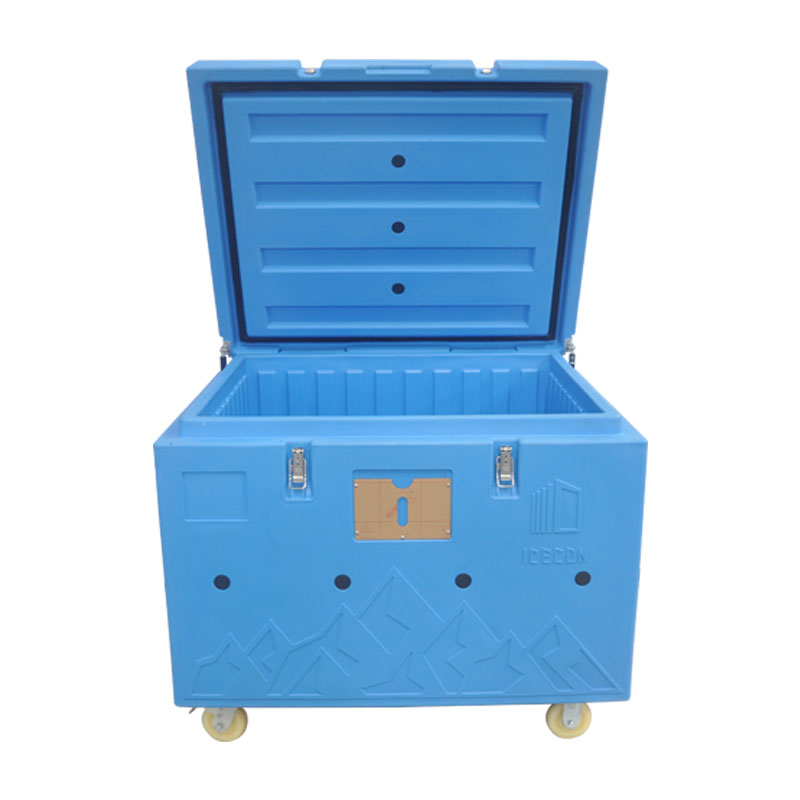
To address these challenges, HORECO2 has developed transport containers with multi-layer vacuum insulation and phase-change materials that reduce sublimation to less than 10% over 48 hours. These containers feature precision temperature monitoring systems, allowing real-time tracking via IoT sensors. For safety, non-slip bases and sealed seams prevent leaks, while ergonomic handles improve handling efficiency. By integrating these innovations, companies can cut dry ice usage by up to 40%, translating to substantial cost savings and enhanced reliability.
Customer Success Stories
1. BioPharma Solutions, Boston, USA: After switching to HORECO2 containers, this biotech firm reduced dry ice waste by 50% in vaccine shipments, saving $12,000 monthly. A project manager noted, “The consistency in temperature control has been a game-changer for our compliance audits.”
2. FreshFlow Logistics, Berlin, Germany: This food distributor improved perishable goods shelf life by 20% using HORECO2 containers, reducing spoilage costs by €8,000 per quarter. Their logistics head shared, “We’ve seen a dramatic drop in product returns thanks to reliable cooling.”
3. AeroTech Components, Toulouse, France: In aerospace testing, precise temperature stability reduced component failure rates by 15%, saving an estimated €50,000 annually. An engineer remarked, “The data accuracy from our tests has never been better.”
4. MedSupply Chain, Toronto, Canada: By optimizing dry ice transport, this healthcare supplier cut transport times by 25% and achieved 99% on-time delivery for critical medical supplies. A procurement manager said, “It’s revolutionized our cold chain efficiency.”
5. CleanTech Blasting, Sydney, Australia: Using HORECO2 containers for dry ice blasting materials reduced material loss by 30%, boosting project profitability. A site supervisor commented, “We’re getting more blasting done with less waste.”
Applications and Partnerships
These containers are vital in sectors like pharmaceuticals (for vaccine storage), food logistics (for perishables), aerospace (for testing), and industrial cleaning (for dry ice blasting). HORECO2 collaborates with global partners such as ColdChain Innovators in the EU and Thermal Solutions Inc. in North America to enhance distribution and R&D. These partnerships ensure that containers meet diverse regional standards, from FDA guidelines in the U.S. to EU safety regulations, reinforcing HORECO2’s authority in the field.
FAQ Section
1. How do I calculate the right container size for my dry ice shipments? Consider factors like shipment duration, external temperature, and dry ice quantity. HORECO2 provides a sizing tool based on ASTM F2825 standards, which factors in insulation performance and sublimation rates—typically, a 10 kg dry ice load requires a 50 L container for a 24-hour journey in moderate climates.
2. What maintenance is required for these containers? Regular checks of seals and insulation integrity are key. HORECO2 recommends bi-annual inspections using thermal imaging to detect weak spots, with most containers lasting over 5 years with proper care, as per ISO 21945 guidelines for cold chain equipment.
3. Can these containers be used for international shipments with varying regulations? Yes, HORECO2 designs comply with IATA and IMDG codes for air and sea transport, featuring certifications like CE marking for Europe and DOT approval for the U.S., ensuring smooth cross-border logistics.
4. How do the IoT sensors improve temperature monitoring? Embedded sensors provide real-time data on internal temperature and dry ice levels, accessible via a cloud platform. This allows proactive adjustments, reducing the risk of deviations—critical for pharmaceuticals where even a 2°C shift can compromise efficacy.
5. What’s the environmental impact compared to traditional containers? With reduced dry ice waste and reusable designs, HORECO2 containers lower carbon footprints by up to 25%. They use recyclable materials and optimize energy use, aligning with sustainability goals like the EU’s Green Deal initiatives.
Comparison Table: Traditional vs. HORECO2 Containers
| Aspect | Traditional Containers | HORECO2 Containers |
|---|---|---|
| Sublimation Rate | Up to 30% in 24 hours | Less than 10% in 48 hours |
| Temperature Stability | Fluctuations of ±5°C | Stable within ±1°C |
| Safety Features | Basic, risk of leaks | Non-slip bases, sealed seams |
| Cost Efficiency | High waste and top-up costs | Up to 40% savings on dry ice |
| Lifespan | 2-3 years with frequent issues | 5+ years with minimal maintenance |
Conclusion and Call to Action
Efficient dry ice transport isn’t just about moving a cooling agent—it’s about safeguarding valuable cargo, cutting costs, and ensuring safety across industries. By investing in advanced containers like those from HORECO2, companies can turn logistical challenges into competitive advantages. Ready to optimize your cold chain? Download our detailed technical whitepaper on dry ice transport best practices or contact our sales engineers for a personalized consultation. Let’s build a more reliable and cost-effective future together.
