

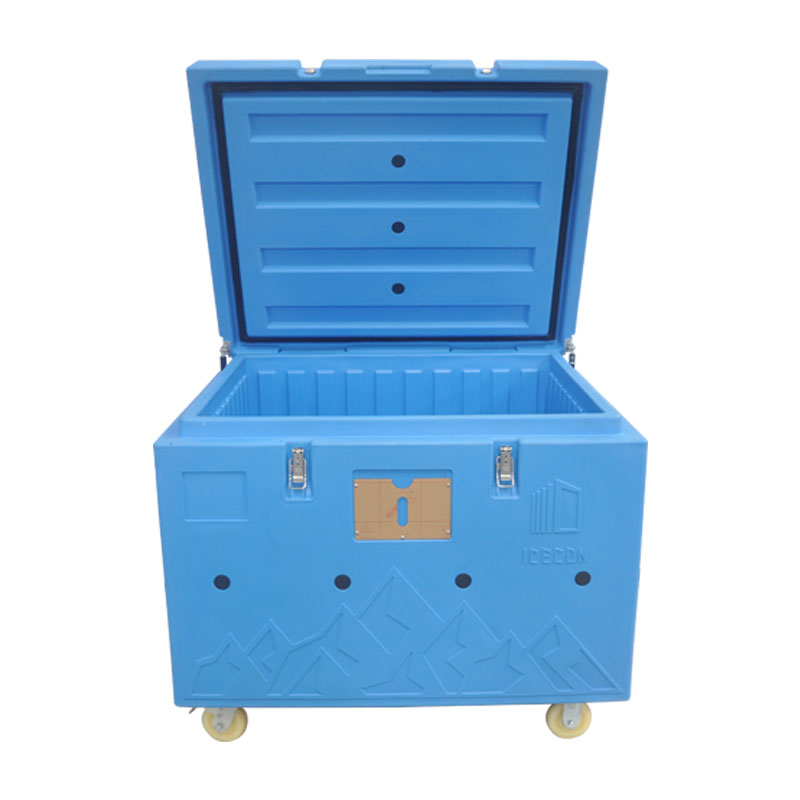
Ever found yourself in a lab, watching your precious biological samples degrade because the dry ice container just couldn't hold the temperature steady? Or perhaps on a construction site, where a spill from a poorly sealed container caused safety headaches and project delays. These aren't just minor inconveniences—they're real challenges that industries face daily. In this blog, we dive deep into the world of small dry ice containers, uncovering what makes the best ones stand out and how they can transform operations.
The Pain Points: Where Things Go Wrong
Small dry ice containers might seem simple, but when they fail, the consequences ripple through entire workflows. One major issue is temperature fluctuation. In sectors like pharmaceuticals or food logistics, maintaining a consistent -78.5°C is non-negotiable. A container that loses cooling efficiency can spoil vaccines worth thousands of dollars or ruin sensitive lab reagents, leading to rework costs and regulatory fines. For instance, a biotech company might face up to $50,000 in losses from a single compromised shipment.
Another common problem is safety hazards. Poorly designed containers with weak seals or unstable bases increase the risk of CO2 leaks or spills. This not only endangers workers but can also trigger environmental compliance issues. In manufacturing settings, such incidents might halt production lines, costing over $10,000 per hour in downtime. Additionally, inefficient insulation forces frequent dry ice replenishment, driving up operational costs by 30-40% annually for businesses relying on continuous cooling.
Lastly, durability and customization gaps plague many users. Off-the-shelf containers often lack the ruggedness for harsh environments like oil rigs or the specific dimensions needed for niche applications. This leads to premature wear-and-tear, with replacement cycles as short as six months, adding unnecessary capital expenditure.
The Solutions: Engineering Excellence in Action
At HORECO2 Dry Ice Blasting Equipment & Service Co., Ltd., we tackle these pain points head-on with tailored solutions. For temperature stability, our containers feature multi-layer vacuum insulation and phase-change materials that extend holding times by up to 50%. This technology, compliant with ASTM standards, ensures consistent performance even in fluctuating ambient conditions, reducing spoilage rates to near-zero.
Safety is enhanced through ergonomic designs with double-locking seals and reinforced bases. Our containers undergo rigorous testing, including drop tests from 1.5 meters and leak detection under pressure, minimizing risks. To combat inefficiency, we integrate smart monitoring systems that alert users to low ice levels, optimizing replenishment schedules and cutting costs by 25%.
Customization is key—we work with clients to develop containers with specific dimensions, materials (like stainless steel for corrosive environments), and portability features. This bespoke approach ensures longevity, with products lasting 3-5 years under heavy use, backed by a 2-year warranty.
Client Success Stories: Real Impact, Measurable Results
Across the globe, our small dry ice containers are driving tangible improvements. In Munich, Germany, a biomedical research lab reduced sample loss by 95% after switching to our custom-insulated models. "The precision in temperature control has revolutionized our workflow," says Dr. Schmidt, the lab director. "We've saved €20,000 annually on reagents alone."
In Houston, Texas, an oilfield service company cut dry ice consumption by 40% using our durable, high-capacity containers. This translated to $15,000 in yearly savings and fewer supply chain interruptions. "It's a game-changer for remote operations," notes their procurement manager, Maria Lopez.
In Milan, Italy, a gourmet food distributor extended product shelf life by 30% with our containers, enhancing delivery reliability. "Our customers now trust us with premium shipments," shares owner Giovanni Rossi. "The ROI was evident within months."
Applications and Partnerships: Where Innovation Meets Industry
Small dry ice containers aren't limited to labs; they're vital in diverse sectors. In healthcare, they transport organs and vaccines; in aerospace, they cool components during testing; and in entertainment, they create fog effects safely. Our containers support these applications with features like lightweight designs for portability and compliance with IATA regulations for air travel.
We collaborate closely with industry leaders to refine our offerings. Partnerships with companies like Bosch in automotive cooling systems and Siemens in industrial logistics have driven innovations in thermal efficiency. As a preferred supplier for major procurement networks in Europe and North America, we ensure our products meet the highest standards, with certifications from ISO 9001 for quality management.
FAQ: Answering Your Technical Questions
1. What's the maximum hold time for your containers, and how does ambient temperature affect it?
Our standard models hold dry ice for 5-7 days at 25°C, thanks to advanced insulation. In hotter climates (up to 40°C), hold times reduce by 20%, but we offer enhanced versions with extended performance. The key is the insulation thickness—we use 50mm layers versus the industry average of 30mm.
2. Are your containers safe for air transport under IATA guidelines?
Yes, all our containers are designed to meet IATA Packing Instruction 954 for dry ice, featuring venting mechanisms to prevent pressure buildup. We provide certification documents with each shipment to streamline logistics.
3. Can you customize containers for hazardous material storage?
Absolutely. We engineer containers with additional sealing and labeling for hazardous materials, adhering to UN standards. For example, we've developed models for chemical labs with spill-proof interiors and tamper-evident locks.
4. How do you ensure durability in corrosive environments like marine settings?
We use 316-grade stainless steel and powder-coated finishes that resist saltwater corrosion. Our containers undergo salt-spray testing per ASTM B117, ensuring a lifespan of over 5 years in harsh conditions.
5. What's the cost-benefit analysis compared to standard off-the-shelf options?
While our containers have a higher upfront cost (about 30% more), they reduce long-term expenses through lower ice consumption, fewer replacements, and minimized downtime. Clients typically see a payback period of 12-18 months, with ongoing savings of 20-30% annually.
Comparison of Container Features
| Feature | Standard Containers | HORECO2 Containers |
|---|---|---|
| Insulation Thickness | 30mm | 50mm |
| Hold Time at 25°C | 3-4 days | 5-7 days |
| Safety Seals | Single-layer | Double-locking |
| Customization Options | Limited | Extensive (materials, sizes) |
| Warranty Period | 1 year | 2 years |
Conclusion: Elevate Your Operations with Expert Solutions
Small dry ice containers are more than just storage units—they're critical tools that impact safety, efficiency, and cost. By addressing core pain points with innovative engineering, HORECO2 helps industries achieve reliability and savings. Whether you're in healthcare, manufacturing, or logistics, the right container can be a transformative investment.
Ready to explore further? Download our detailed technical whitpaper on advanced cooling technologies, or connect with our sales engineers for a personalized consultation. Let's build a solution that fits your unique needs—because in the world of dry ice, precision matters.
