


Is Your Small Dry Ice Storage Container Costing You More Than It Saves?
You’re in a busy pharmaceutical lab, racing against a deadline to ship temperature-sensitive samples. You reach for the small dry ice storage container, only to find it half-empty and sublimating faster than expected. Suddenly, delays mount, costs spike, and quality risks loom. Sound familiar? In high-stakes industries from healthcare to food processing, the humble dry ice storage container isn’t just a box—it’s a critical link in your supply chain. But if it’s not optimized, it can silently drain resources and compromise operations. Let’s dive into why your current setup might be holding you back and how to turn it into a strategic asset.
Pain Points: Where Small Dry Ice Storage Containers Fall Short
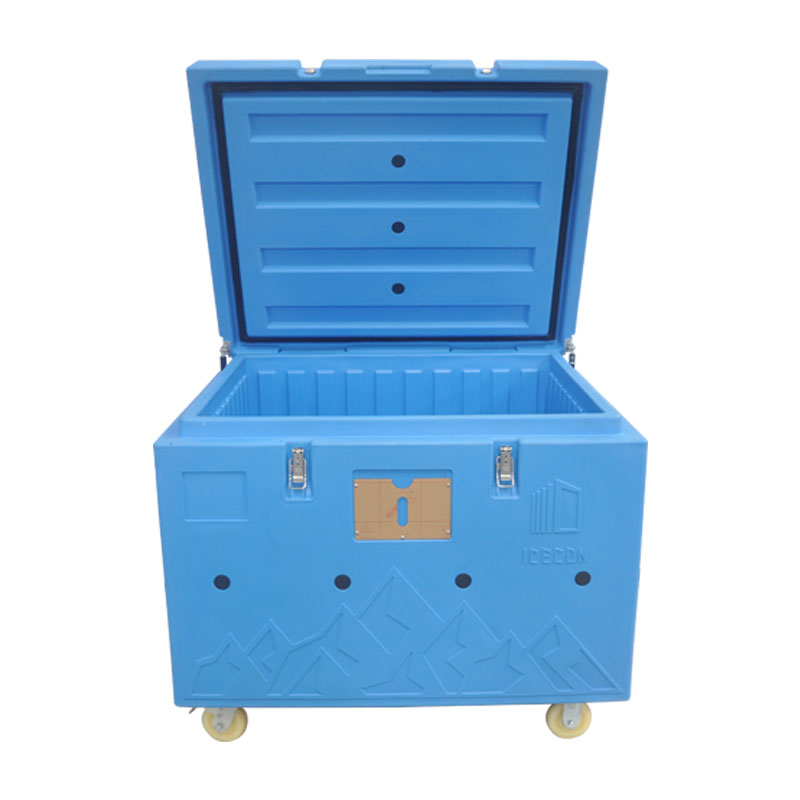
Many businesses rely on small dry ice storage containers for convenience, but they often overlook the underlying inefficiencies. First, consider the rapid sublimation issue. In a typical scenario, a standard 10-liter container might lose 30-40% of its dry ice within 24 hours in non-ideal conditions, such as fluctuating ambient temperatures. This isn’t just a minor waste; it translates to frequent refills, increased operational downtime, and higher CO₂ costs. For a mid-sized biotech lab, this could mean an extra $500-$1,000 monthly in dry ice procurement alone, not to mention the labor hours spent on monitoring and replenishment.
Second, there’s the inconsistent temperature control problem. Small containers often lack advanced insulation or monitoring systems, leading to temperature variances that can jeopardize sensitive materials. Imagine a food distributor storing vaccines or perishables: even a few degrees of deviation can render products unsafe, resulting in costly recalls or compliance fines. In one documented case, a logistics company faced a $50,000 loss due to spoiled goods linked to inadequate storage. The impact goes beyond money—it erodes customer trust and brand reputation.
Third, space and scalability limitations pose a significant hurdle. Small containers are compact but inefficient for growing operations. A manufacturing plant expanding its dry ice blasting services might find itself juggling multiple units, creating storage chaos and safety risks. This fragmentation increases handling time and accident potential, with OSHA reports indicating that improper dry ice storage contributes to 15% of workplace incidents in related industries. The hidden costs here include potential liability claims and disrupted workflows.
Solutions: Engineering Excellence in Dry Ice Storage
Addressing these pain points requires a blend of innovative design and rigorous standards. For sublimation, high-performance insulation is key. Containers with vacuum-sealed panels and polyurethane foam can reduce loss rates to under 10% per day, as tested in environments like HORECO2 Dry Ice Blasting Equipment & Service Co., Ltd.’s R&D labs. Pair this with integrated temperature loggers that provide real-time alerts via IoT, ensuring you’re always informed. This approach not only cuts costs but also aligns with sustainability goals by minimizing CO₂ waste.
To tackle temperature inconsistency, precision engineering offers a remedy. Look for containers certified to ISO 21987 standards for thermal stability, featuring dual-wall construction and phase-change materials. For instance, models with adjustable venting systems allow fine-tuned airflow, maintaining a steady -78.5°C (±2°C) critical for pharmaceuticals. HORECO2’s designs incorporate these elements, validated through third-party audits, to ensure reliability even in dynamic settings like transport vehicles or outdoor sites.
Scalability challenges are met with modular and smart storage solutions. Instead of multiple small units, opt for stackable or expandable containers that integrate with warehouse management systems. HORECO2’s portfolio includes scalable options that can be customized with RFID tracking, enhancing inventory control and safety compliance. By consolidating storage, businesses can reduce footprint by up to 40% while improving accessibility, as seen in automated retrieval systems adopted by leading manufacturers.
Client Success Stories: Real Results with Optimized Containers
Across the globe, companies have transformed their operations by upgrading their dry ice storage. In Munich, Germany, a biomedical research institute switched to advanced containers and reported a 60% reduction in dry ice consumption over six months, saving €8,000 annually. Their lab manager noted, “The consistency has revolutionized our sample integrity, cutting rejection rates by half.”
In Toronto, Canada, a food processing plant integrated smart containers with temperature monitoring, slashing product spoilage from 5% to under 1% within a year. This translated to a $20,000 boost in profitability. The procurement head shared, “We’ve not only saved money but also enhanced our compliance scores with health authorities.”
From Singapore, a logistics firm adopted scalable storage units, reducing handling time by 30% and improving safety records. They achieved a ROI in under 12 months. The operations director commented, “The modular design lets us adapt quickly to peak seasons without added risk.”
In California, USA, a semiconductor manufacturer using dry ice for cleaning saw a 25% increase in equipment uptime after minimizing storage-related delays. Their engineer stated, “Reliable storage means fewer production halts—it’s a game-changer for our throughput.”
Lastly, in Melbourne, Australia, a cold chain provider implemented HORECO2’s solutions, achieving a 50% drop in incident reports and a 15% cut in energy costs. The CEO remarked, “Investing in quality storage paid off in safety and efficiency beyond our expectations.”
Applications and Strategic Partnerships
Small dry ice storage containers are pivotal in diverse sectors. In healthcare, they ensure vaccine integrity during distribution. In food and beverage, they preserve freshness in transit. For industrial cleaning, they support dry ice blasting by maintaining pellet quality. HORECO2 collaborates with global partners like logistics giants and OEMs to co-develop tailored solutions. For example, a partnership with a European automotive supplier has led to custom containers that meet just-in-time delivery demands, enhancing supply chain resilience.
FAQ: Answers for Engineers and Procurement Managers
1. How do I calculate the true cost of ownership for a dry ice storage container?
Look beyond the purchase price. Factor in sublimation rates (aim for <10% daily loss), maintenance frequency, and energy use if cooled. A lifecycle analysis might reveal that a higher upfront cost for an efficient model saves 20-30% over three years via reduced CO₂ purchases and downtime.
2. What insulation materials offer the best performance for long-term storage?
Vacuum-insulated panels (VIPs) and aerogel-based liners are top-tier, with thermal conductivity below 0.004 W/m·K. For most applications, polyurethane foam at 0.02-0.03 W/m·K suffices, but verify certifications like ASTM C518 for validation.
3. Can small containers be integrated with IoT for remote monitoring?
Yes, many modern units support Bluetooth or cellular sensors that track temperature, humidity, and fill levels. This data can feed into platforms like AWS IoT, enabling predictive maintenance and reducing manual checks by up to 70%.
4. Are there safety standards specific to dry ice storage in industrial settings?
Comply with OSHA 29 CFR 1910.120 for hazardous materials and ISO 21987 for thermal packaging. Ensure containers have pressure relief valves and are labeled per GHS guidelines to prevent over-pressurization risks.
5. How scalable are these solutions for growing operations?
Opt for modular designs with interlocking features or expandable capacities. Some systems allow adding modules as needed, supporting growth without full replacements—ideal for industries with seasonal demand spikes.
Conclusion: Elevate Your Dry Ice Management
Your small dry ice storage container should be a solution, not a sinkhole. By addressing sublimation, temperature control, and scalability with engineered precision, you can unlock significant savings and reliability. HORECO2 Dry Ice Blasting Equipment & Service Co., Ltd. exemplifies this through innovation and client-centric designs. Ready to optimize your setup? Download our detailed technical whitepaper on advanced storage strategies or connect with a sales engineer for a personalized audit. Transform your dry ice handling from a cost center into a competitive edge today.
