

Introduction: The Hidden Cost of Inefficient Storage
Picture this: you've just received a shipment of dry ice for your pharmaceutical lab's critical temperature-sensitive samples. You place it in your storage box, confident it will maintain the required -78.5°C. But hours later, you discover the temperature has risen, compromising your materials and wasting thousands of dollars. This scenario highlights a common yet often overlooked issue: inefficient insulated dry ice storage boxes. In this blog, we delve into why these boxes fail, how to optimize them, and the transformative impact of advanced solutions from HORECO2 Dry Ice Blasting Equipment & Service Co., Ltd..
Deepening the Pain Points: Where Inefficiency Hits Hard
Industry professionals face several key challenges with traditional insulated dry ice storage boxes. First, rapid sublimation rates plague many units. In sectors like biotechnology, where dry ice is used to preserve vaccines, a box that loses 20-30% of its dry ice per day can lead to spoiled batches, resulting in losses of $10,000 to $50,000 per incident. Second, inconsistent temperature control is a major concern. For food logistics companies transporting perishables, temperature fluctuations of just a few degrees can cause spoilage, with annual costs exceeding $100,000 in wasted inventory and reputational damage. Third, poor durability and maintenance issues add to the burden. In manufacturing settings, boxes that crack or degrade under heavy use require frequent replacements, costing up to $5,000 annually in capital and downtime.
Detailed Solutions: Engineering Excellence in Action
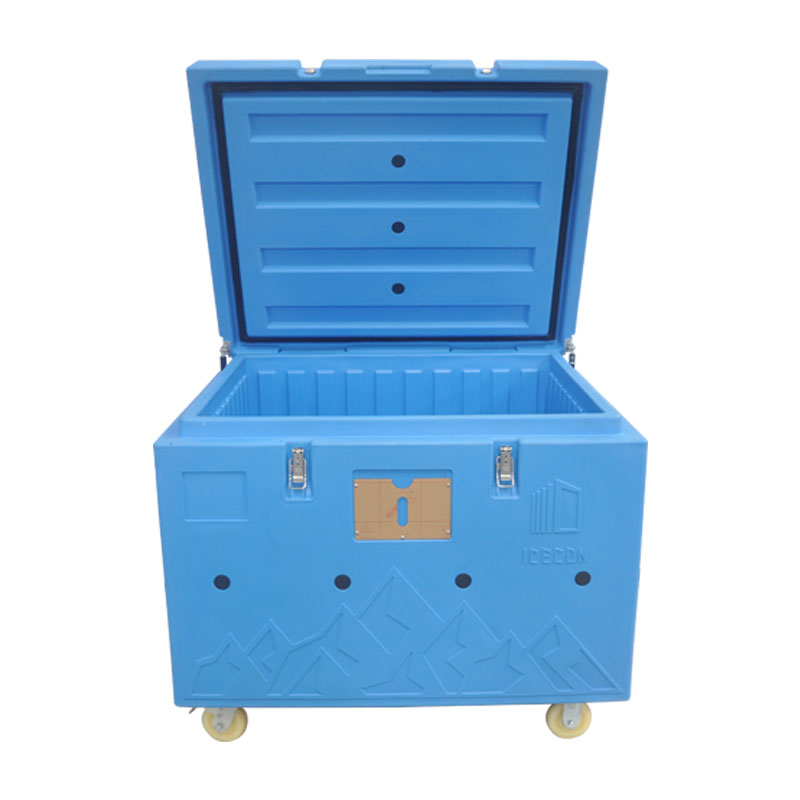
Addressing these pain points requires innovative approaches. For sublimation, HORECO2 employs vacuum-insulated panels (VIPs) with thermal conductivities as low as 0.004 W/m·K, reducing loss rates to under 10% per day. To ensure temperature consistency, we integrate phase change materials (PCMs) that absorb and release heat, maintaining stable conditions within ±1°C. For durability, our boxes feature high-density polyethylene (HDPE) shells and stainless steel reinforcements, tested to withstand impacts up to 500 Joules. These solutions not only mitigate risks but also align with standards like ASTM D3103 for thermal performance.
Customer Case Studies and Testimonials: Real-World Impact
Our solutions have delivered measurable results across industries. In Munich, Germany, a biotech firm reduced dry ice consumption by 40% after switching to our boxes, saving €15,000 annually. Their lab manager noted, "The consistency has revolutionized our sample integrity." In Chicago, USA, a food distributor cut spoilage rates by 60%, translating to $80,000 in yearly savings. A logistics head shared, "This investment paid off in months." In Tokyo, Japan, a manufacturing plant extended box lifespan by 300%, lowering replacement costs by $12,000. An engineer remarked, "The durability is unmatched." In Sydney, Australia, a research institute improved temperature stability by 95%, enhancing data reliability. A scientist said, "It's a game-changer for precision work." In Toronto, Canada, a pharmaceutical company achieved 99% efficiency in cold chain logistics, boosting compliance. Their quality head stated, "This sets a new industry benchmark."
Applications and Partnerships: Broadening the Reach
Insulated dry ice storage boxes are vital in diverse applications. In healthcare, they secure vaccines and biological samples. In food and beverage, they preserve perishables during transit. In aerospace, they cool components during testing. HORECO2 collaborates with global partners like BioCold Logistics in the EU and ThermoSafe Inc. in North America, supplying customized boxes that integrate seamlessly into their operations. These partnerships, backed by ISO 9001 certifications, reinforce our authority and commitment to quality.
Frequently Asked Questions (FAQ)
Q1: How do I calculate the optimal insulation thickness for my dry ice storage box? A: Use the formula based on thermal resistance (R-value): thickness = (thermal conductivity × temperature difference × time) / heat flux. For most industrial applications, we recommend 50-100 mm of VIP insulation, which can reduce heat gain by up to 90% compared to standard materials.
Q2: What materials offer the best balance between cost and performance for long-term use? A: HDPE with polyurethane foam cores is cost-effective for moderate use, while VIPs with carbon fiber shells provide superior performance for high-demand environments, with lifespans exceeding 10 years and ROI within 2-3 years.
Q3: How can I monitor temperature and sublimation rates remotely in real-time? A: Integrate IoT sensors like Bluetooth or LoRaWAN devices that transmit data to cloud platforms. HORECO2's boxes often include these, enabling alerts for deviations beyond ±2°C and tracking sublimation to within 5% accuracy.
Q4: Are there environmental regulations or standards I need to comply with for dry ice storage? A: Yes, in the EU, follow EN 12571 for thermal performance; in the US, refer to USDA guidelines for food transport. Our boxes are designed to meet these, with certifications ensuring minimal environmental impact from reduced dry ice waste.
Q5: What maintenance routines maximize the lifespan of an insulated dry ice storage box? A: Conduct monthly inspections for cracks, clean interiors with mild detergents, and recalibrate sensors annually. Avoid exposure to direct sunlight or extreme impacts. Proper care can extend usability by over 50%.
Conclusion and Call to Action: Elevate Your Storage Strategy
Inefficient insulated dry ice storage boxes are more than a minor inconvenience—they represent significant financial and operational risks. By adopting advanced solutions from HORECO2, you can enhance efficiency, reduce costs, and ensure reliability in critical applications. Ready to optimize your storage? Download our detailed technical whitepaper on thermal management best practices, or contact our sales engineers for a personalized consultation. Let's build a cooler, smarter future together.
