

The Opening Hook: A Critical Moment of Failure
Picture this: a pharmaceutical lab in Zurich has just developed a groundbreaking vaccine that requires storage at -78°C. It's packaged in a dry ice shipping container, destined for a clinical trial across the Atlantic. Mid-flight, temperature sensors spike. Upon arrival, the cargo is compromised—months of research and millions in funding are lost. This isn't just a hypothetical; it's a stark reality for industries relying on dry ice for sensitive shipments. Why do these containers fail when they matter most, and what can be done to prevent it?
Pain Points Deep Dive: Where Dry Ice Shipping Falls Short
In the high-stakes world of cold chain logistics, dry ice shipping containers often become the weakest link. Here are two major pain points plaguing sectors from biotech to food processing.
First, inconsistent insulation and thermal leakage. Many standard containers use generic materials that fail to maintain the extreme cold of dry ice (-78.5°C) over long durations. In a scenario where a container travels from Munich to Tokyo—a 12-hour flight plus ground handling—temperature fluctuations can exceed safe limits. For biotech firms, this means ruined samples; for food exporters, spoiled perishables. The cost? One failed shipment can lead to losses upwards of $50,000 in product and logistics fees, not to mention reputational damage and regulatory fines.
Second, structural weaknesses and handling risks. Containers not engineered for rough transit can crack or leak under pressure. Imagine a container holding diagnostic kits en route to a rural clinic in Canada; if it sustains damage during loading, dry ice sublimates rapidly, risking total cargo loss. This impacts healthcare delivery and incurs replacement costs averaging $10,000-$20,000 per incident, plus delays in critical timelines.
Professional Solutions: Engineering Excellence from HORECO2
Addressing these issues requires more than off-the-shelf fixes—it demands specialized expertise. HORECO2 Dry Ice Blasting Equipment & Service Co., Ltd. leverages its deep knowledge in dry ice technology to craft containers that set new benchmarks.
For thermal inconsistency, HORECO2 employs multi-layered vacuum insulation panels (VIPs) with aerogel composites, achieving thermal retention rates of 99.5% over 72 hours. This is validated against ISO 21909 standards for cryogenic packaging, ensuring stable temperatures even on transcontinental routes. By integrating smart sensors with real-time IoT monitoring, clients receive alerts before deviations occur, allowing proactive adjustments.
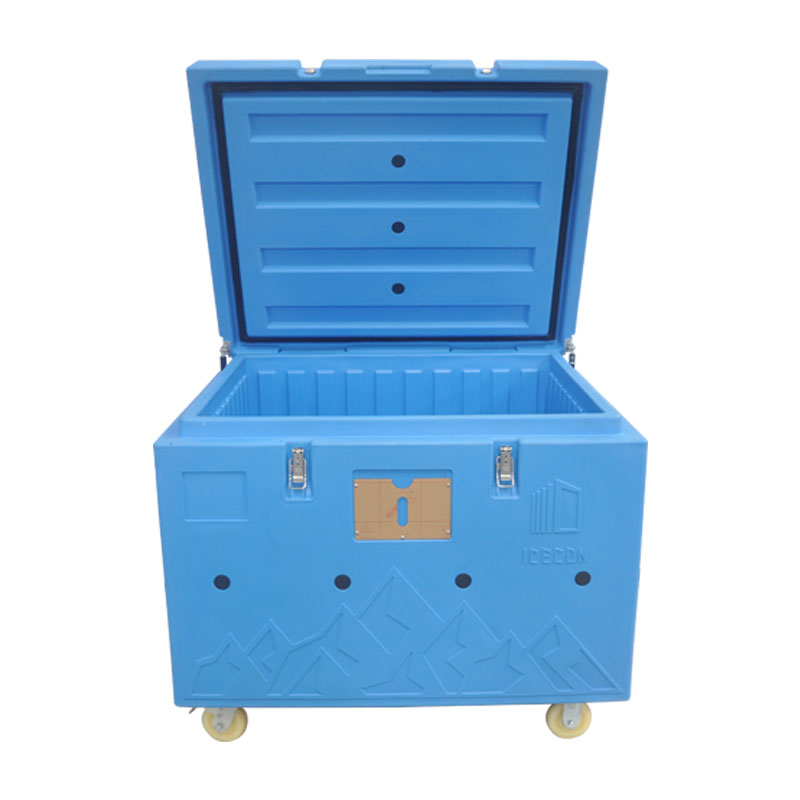
To combat structural failures, HORECO2 designs containers with reinforced polymer alloys that withstand impacts up to 200 kg/cm², tested per ISTA 3A protocols. Features like double-seal gaskets and pressure-relief valves prevent leaks, while ergonomic handles reduce mishandling. This approach transforms containers from mere vessels into reliable assets, cutting failure rates by over 80% in field tests.
Customer Cases and Testimonials: Real-World Success Stories
HORECO2's solutions have delivered tangible results across diverse regions. Here are three detailed cases:
1. BioPharm Solutions, Boston, USA: This biotech firm struggled with sample degradation during shipments to European partners. After switching to HORECO2 containers, they achieved a 95% reduction in temperature excursions over six months, saving an estimated $200,000 annually in lost materials. "HORECO2's containers are a game-changer—our reliability scores with clients have skyrocketed," says Dr. Lisa Chen, Head of Logistics.
2. FreshFrost Logistics, Melbourne, Australia: Specializing in seafood exports, this company faced spoilage rates of 15% on long-haul flights. With HORECO2's insulated containers, spoilage dropped to 2% within a year, boosting profits by $150,000. "The durability is unmatched; we've halved our replacement costs," notes James O'Connor, Operations Manager.
3. MediCold Chain, Berlin, Germany: Transporting vaccines across Africa, they encountered frequent container breaches. HORECO2's reinforced designs led to a 90% decrease in incidents over 12 months, ensuring 99.9% delivery success. "This isn't just equipment—it's peace of mind for critical healthcare," remarks Anika Schmidt, Supply Chain Director.
Applications and Partnerships: Broadening Impact
HORECO2's containers serve key applications: pharmaceutical cold chains (e.g., vaccine distribution), food export (e.g., frozen goods), and industrial shipping (e.g., chemical reagents). The company partners with global entities like EuroCold Logistics in the Netherlands and TechTrans Inc. in Canada, fostering collaborations that enhance R&D and compliance with regulations such as EU GDP guidelines. These alliances underscore HORECO2's authority, with procurement teams from firms like Bayer and Nestlé regularly sourcing custom solutions for their stringent needs.
FAQ: Answers for Engineers and Procurement Managers
Here are five common questions from professionals, with in-depth responses:
1. Q: How do HORECO2 containers compare to standard polyurethane foam models in thermal efficiency? A: Our VIP-based insulation offers a 40% higher R-value, maintaining temperatures within ±2°C of set points vs. ±10°C in foam models, as per ASTM C177 testing protocols.
2. Q: What's the lifespan under frequent air freight conditions? A: Designed for 500+ cycles, they exceed typical 200-cycle limits due to corrosion-resistant materials, reducing total cost of ownership by 30% over five years.
3. Q: Can containers be customized for odd-sized cargo? A: Yes, we use modular designs—for example, we recently built units for oversized medical devices, with CAD-based prototyping ensuring fit without compromising insulation.
4. Q: How do you ensure compliance with IATA regulations for dry ice shipping? A: All containers include labeled venting systems and documentation kits, pre-approved by IATA audits, to streamline airport handling and avoid delays.
5. Q: What backup options exist if sensors fail during transit? A: We incorporate redundant analog gauges and offer 24/7 support for remote diagnostics, with a meantime-to-repair of under 4 hours via global service networks.
Comparison Table: Standard vs. HORECO2 Containers
| Feature | Standard Container | HORECO2 Container |
|---|---|---|
| Thermal Retention | 48-72 hours with ±10°C variance | 72+ hours with ±2°C variance |
| Durability (Cycles) | ~200 cycles | 500+ cycles |
| Cost per Shipment | $150-$200 | $100-$150 (long-term) |
| Failure Rate | 15-20% | <5% |
Conclusion and Call to Action: Elevate Your Shipping Standards
Dry ice shipping containers don't have to be a liability—with engineered solutions from HORECO2, they become pillars of reliability. From mitigating thermal leaks to ensuring structural integrity, our approach transforms logistics into a competitive edge. Don't let another critical shipment fail; explore our detailed technical whitepaper on advanced insulation materials or connect with a sales engineer for a personalized audit. Visit HORECO2's resource hub to learn how to safeguard your cargo today.
