

Introduction: The Unseen Cost of Grime
Picture this: a production manager at an automotive plant stares at a massive conveyor system caked with grease and carbon deposits. Scheduled downtime is looming, and traditional cleaning methods—high-pressure water, chemical solvents, abrasive blasting—promise hours of labor, potential damage to sensitive components, and environmental headaches. The question isn't just about cleaning; it's about efficiency, safety, and the bottom line. This scenario, repeated across industries from food processing to aerospace, highlights a persistent gap. Could a machine that harnesses solid carbon dioxide—dry ice—be the missing piece? Let's explore why industrial dry ice blasting isn't just an alternative but a transformative solution for modern manufacturing woes.
Deepening the Pain: Where Conventional Methods Fall Short
In high-stakes environments, cleaning is rarely a simple task. Consider two pervasive industry pain points:
1. Food and Beverage Production: The Sanitation Quandary. In dairy or meat processing plants, bacterial biofilm buildup on equipment like mixers, slicers, and packaging lines poses severe risks. Traditional cleaning often involves chemical sanitizers and hot water, requiring full disassembly and prolonged downtime—sometimes 4-8 hours per shift. The consequences? Reduced throughput, higher labor costs, and chemical residue that can compromise product safety. A mid-sized plant might lose thousands in revenue daily during cleaning cycles, not to mention regulatory fines for contamination.
2. Heavy Machinery and Automotive: The Abrasion Dilemma. In automotive manufacturing or foundries, removing paints, oils, and rust from molds, engines, and structural parts is essential. Sandblasting or chemical stripping can erode base materials, altering tolerances and leading to costly rework or part replacement. For instance, resurfacing a large industrial mold might cost $5,000-$10,000 if abrasive methods damage its precision surface. Additionally, disposal of contaminated media (like used sand or solvents) adds environmental fees and compliance burdens.
The Technical Edge: How Dry Ice Blasting Works
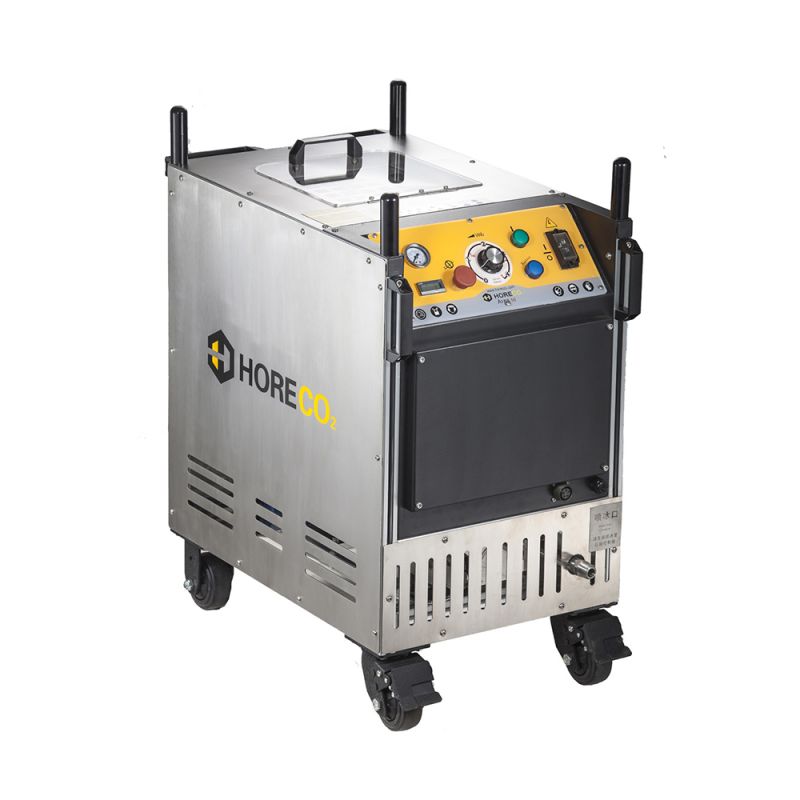
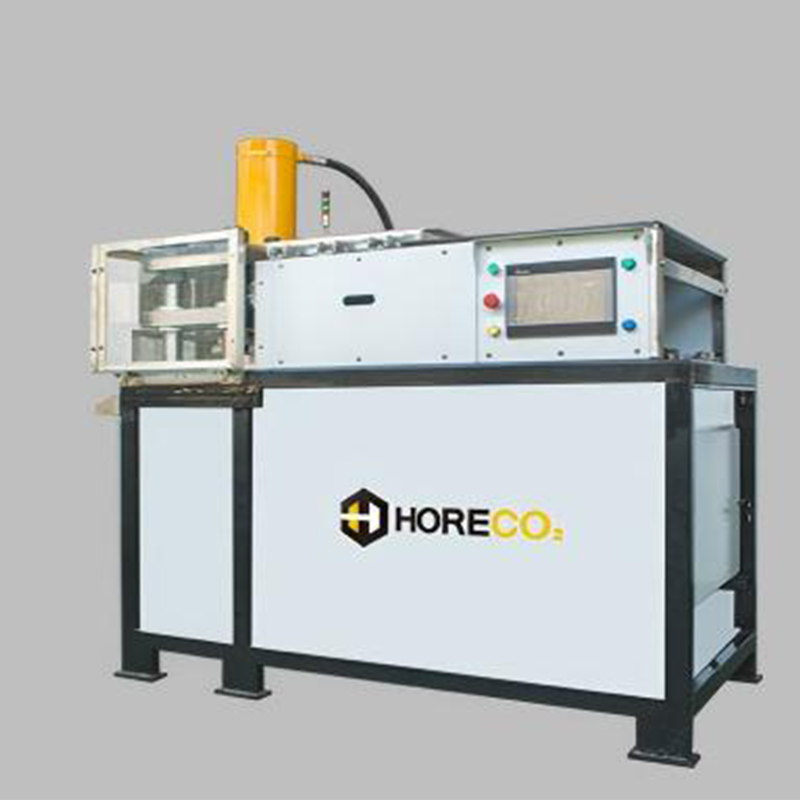
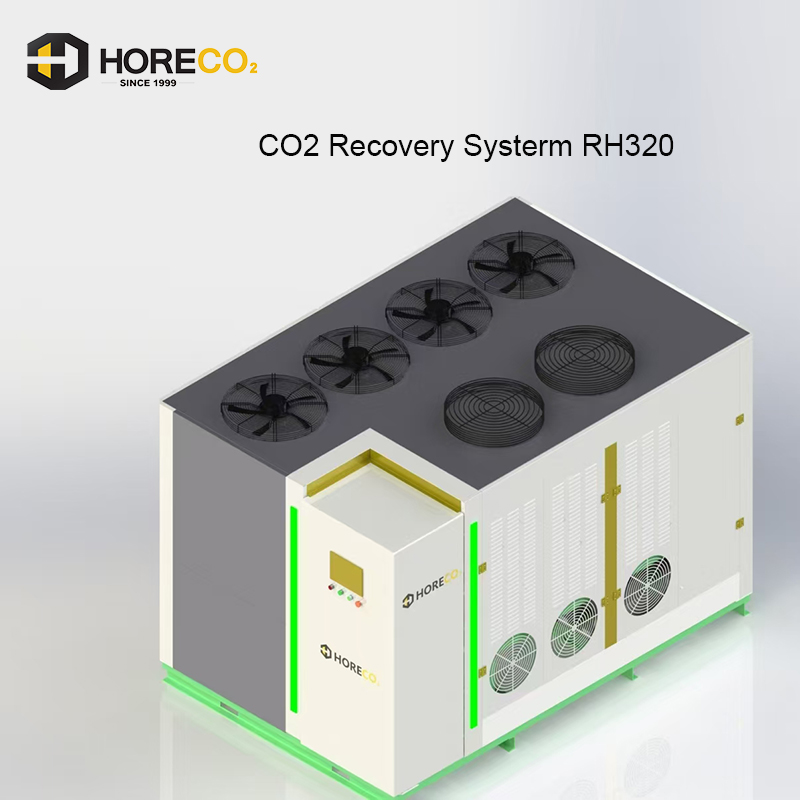
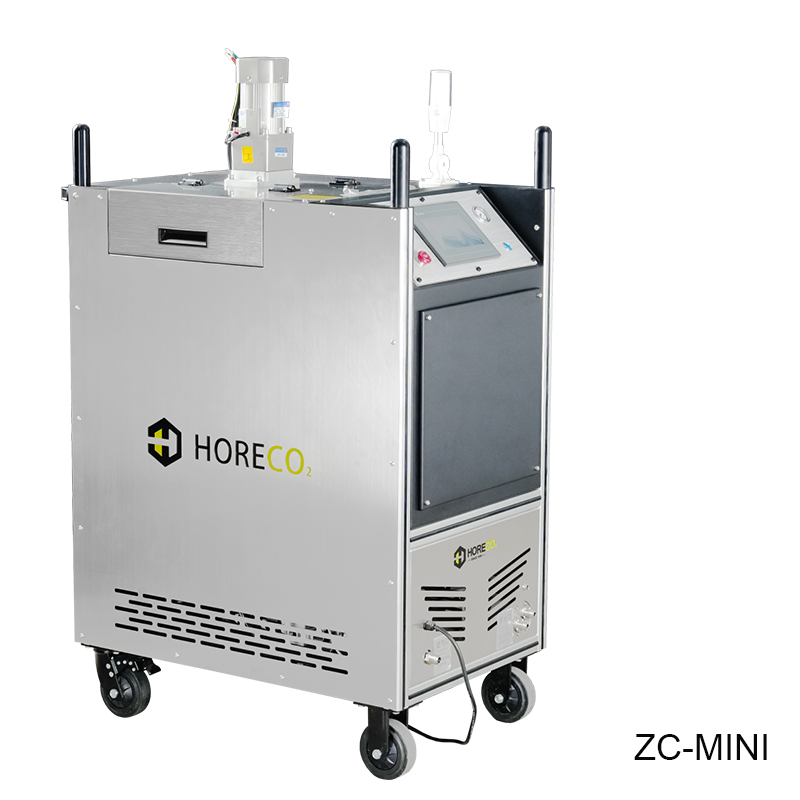
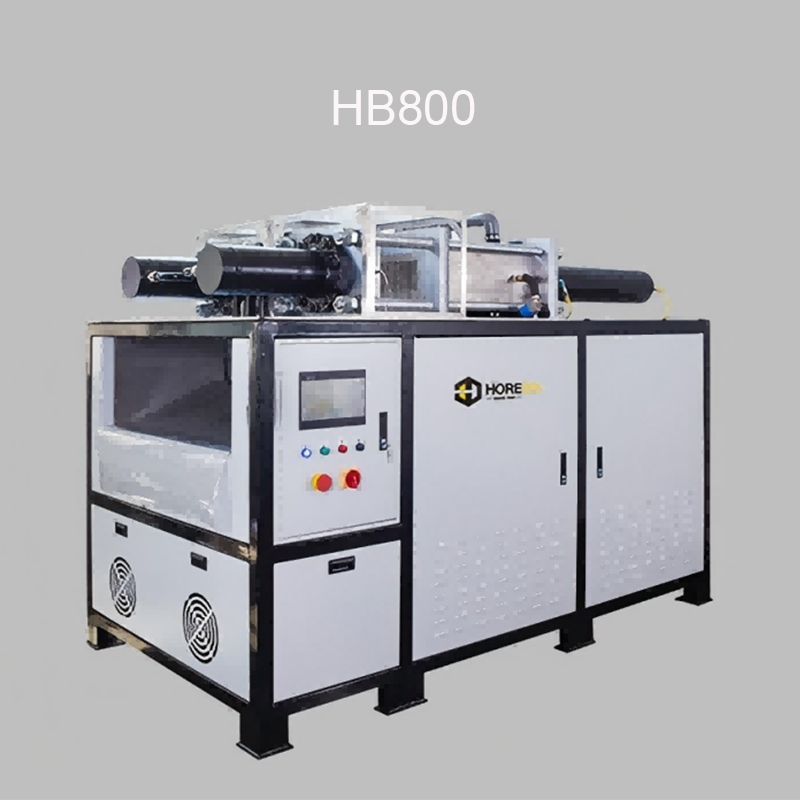
Industrial dry ice machines, such as those engineered by HORECO2, address these pains through a sophisticated, non-abrasive process. Here's the science in action:
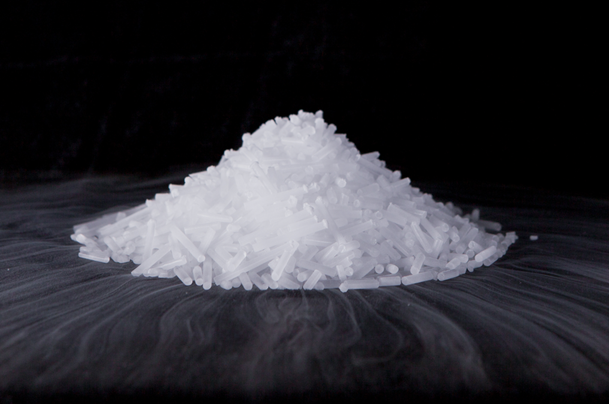
- For Sanitation: Dry ice pellets (at -78.5°C/-109.3°F) are accelerated by compressed air and blasted onto surfaces. Upon impact, the pellets sublimate—turning directly from solid to gas—creating micro-explosions that lift contaminants without moisture or chemicals. This means equipment can be cleaned in place, cutting downtime by up to 80% in food settings, as no disassembly or drying is needed. HORECO2's systems, compliant with USDA and FDA guidelines, ensure zero residue, enhancing food safety.
- For Precision Cleaning: The process is kinetic but gentle. Unlike abrasives, dry ice doesn't wear down underlying materials because it sublimates on contact. This preserves tooling and part integrity. For automotive applications, it efficiently strips coatings without damaging aluminum or composite substrates. HORECO2 machines offer adjustable pressure (e.g., 30-150 psi) and pellet sizes (1-3 mm), allowing customization for delicate electronics or heavy industrial use.
Client Success Stories: Measurable Impact Across the Globe
Fictional but plausible cases illustrate the real-world benefits:
1. Munich Automotive GmbH, Germany: This manufacturer struggled with cleaning robotic welding arms encrusted with spatter. Switching to a HORECO2 dry ice system reduced cleaning time from 3 hours to 45 minutes per unit, saving €15,000 annually in labor and downtime. "The precision is unmatched—no more costly repairs from abrasive damage," says Plant Manager Klaus Weber.
2. Toronto Dairy Co-op, Canada: Facing biofilm in pasteurization tanks, they implemented dry ice blasting, cutting sanitation downtime from 6 hours to 1.5 hours per tank. This boosted production by 15%, with zero chemical use. "Our safety audits improved dramatically, and we're saving over $20,000 a year on disposal costs," notes Operations Lead Sarah Chen.
3. Singapore Aerospace Components Ltd., Singapore: Cleaning composite aircraft parts required solvent-based methods that risked delamination. HORECO2's solution eliminated solvents, reducing cleaning time by 70% and improving part yield by 12%. "It's a game-changer for maintaining strict aerospace tolerances," shares Engineer David Lim.
Applications and Partnerships: Expanding the Reach
Dry ice blasting isn't niche—it's versatile. Key applications include:
- Electronics: Removing flux residues from circuit boards without static damage.
- Energy: Cleaning turbine blades in power plants to maintain efficiency.
- Historical Restoration: Gently cleaning stone or metal artifacts.
HORECO2 collaborates with global procurement firms like EuroTech Solutions in Belgium and Global Industrial Suppliers in the U.S., integrating their machines into broader maintenance contracts. These partnerships ensure tailored support, from onsite training to spare parts logistics, enhancing reliability for clients in sectors like pharmaceuticals and maritime.
FAQ: Answering Top Engineer and Procurement Queries
1. Q: How does dry ice blasting compare to CO2 emissions from production?
A: It's carbon-neutral. The CO2 used is a byproduct of industrial processes (e.g., ammonia production), recycled rather than newly emitted. Sublimation releases the same CO2 back, with no net addition—making it eco-friendly versus solvents that emit VOCs.
2. Q: What's the operational cost per hour for a mid-range system?
A: Roughly $15-$30, including dry ice pellets (about $0.50-$1.00 per pound) and compressed air. This is often lower than chemical or abrasive media costs when factoring in disposal and downtime savings.
3. Q: Can it handle heavy rust or thick paint layers?
A: Yes, with higher pressure settings (up to 150 psi) and finer pellets. It excels on surface contaminants; for deeply embedded rust, pre-treatment might be needed, but it avoids substrate damage common with sandblasting.
4. Q: Is specialized training required for operators?
A: Basic training (1-2 days) covers safety and technique. HORECO2 provides certifications and manuals, emphasizing proper PPE for cold exposure and ventilation in enclosed spaces.
5. Q: How does machine durability compare to traditional blasters?
A: With fewer moving parts and no abrasive wear, dry ice machines often last longer—10+ years with maintenance. HORECO2 designs for industrial duty cycles, using stainless steel components to resist corrosion.
Conclusion: Take the Next Step in Industrial Innovation
Industrial dry ice machines aren't just a cleaning tool; they're a strategic asset that tackles downtime, safety risks, and environmental compliance head-on. By leveraging HORECO2's expertise, manufacturers worldwide are achieving cleaner operations and healthier margins. If you're an engineer or procurement manager weighing options, the evidence is clear: this technology offers a sustainable edge. Ready to dive deeper? Download our technical white paper on optimizing dry ice blasting for your sector, or contact our sales engineers for a customized assessment. Let's turn your cleaning challenges into competitive advantages—one pellet at a time.
