

Is Your Factory's Deep Cleaning Secret Hidden in Dry Ice?
Picture this: It's 3 AM on a production line in Stuttgart. A critical conveyor system has ground to a halt—not due to mechanical failure, but because accumulated grime, a mixture of industrial lubricants and polymer residues, has seized the bearings. The maintenance team faces a 12-hour shutdown, chemical solvents that require hazardous material protocols, and the lingering risk of damaging sensitive electronic components nearby. What if there was a cleaning method that could tackle such contamination in a fraction of the time, without chemicals, water, or abrasives? This isn't a futuristic fantasy; it's the reality delivered by advanced dry ice spray machine technology. In this deep dive, we explore how this innovation is solving some of manufacturing's most persistent and costly cleaning challenges.
The High Cost of Getting Clean: Industry Pain Points Exposed
For plant managers and engineers, cleaning is rarely just about aesthetics—it's a critical path activity with direct bottom-line impact. Let's break down three pervasive pain points:
Pain Point 1: Production Downtime and Labor Intensity. Traditional cleaning methods often necessitate full or partial production stoppages. For example, cleaning a large industrial mold in an injection molding facility might require disassembly, manual scrubbing with solvents, rinsing, and drying—a process that can take 8-16 hours. This translates directly to lost production capacity. In capital-intensive industries like aerospace or automotive, downtime costs can exceed $10,000 per hour. The labor component is equally taxing, involving skilled technicians in PPE handling potentially dangerous chemicals, a process that is both slow and subject to human variability.
Pain Point 2: Environmental, Health, and Safety (EHS) Compliance Burdens. Chemical solvents, high-pressure water, and abrasive media like sand or soda create significant secondary waste streams. Solvent-contaminated rinse water requires expensive treatment or disposal. Abrasive media leave behind spent material that must be collected and landfilled. Moreover, these methods often generate airborne particulates or chemical vapors, demanding extensive ventilation, worker respiratory protection, and increasing the risk of regulatory non-compliance. The administrative and operational costs of managing these EHS aspects are substantial and growing.
Pain Point 3: Substrate Damage and Incomplete Contamination Removal. Aggressive cleaning can be a double-edged sword. High-pressure water can force moisture into electrical housings or micro-cracks, leading to corrosion or short circuits. Abrasive blasting, even with soft media, can alter the surface profile of critical components, affecting tolerances or fatigue life. Conversely, gentler methods may fail to remove tenacious contaminants like carbonized oils or adhesives from intricate geometries, leading to compromised product quality in subsequent production runs.
How Dry Ice Spray Technology Engineered the Solution
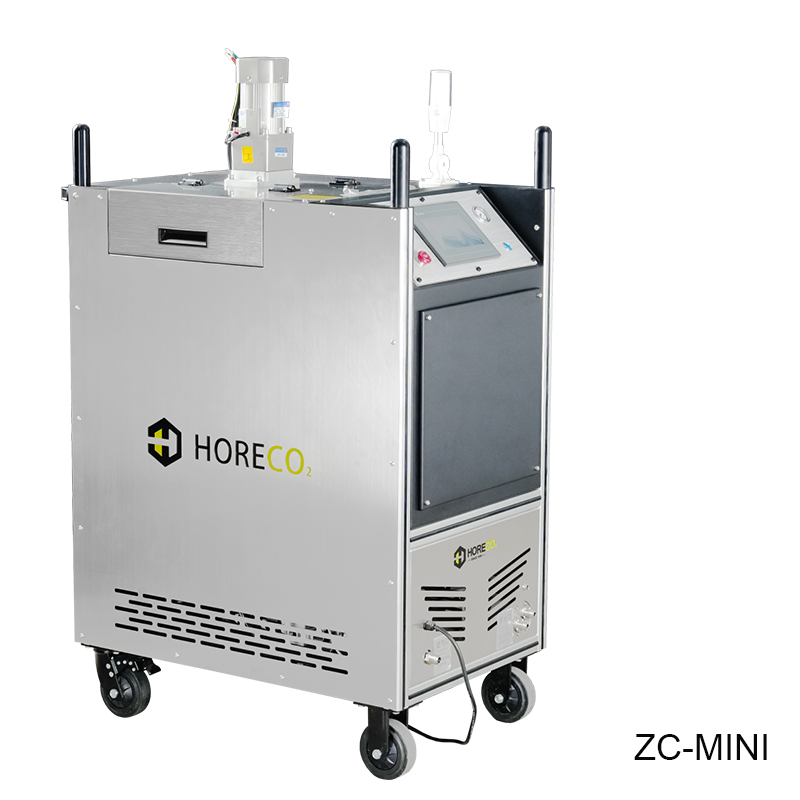
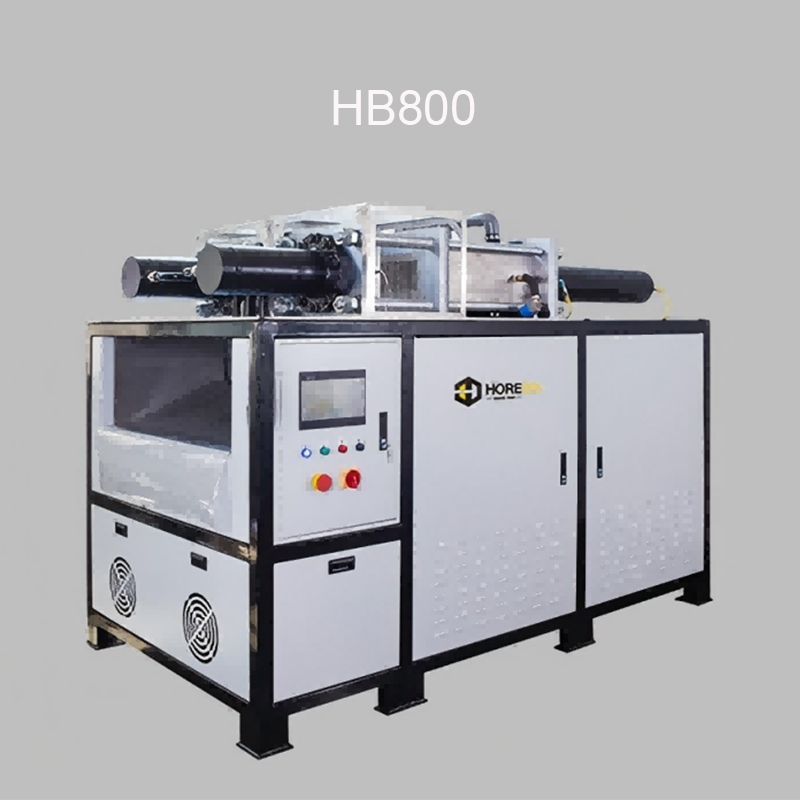
The dry ice spray machine, or dry ice blaster, addresses these pain points through a unique combination of thermal shock, kinetic energy, and sublimation. Here's how it corresponds to the challenges above:
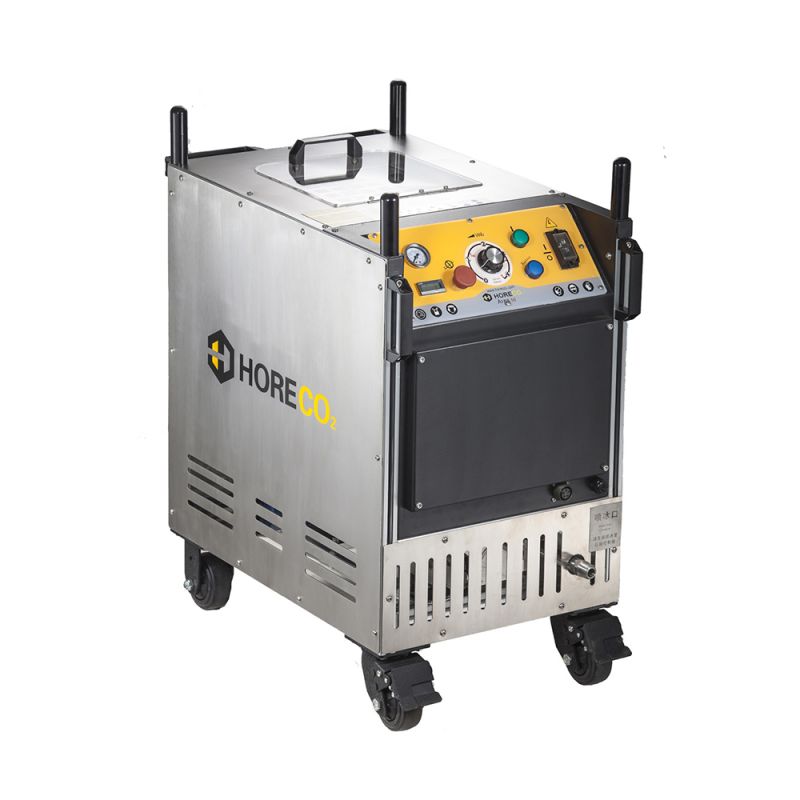
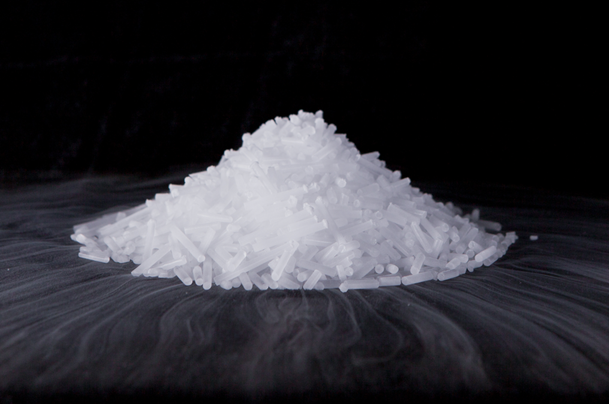
Solution to Downtime & Labor: A HORECO2 dry ice spray system cleans in place. There's typically no need for disassembly. The dry ice pellets (solid CO2 at -78.5°C) are accelerated by compressed air and impact the surface. The extreme cold embrittles the contaminant, while the kinetic energy fractures and lifts it. The ice then sublimates—turning directly from solid to gas—leaving only the dislodged contaminant to be vacuumed away. This process can cut cleaning times by 50-80% compared to traditional methods. For our Stuttgart conveyor example, what was a 12-hour job might be reduced to 2-3 hours, with minimal labor beyond the machine operator.
Solution to EHS Concerns: Dry ice cleaning is inherently cleaner. It uses no added chemicals or water. The only consumable is the food-grade, reclaimed CO2 used to make the pellets. There is no secondary waste stream from the cleaning media itself. While the dislodged contaminant must be collected, its volume is vastly reduced as it isn't mixed with solvent or water. The process is non-abrasive to most substrates and, when combined with proper local extraction, generates minimal airborne dust, significantly lowering the respiratory hazard profile and simplifying regulatory compliance.
Solution to Substrate Integrity: The non-abrasive nature of dry ice means it does not etch or wear away the underlying substrate. This makes it ideal for cleaning delicate surfaces like polished molds, circuit board assemblies, or historical restoration projects. The combination of thermal shock and kinetic energy is exceptionally effective at removing composite contaminants from complex surfaces, blind holes, and textured areas that brushes or fluids cannot reliably reach, ensuring a more complete clean without damage.
Client Success Stories: From Skepticism to Standard Practice
| Client & Location | Challenge | HORECO2 Solution & Results | Client Voice |
|---|---|---|---|
| Precision Mold GmbH (Bavaria, Germany) | Cleaning high-gloss injection molds for automotive interiors. Traditional solvent cleaning caused microscopic hazing, affecting part finish, and required 10-hour mold cooling periods. | Deployed a HORECO2 CB 100 mobile unit. Achieved flawless mold surface cleaning in 90 minutes per set, with no cooling delay. Eliminated solvent costs and disposal. Improved part first-pass yield by 3.2%. | "The finish on our Class-A surfaces is now perfect every time. We've turned a maintenance bottleneck into a non-issue." – Franz Weber, Production Manager |
| Great Lakes Food Processing Co. (Michigan, USA) | Baked-on carbohydrate and protein residues on continuous baking oven bands. Required weekly 36-hour shutdown for manual scraping and caustic cleaning, posing food safety risks. | Installed a HORECO2 inline system with automated traversing. Now performs hot cleaning during 4-hour weekly maintenance windows. Reduced water usage by 400,000 gallons annually. Passed FDA and third-party allergen swab tests with zero failures for 18 months. | "Our sanitation downtime is down 90%, and our environmental footprint shrank dramatically. It's a win for operations and sustainability." – Maria Chen, Plant Director |
| WindForce Renewables Ltd. (Essex, UK) | Salt, grime, and insect buildup on wind turbine rotor blades, reducing aerodynamic efficiency by an estimated 5-7%. Manual rope-access cleaning was dangerous, weather-dependent, and slow. | Implemented a custom HORECO2 system with extended-reach nozzles for ground-based cleaning. Cleaned a 50m blade in 4 hours vs. 2 days. Post-cleaning power output analysis showed a consistent 6.1% efficiency recovery. | "This tech gives us predictable, safe maintenance scheduling and recovers significant lost revenue from underperforming assets." – David Croft, Operations Head |
| ElectroFab Semiconductor (Hsinchu, Taiwan) | Removing flux residues and microscopic particulates from PCB assemblies without damaging sensitive components or leaving ionic contamination. | Utilized a HORECO2 cleanroom-compatible, static-controlled model in a controlled environment. Achieved cleanliness levels surpassing IPC standards. Eliminated CFC-based solvent use entirely. Increased board reliability scores by 15%. | "In our world, a micron matters. Dry ice cleaning delivers precision we couldn't achieve with liquids, with zero residue risk." – Dr. Li Wei, Quality Assurance Lead |
Applications and Strategic Partnerships
The versatility of dry ice spray technology sees application across a vast spectrum: Mold & Tool Cleaning (plastic, rubber, die-cast), Food & Pharma (production line decontamination, allergen removal), Electronics & Aerospace (component cleaning, composite maintenance), Fire Restoration (soot removal), Historical Preservation (gentle stonework cleaning), and Power Generation (turbine and heat exchanger cleaning).
HORECO2 Dry Ice Blasting Equipment & Service Co., Ltd. has cultivated deep technical partnerships with industry leaders to refine its systems. For instance, collaboration with a major European producer of polyurethane has led to specialized nozzle designs for releasing sticky mold residues. Similarly, joint development with a global automotive Tier-1 supplier has optimized machines for high-volume, robotic cell integration. These partnerships ensure HORECO2 equipment isn't generic, but engineered for real-world industrial challenges, a fact recognized by procurement teams at firms like Siemens Mobility and Nestlé, who have integrated HORECO2 systems into their global maintenance standards.
FAQ: Your Technical Questions Answered
Q1: We have very heavy, layered contamination (paint, grease, carbon). Will dry ice cleaning really work, or is it only for light dust?
A: Absolutely. The key is parameter optimization. For heavy contamination, a combination of higher pellet mass flow rate (using larger pellets or higher feed rates), optimal air pressure, and a multi-pass strategy at the correct angle is employed. The thermal shock is particularly effective on dissimilar materials (like paint on metal), causing differential contraction that breaks the adhesive bond. HORECO2 units offer variable parameter controls precisely for these challenging applications.
Q2: What is the operating cost per hour compared to traditional methods?
A: A direct comparison is complex but revealing. While dry ice pellet consumption is a cost (typically $2-$5 per kg, with usage rates from 5-30 kg/hour depending on the machine and task), this must be weighed against the total cost of ownership of other methods: solvent purchase/disposal, abrasive media cost/disposal, water usage/treatment, labor hours, and most significantly, the value of recovered production time. In most industrial applications, the dramatic reduction in downtime is the dominant economic factor, yielding a rapid ROI often under 12 months.
Q3: Is the extreme cold a concern for metal components? Could it induce brittleness or thermal stress cracks?
A: This is a critical engineering consideration. The thermal impact is highly localized and transient. The pellet sublimates instantly upon impact, creating a micro-thermal shock zone only microns deep. It does not bulk-cool the substrate like a cryogenic bath. For standard steels and most alloys, this poses no risk of embrittlement or cracking. However, for certain high-hardness tool steels or materials with known low-temperature sensitivity, HORECO2 provides specific operational guidelines, such as pre-cleaning consultation and test protocols, to ensure safety.
Q4: How do you handle the removed contaminant, especially if it's hazardous like lead paint or toxic mold?
A: The process excels here. Because the contaminant is removed dry and is not mixed with a secondary media (like water or solvent), it is collected in a concentrated, often easier-to-handle form. HORECO2 systems integrate high-efficiency HEPA-filtered vacuum recovery systems. For hazardous materials, the collected waste goes directly into approved containers for disposal, vastly simplifying the hazardous waste stream management compared to slurry or solvent waste.
Q5: Can the process be automated and integrated into a robotic cell or continuous production line?
A: Yes, this is a major growth area. HORECO2 offers models designed for integration. They feature standardized interfaces (e.g., PLC controls, pneumatic triggers) and can be mounted on robotic arms or custom gantries. Automated systems provide unparalleled consistency, perfect for cleaning identical parts like engine blocks or repetitive tasks like conveyor belt cleaning. The key enabler is the dry process—there are no liquid lines to manage or wet waste to extract from an automated cell.
Unlocking Efficiency: Your Next Step
The question posed at the outset—"Is your factory's deep cleaning secret hidden in dry ice?"—is more than rhetorical. As we've seen, the technology represents a paradigm shift, moving cleaning from a costly, disruptive necessity to a streamlined, value-adding process. It addresses the core trifecta of modern manufacturing: the need for speed, safety, and sustainability.
The stories from Bavaria, Michigan, Essex, and Hsinchu are not outliers; they are blueprints for transformation in your own operations. Whether your pain point is measured in hours of downtime, tons of solvent waste, or microns of unacceptable residue, dry ice spray technology offers a proven, engineered solution.
To move from insight to action, we invite you to delve deeper. Download our comprehensive technical white paper, "The Engineer's Guide to Dry Ice Blasting: Parameters, Performance, and ROI," which provides detailed case studies, comparative performance data, and integration guidelines. For a specific analysis of your application, contact a HORECO2 sales engineer to schedule a no-obligation consultation and a demonstration on your most challenging sample part. Discover how to turn your toughest cleaning challenge into your next efficiency breakthrough.
