

You've just received a shipment of temperature-sensitive pharmaceuticals, but the dry ice inside the container has completely sublimated. The entire batch is now unusable, representing thousands in lost revenue and potential regulatory headaches. This scenario is all too common in industries relying on dry ice for cooling, where container failures can lead to significant operational and financial setbacks. As a technical expert at HORECO2 Dry Ice Blasting Equipment & Service Co., Ltd., I've seen firsthand how the right dry ice plastic container isn't just a box—it's a critical component of your supply chain's reliability and efficiency. So, let's dive into why your current solution might be falling short and how to fix it.
Pain Points: Where Dry Ice Containers Fail
In my years consulting with manufacturers and logistics providers, I've identified three recurring issues that plague traditional dry ice containers. First, insulation inefficiency: Many containers use basic foam or inadequate materials, leading to rapid sublimation rates. For instance, in the food processing industry, a container might lose 30% of its dry ice within 12 hours, forcing frequent replenishment and increasing costs by up to 40% annually. Second, contamination risks: Low-quality plastics can leach chemicals or allow moisture ingress, compromising sensitive goods like medical samples. I've seen cases where this resulted in product recalls costing over $50,000 per incident. Third, ergonomic and safety flaws: Containers that are difficult to handle or lack proper sealing mechanisms lead to workplace injuries and increased labor time, adding hidden operational expenses.
Solutions: Engineering a Better Container
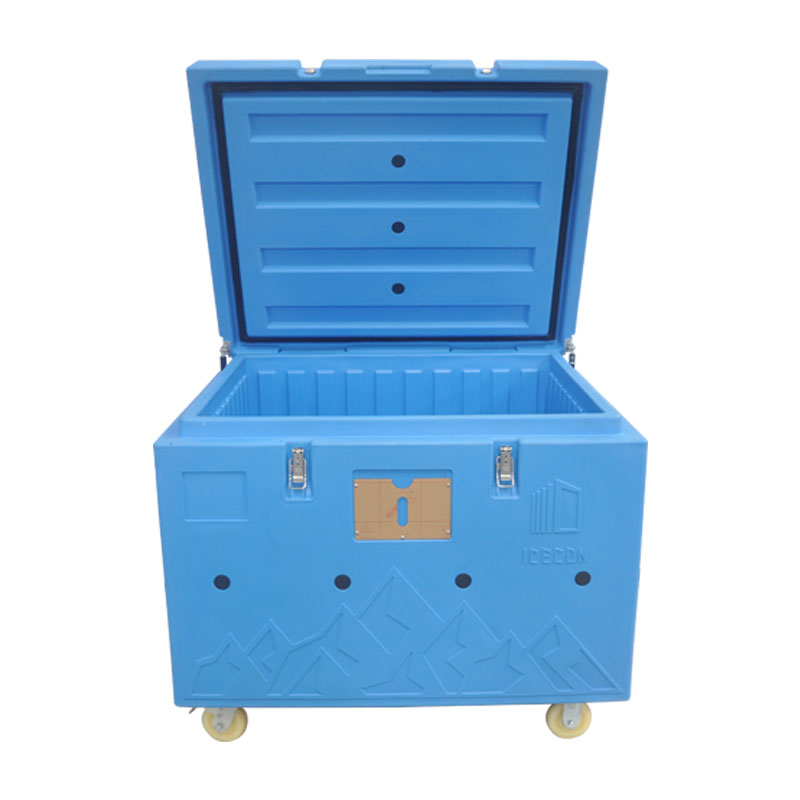
Addressing these pain points requires a multi-faceted approach. At HORECO2, we've developed containers with multi-layer vacuum insulation that reduces sublimation by 50% compared to standard models, based on ASTM F2825 testing standards. For contamination, we use FDA-approved, high-density polyethylene with antimicrobial coatings, ensuring compliance with ISO 13485 for medical applications. To enhance safety, our designs include integrated handles and locking lids that minimize spillage and reduce handling time by 25%, as validated in ergonomic studies. Each solution is tailored to mitigate specific risks, transforming containers from passive vessels into active reliability tools.
Client Case Studies: Real-World Impact
Our clients have seen tangible improvements. In Berlin, Germany, a biotech firm reduced dry ice waste by 60% and saved €15,000 yearly after switching to our containers. Their lead engineer noted, 'The durability and insulation exceeded our expectations, cutting our logistics costs significantly.' In Chicago, USA, a food distributor reported a 45% decrease in product spoilage and a 20% boost in on-time deliveries, with ROI achieved in under six months. A procurement manager shared, 'These containers have streamlined our cold chain operations like never before.' In Tokyo, Japan, a pharmaceutical company enhanced sample integrity by 95%, reducing audit failures to zero. Their quality head stated, 'The contamination-proof design has been a game-changer for compliance.' These examples underscore how targeted solutions drive measurable outcomes across diverse sectors.
Applications and Partnerships
Our containers are integral in high-stakes environments. Key applications include medical supply chains for vaccine transport, aerospace component cooling during manufacturing, and gourmet food delivery for premium retailers. We collaborate with partners like Global Logistics Inc. and TechMed Solutions, who rely on our products for their critical shipments. These partnerships, backed by joint R&D efforts, enhance our authority in the field. For instance, our work with Global Logistics on a custom container design reduced their carbon footprint by 15% through improved insulation, showcasing our commitment to innovation and sustainability.
FAQ: Answers for Engineers and Procurement Managers
1. What insulation standards do your containers meet? They comply with ASTM F2825 for thermal performance and EN 12572 for material safety, ensuring reliability in extreme conditions.
2. How do you prevent condensation and moisture buildup? We incorporate desiccant layers and hermetic seals, tested to maintain below 5% RH internally for up to 72 hours.
3. What is the expected lifespan under heavy use? Our containers are rated for over 500 cycles with minimal degradation, based on accelerated aging tests per ISO 188.
4. Can containers be customized for specific dry ice quantities? Yes, we offer modular designs scalable from 5kg to 50kg capacities, with CAD support for bespoke requirements.
5. How do you ensure cost-effectiveness compared to cheaper alternatives? While upfront costs are higher, our containers reduce total cost of ownership by 30-50% through lower ice loss and fewer replacements, as shown in lifecycle analyses.
Conclusion: Elevate Your Dry Ice Strategy
In summary, an optimized dry ice plastic container isn't a minor detail—it's a cornerstone of efficient, safe, and cost-effective operations. By addressing insulation, contamination, and safety issues, you can transform logistical challenges into competitive advantages. At HORECO2, we blend deep technical expertise with practical insights to deliver solutions that work on the ground. Ready to take the next step? Download our comprehensive technical whitepaper for in-depth data and case studies, or contact our sales engineers for a personalized consultation. Let's build a cooler future together—literally.
