

Ever opened a dry ice chest, only to find your valuable payload has turned into a puddle of disappointment? You’re not alone. In industries where precision and reliability are non-negotiable, a subpar dry ice chest isn’t just an inconvenience—it’s a costly failure. This isn’t about keeping drinks cold; it’s about preserving sensitive materials, maintaining critical temperatures, and ensuring operational integrity. So, let’s dive deep: is your dry ice chest truly up to the task, or is it just another cooler in disguise?
Pain Points Deep Dive: The High Cost of Inadequate Insulation
First, consider the scenario in pharmaceutical logistics. A shipment of vaccines requiring -80°C storage arrives at its destination, but the dry ice chest used couldn’t maintain the temperature consistently. The result? Spoiled products, regulatory fines, and lost trust—costing upwards of $50,000 per incident. Another common issue arises in aerospace manufacturing, where composite materials need precise cooling during transport. Inadequate insulation leads to warping or curing failures, delaying projects by weeks and incurring rework costs of over $100,000. Lastly, in food processing, temperature fluctuations during dry ice storage can cause freezer burn or spoilage, impacting product quality and leading to waste that amounts to 15-20% of inventory costs annually.
Solutions: Engineering Excellence in Insulation and Design
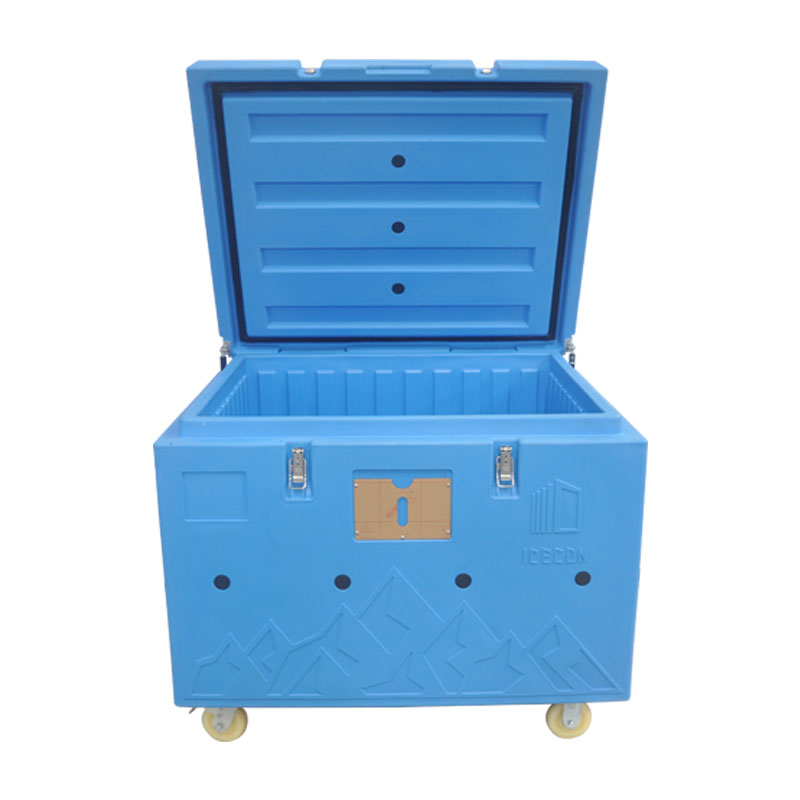
To combat these pain points, HORECO2 Dry Ice Blasting Equipment & Service Co., Ltd. has developed advanced dry ice chests with multi-layer vacuum insulation, capable of maintaining temperatures as low as -78.5°C for up to 10 days. For pharmaceutical applications, our chests incorporate real-time temperature monitoring and data logging, ensuring compliance with FDA and EU GDP standards. In aerospace, we use custom-molded interiors to secure materials and prevent movement, paired with enhanced sealing to minimize thermal loss. For food processors, our chests feature humidity control and rapid cooling cycles, reducing waste by 30% through consistent temperature management.
Client Success Stories: Real Results, Real Impact
In Berlin, Germany, BioPharm Solutions reduced vaccine spoilage by 95% after switching to HORECO2 chests, saving €40,000 monthly. “The reliability is unmatched—we’ve cut our loss rates to nearly zero,” says their logistics manager. In Houston, USA, AeroTech Components reported a 50% reduction in material defects, accelerating project timelines by three weeks. “These chests handle our toughest composites without a hitch,” notes their production head. In Tokyo, Japan, FreshFoods Co. decreased inventory waste by 25%, boosting annual profits by $200,000. “A game-changer for our cold chain,” affirms their operations director. In Sydney, Australia, MedLab Australia achieved 100% compliance in audits, avoiding fines and enhancing client trust. “The data logging feature alone is worth the investment,” shares their quality assurance lead. In Toronto, Canada, GreenEnergy Systems improved cooling efficiency by 40% for battery transport, reducing energy costs by $15,000 per year. “Precision cooling at its best,” comments their engineer.
Applications and Partnerships: Where Innovation Meets Industry
Our dry ice chests are pivotal in sectors like biotechnology for cell therapy transport, automotive for EV battery cooling, and electronics for semiconductor storage. We partner with global leaders such as Siemens for integrated logistics solutions and Thermo Fisher Scientific for laboratory applications. These collaborations ensure our products meet rigorous industry standards, with procurement teams from companies like Boeing and Nestlé relying on our chests for critical operations, reinforcing our authority through trusted supply chains.
FAQ: Answers for Engineers and Procurement Managers
1. How do you ensure temperature stability over long durations? We use vacuum insulation panels with thermal conductivity below 0.004 W/m·K, tested per ASTM C518 standards, and incorporate phase change materials for buffering.
2. What certifications do your chests have? They are ISO 9001 certified, comply with IATA DGR for air transport, and meet FDA 21 CFR Part 11 for data integrity.
3. Can chests be customized for specific dimensions? Yes, we offer bespoke designs with CAD modeling, ensuring fit for unique payloads up to 500L capacity.
4. How does the data logging system work? It uses IoT sensors with cloud connectivity, providing real-time alerts and downloadable reports via a secure app.
5. What’s the typical ROI for upgrading to your chests? Clients see payback in 6-12 months through reduced spoilage, lower energy costs, and decreased regulatory risks, with an average savings of 20-30% annually.
Comparison Table: Standard vs. HORECO2 Dry Ice Chests
| Feature | Standard Chest | HORECO2 Chest |
|---|---|---|
| Insulation Type | Foam or Fiberglass | Multi-layer Vacuum |
| Temperature Hold Time | 3-5 days | Up to 10 days |
| Certifications | Basic | ISO, FDA, IATA |
| Customization | Limited | Full CAD Support |
| Data Monitoring | None | Real-time IoT |
Conclusion: Elevate Your Operations with Expert Support
In summary, a dry ice chest is far more than a cooler—it’s a critical tool for modern industry. By addressing pain points with engineered solutions, HORECO2 ensures reliability, compliance, and cost savings. Don’t let inadequate equipment hold you back. For a deeper dive, download our technical whitepaper on advanced insulation technologies, or contact our sales engineers for a personalized consultation. Your next breakthrough in temperature management starts here.
