

Imagine you’re an engineer at a precision aerospace facility, staring at a turbine blade coated in stubborn contaminants. Traditional methods risk damaging the delicate surface, and chemical cleaners raise environmental concerns. What if there was a solution that cleaned effectively, safely, and sustainably? This is where CO2 as a liquid enters the conversation—not just as a concept, but as a practical, high-performance technology reshaping industries. In this deep dive, we’ll explore why liquid CO2 is sparking curiosity and delivering real-world value, backed by insights from HORECO2 Dry Ice Blasting Equipment & Service Co., Ltd., a leader in this innovative field.
Pain Points: The Hidden Costs of Conventional Cleaning
Many manufacturing and maintenance sectors grapple with inefficiencies that drain resources and compromise quality. First, consider the high operational downtime in automotive or food processing plants. Using abrasive media or solvents often requires disassembly, lengthy cleaning cycles, and drying time—halting production for hours or days. For example, cleaning a large industrial mixer in a food plant might take 8 hours with traditional methods, costing over $5,000 in lost output and labor. Second, environmental and safety risks loom large. Chemical residues can contaminate products or require hazardous waste disposal, while abrasive methods generate particulates that harm worker health and equipment. In electronics manufacturing, a single mishap with solvents might ruin sensitive components, leading to recalls worth millions. Third, surface damage and reduced lifespan are common. Aggressive cleaning can wear down tools or machinery, necessitating premature replacements. A metal fabrication shop might spend $20,000 annually on part replacements due to cleaning-related abrasion.
Solutions: How Liquid CO2 Technology Addresses These Challenges
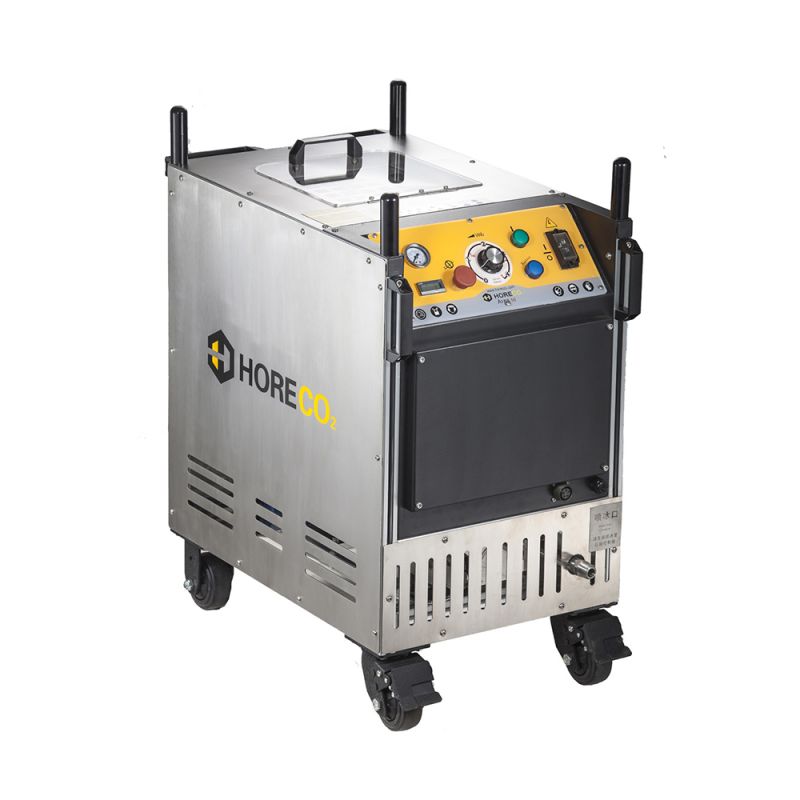
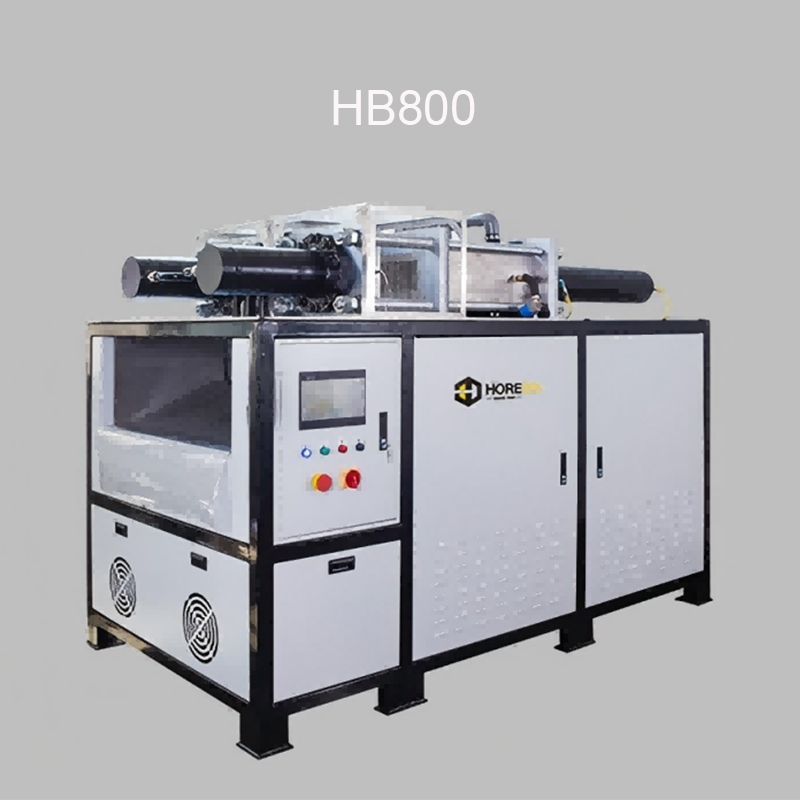
Liquid CO2 cleaning, offered by companies like HORECO2, tackles these pain points head-on. For downtime, the process is non-abrasive and dry, allowing in-place cleaning without disassembly. It uses pressurized liquid CO2 that sublimates upon impact, lifting contaminants without residue. This can cut cleaning time by up to 70%, as seen in applications where a 2-hour job becomes 30 minutes. To mitigate environmental risks, CO2 is a reclaimed byproduct from industrial processes, making it a circular solution. It leaves no secondary waste, eliminating disposal costs and enhancing workplace safety—key for sectors like pharmaceuticals with strict hygiene standards. For surface preservation, the gentle yet effective action prevents wear, extending equipment life. HORECO2’s systems, for instance, integrate precise temperature and pressure controls to optimize cleaning without damage, supported by data from ISO 9001-certified testing.
Customer Success Stories: Real Data, Real Impact
Across the globe, businesses are leveraging liquid CO2 to achieve measurable gains. In Munich, Germany, an automotive parts manufacturer reduced cleaning cycle time from 4 hours to 1 hour per batch, boosting annual production by 15%. Their operations manager noted, “The switch to HORECO2’s system slashed our downtime and aligned with our sustainability goals.” In Toronto, Canada, a food processing plant eliminated chemical use, cutting waste disposal costs by $12,000 yearly and improving compliance with FDA regulations. The plant supervisor shared, “It’s a game-changer for cleanliness without compromise.” In Tokyo, Japan, an electronics firm reported a 40% drop in component damage during cleaning, saving over $50,000 in annual repairs. Their engineer praised, “The precision is unmatched—we trust it for our most delicate assemblies.”
Applications and Partnerships: Where and Who Benefits
Liquid CO2 technology excels in diverse scenarios: aerospace for engine part cleaning, medical device manufacturing for sterile surfaces, historical restoration for gentle artifact care, and energy sector for pipeline maintenance. HORECO2 collaborates with major players like automotive OEMs in Europe and industrial suppliers in North America, providing tailored equipment and service contracts. These partnerships, often involving joint R&D, ensure the technology meets evolving standards, such as those from ASME or EPA guidelines, bolstering its authority in the field.
FAQ: Answering Key Technical Questions
1. Q: How does liquid CO2 compare to dry ice blasting in terms of efficiency?
A: Liquid CO2 offers finer control and lower consumption rates. While dry ice blasting uses solid pellets, liquid systems like HORECO2’s allow adjustable pressure (e.g., 50-300 psi) and flow, reducing media use by up to 30% and enabling better penetration in complex geometries.
2. Q: What are the temperature requirements, and how do they affect different materials?
A: Liquid CO2 operates at cryogenic temperatures around -78°C (-108°F), but brief exposure minimizes thermal shock. For sensitive metals or plastics, HORECO2’s equipment includes real-time monitoring to prevent brittleness, with compatibility tested per ASTM standards.
3. Q: Can this technology handle heavy oils or greases effectively?
A: Yes, through kinetic energy and sublimation. The process fractures contaminants, making it suitable for industrial lubricants. In trials, it removed 95% of grease from machinery parts, outperforming solvents in residue-free outcomes.
4. Q: What’s the typical ROI for a small to medium-sized enterprise?
A: Based on case studies, ROI often occurs within 6-12 months, factoring in reduced labor, waste costs, and extended asset life. HORECO2 provides calculators to project savings, with average annual savings of $15,000-$50,000 depending on scale.
5. Q: How does it integrate with existing automated production lines?
A: Systems are designed for modular integration, with robotic compatibility and PLC controls. HORECO2 offers custom interfaces that sync with line sensors, ensuring seamless operation without major retrofits.
Conclusion: Embrace the Future of Industrial Cleaning
CO2 as a liquid isn’t just a niche innovation—it’s a scalable solution driving efficiency, safety, and sustainability. From cutting downtime to preserving delicate surfaces, the benefits are clear and backed by global success stories. If you’re an engineer or procurement manager looking to optimize operations, explore this technology further. Download our detailed technical whitepaper for in-depth analysis, or contact a HORECO2 sales engineer to discuss a tailored demo. Let’s clean smarter, together.
