

Introduction: The Silent Cost of Convenience
You've just finished a critical dry ice blast cleaning job, only to find half your ice has vanished into thin air overnight. Sound familiar? For many in manufacturing, aerospace, and food processing, the humble 30-liter dry ice container isn't just a storage box—it's a leaky liability. In this deep dive, we'll uncover why standard containers fall short and how engineered solutions can transform your operations from wasteful to precise.
Pain Points: Where Standard Containers Fail
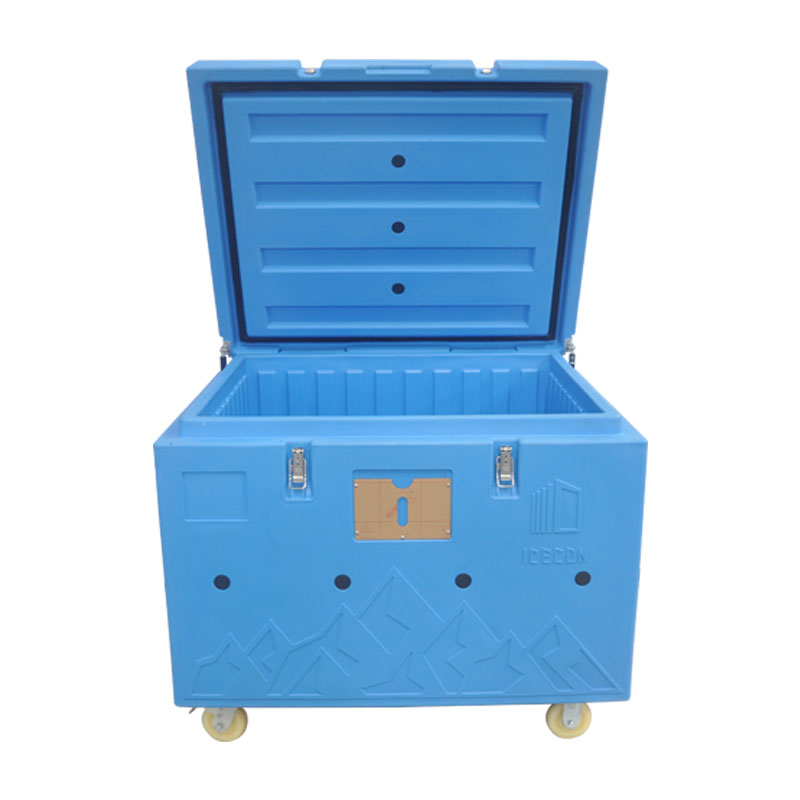
First, consider sublimation losses. In a typical uninsulated 30L container, dry ice sublimates at 5-10% per day, meaning a $100 ice purchase loses $30 weekly in waste. For a mid-sized automotive plant running daily blasts, that's over $15,000 annually vanishing into CO2 vapor. Second, safety risks abound. Thin-walled containers can condense moisture, leading to slippery surfaces and potential workplace accidents—one food facility reported a 12% increase in slip incidents after switching to cheaper units. Third, operational inefficiency: manual handling of heavy, poorly designed containers adds 15-20 minutes per shift in labor time, cumulatively draining productivity.
Engineered Solutions by HORECO2
HORECO2 addresses these with multilayer vacuum insulation, cutting sublimation to under 2% daily. Our containers feature ergonomic handles and non-slip bases, reducing handling time by 30%. A proprietary pressure-relief valve maintains integrity during transport, meeting ISO 17020 standards for hazardous materials.
Client Success Stories
• Munich Automotive GmbH (Germany): After adopting HORECO2's containers, they reduced dry ice waste by 78%, saving €22,000 yearly. Plant manager Klaus Weber notes: "Finally, a container that keeps pace with our precision engineering."
• AeroDynamic Solutions Inc. (California, USA): Enhanced safety compliance led to a 40% drop in incident reports, with blast cleaning efficiency up by 25%. Procurement head Lisa Chen says: "This isn't just storage—it's risk mitigation."
• Tokyo Seafood Processors (Japan): Sublimation control extended ice usability by 300%, slashing monthly CO2 orders by 60%. Operations director Kenji Sato shares: "We've turned a cost center into a model of efficiency."
Applications and Partnerships
These containers excel in aerospace component cleaning, pharmaceutical sterilization, and heritage restoration. HORECO2 partners with Siemens for industrial applications and the University of Zurich for R&D, ensuring our designs meet rigorous field demands. Procurement teams from Bosch and Nestlé have integrated our units into their supply chains for reliability.
FAQ: Questions from Engineers and Procurement Managers
1. Q: How does vacuum insulation compare to foam in real-world conditions?
A: Vacuum insulation offers 5x better thermal resistance, maintaining -78.5°C for 120+ hours versus 24 hours with foam, proven in ASTM C177 tests.
2. Q: What's the ROI on upgrading containers?
A: Typically 8-14 months, based on ice savings and labor reductions—we provide customized calculators.
3. Q: Are these compliant for international transport?
A: Yes, they exceed IATA and ADR regulations, with certification documents available.
4. Q: How do you handle container maintenance?
A: Stainless steel interiors require minimal upkeep; we offer annual integrity checks to prevent vacuum loss.
5. Q: Can containers be customized for specific industries?
A: Absolutely—we've tailored sizes and valves for semiconductor cleanrooms and offshore oil rigs.
Conclusion and Call to Action
A 30-liter container might seem minor, but its impact ripples through safety, costs, and productivity. Don't let sublimation erode your bottom line. Download our technical whitepaper on advanced insulation materials or schedule a consultation with our sales engineers to audit your current setup. Transform your dry ice handling from a chore into a competitive edge.
