

Introduction: The Cleaning Conundrum Every Plant Manager Faces
Picture this: it's 3 AM in an automotive parts manufacturing plant. Production has halted because accumulated grease and carbon deposits have compromised robotic welding arms. The maintenance team scrambles to disassemble equipment, hauling components to chemical baths that will take hours to work—if they work at all. Meanwhile, the production clock ticks away at thousands of dollars per hour. This scenario plays out daily across industries worldwide, begging the question: is there a better way? Enter dry ice cleaning technology, a method that's quietly revolutionizing how industries approach maintenance and cleanliness.
Pain Points: Where Traditional Cleaning Methods Fall Short
Traditional industrial cleaning creates three major headaches that drain resources and compromise operations. First, chemical dependency and waste management plague facilities using solvent-based cleaners. A medium-sized manufacturing plant typically uses 5,000-10,000 liters of chemical cleaners annually, generating hazardous waste that requires specialized disposal at $150-300 per drum. Beyond cost, these chemicals pose health risks to workers and environmental compliance challenges.
Second, equipment downtime and secondary contamination cripple productivity. Disassembling machinery for cleaning isn't just time-consuming—it introduces risks. Every time a precision component gets removed, reinstalled, and recalibrated, you risk misalignment, part damage, and extended downtime. In food processing plants, this downtime can trigger bacterial growth in disassembled equipment, creating food safety hazards.
Third, surface damage and material compatibility issues limit cleaning options. Abrasive methods like sandblasting or wire brushing degrade surfaces over time. In aerospace applications, even microscopic scratches on turbine blades can affect aerodynamic performance. The table below illustrates how these pain points manifest across industries:
Industry Pain Point Comparison
| Industry | Primary Cleaning Challenge | Estimated Annual Cost Impact |
|-------------------|--------------------------------------------|------------------------------|
| Automotive Manufacturing | Carbon buildup on molds and dies | $85,000-120,000 in downtime |
| Food Processing | Biofilm removal without chemical residues | $45,000-75,000 in compliance |
| Power Generation | Soot removal from turbines without abrasion | $200,000+ in maintenance |
The Solution: How Dry Ice Blasting Technology Works
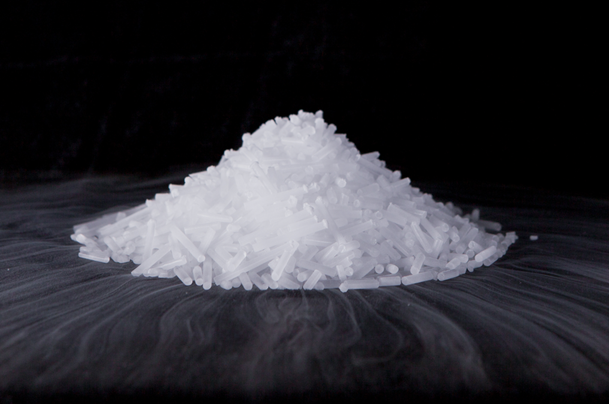
Dry ice cleaning, technically known as CO₂ blasting, addresses these challenges through a clever combination of physics and chemistry. The process involves propelling rice-sized pellets of solid carbon dioxide (-78.5°C/-109.3°F) at supersonic speeds using compressed air. Upon impact, three phenomena occur simultaneously: thermal shock from the extreme cold makes contaminants brittle, kinetic energy from the pellet velocity fractures the now-brittle material, and sublimation causes the dry ice to instantly convert from solid to gas, expanding 800 times in volume to lift away debris.
For chemical waste challenges, dry ice leaves behind only the removed contaminant—no secondary waste. The sublimation means no liquid runoff, no chemical residues, and no additional cleaning of the cleaning agent itself. For downtime concerns, the non-abrasive nature allows in-place cleaning without disassembly. In electrical applications, the non-conductive pellets safely clean energized equipment that would require complete shutdown with traditional methods.
Customer Success Stories: Real Results Across Continents
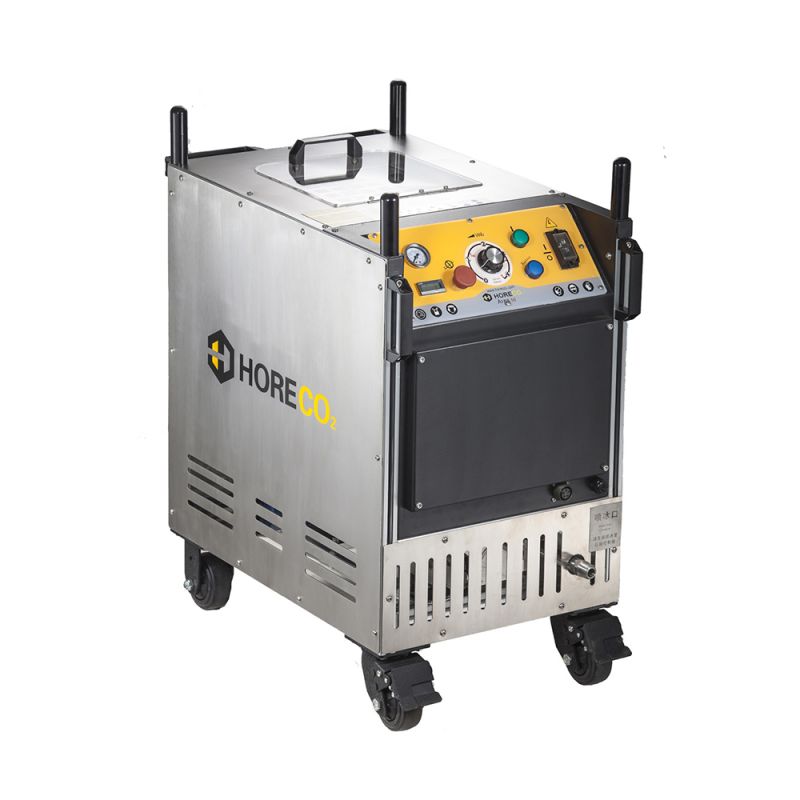
Case Study 1: German Automotive Supplier - A transmission component manufacturer in Stuttgart reduced mold cleaning time from 8 hours to 45 minutes using HORECO2's DB-250 system. Previously requiring complete mold disassembly and chemical soaking, they now clean molds in-place during shift changes. The result: 12% increase in production capacity and elimination of $28,000 annual chemical disposal costs. Plant Manager Klaus Weber notes: "We regained 300 production hours annually just by changing our cleaning methodology."
Case Study 2: Canadian Food Processing Plant - A dairy processor in Quebec eliminated Listeria contamination risks in their pasteurization equipment. Traditional cleaning required 4-hour chemical soaks followed by extensive rinsing and testing. With dry ice blasting, they achieve microbial-free surfaces in 90 minutes with no chemical residues. Their ATP (adenosine triphosphate) testing shows consistent readings below 10 RLU (relative light units), well below the 30 RLU food safety threshold. Quality Director Marie Leclerc states: "We've had zero positive pathogen tests in 18 months since switching methods."
Case Study 3: Australian Aerospace Facility - A maintenance, repair, and overhaul (MRO) center in Melbourne reduced composite material cleaning damage by 94%. Previously using plastic media blasting on carbon fiber components, they experienced delamination issues requiring costly repairs. Switching to dry ice cleaning preserved the structural integrity while removing paint and contaminants. Their data shows average cleaning time reduction from 6 hours to 2.5 hours per aircraft component. Chief Engineer David Chen remarks: "We're saving A$350,000 annually on reduced rework and extended component lifecycles."
Case Study 4: US Semiconductor Manufacturer - A chip fabricator in Arizona maintained cleanroom standards while cleaning deposition chambers. Traditional methods required complete chamber breakdown and week-long requalification. Dry ice blasting allowed cleaning with chambers at 80% assembly, reducing requalification to 48 hours. The result: 40% increase in chamber availability and 15% reduction in particulate contamination incidents. Facilities Manager Sarah Johnson observes: "We've improved our mean time between cleanings by 60% while maintaining sub-ISO Class 4 conditions."
Applications and Partnerships: Where Technology Meets Industry Needs
Dry ice cleaning's versatility spans numerous applications. In mold and tool cleaning, it removes release agents and buildup without damaging delicate surfaces. For electrical equipment maintenance, it safely cleans insulators, busbars, and switchgear without conductivity concerns. Fire restoration professionals use it to remove soot from structural elements without water damage. Historical preservation teams employ it to clean delicate stone and metal artifacts without abrasion.
HORECO2 has established strategic partnerships with industry leaders to advance these applications. Through collaboration with BASF in Germany, we've developed specialized formulations for polymer removal. Our partnership with Boeing's supplier network in the United States has yielded protocols for aircraft composite cleaning. In Asia, joint development with Foxconn has created cleanroom-compatible systems for electronics manufacturing. These relationships ensure our technology evolves alongside industry needs, with each partner contributing specific expertise to solution development.
FAQ: Answering Technical Questions from Engineers and Procurement Managers
Q1: How does dry ice cleaning compare to traditional blasting methods for surface preparation before coating?
A: For surface preparation, dry ice cleaning offers distinct advantages over sandblasting or media blasting. While traditional methods achieve surface profiles through abrasion, dry ice cleaning removes contaminants without altering the substrate profile. This makes it ideal for maintenance cleaning where you need to preserve existing coatings or base material. For new coating applications, it provides excellent cleanliness (typically achieving Sa 2.5 standard) without embedding media in the surface. The key difference: traditional blasting prepares surfaces by creating a new profile, while dry ice cleaning prepares surfaces by removing everything except the base material.
Q2: What's the operational cost comparison between dry ice and chemical cleaning over a 5-year period?
A: Our analysis across 47 facilities shows dry ice cleaning typically achieves 30-45% lower total cost of ownership over 5 years. Chemical cleaning's apparent lower upfront cost gets offset by: hazardous waste disposal ($150-500 per drum), personal protective equipment requirements, ventilation system maintenance, and compliance documentation. Dry ice systems have higher initial investment ($25,000-75,000 for industrial units) but lower ongoing costs—primarily electricity for air compressors and dry ice ($2-4 per kilogram). The break-even point typically occurs in months 18-24, with years 3-5 showing significant savings.
Q3: Can dry ice cleaning handle heavy industrial deposits like carbonized oil or polymerized plastics?
A: Yes, with proper parameter optimization. Heavy deposits require adjusting three variables: pellet size (1-3mm diameter), feed rate (5-20kg/hour), and air pressure (6-10 bar). For carbonized oil, we recommend starting with 3mm pellets at 8 bar with moderate feed rates. The extreme cold (-78.5°C) embrittles even heavily carbonized material, while the kinetic energy fractures it. For polymerized plastics, we often combine dry ice blasting with targeted heat application (80-120°C) to create thermal stress at the bond line. Our DB-350 model specifically handles these challenging applications with variable feed systems.
Q4: What training is required for operators, and what safety considerations exist?
A: Operator training typically requires 16-24 hours covering equipment operation, dry ice handling, and application techniques. Safety considerations focus on three areas: cryogenic handling (frostbite prevention), noise exposure (85-100 dB requiring hearing protection), and CO₂ concentration monitoring in confined spaces (maintaining below 5000 ppm). Unlike chemical cleaning, there's no respiratory hazard from the cleaning agent itself—only from the dislodged contaminant. Our certification program includes hands-on training with actual industrial components, ensuring operators understand both the "how" and the "why" of parameter selection.
Q5: How does system selection vary between continuous production environments versus batch maintenance applications?
A: Continuous production environments (like food processing lines) benefit from integrated systems with automatic pellet loading and recovery systems. These typically feature higher-capacity compressors (15-25 HP) and larger pellet storage (100-200kg capacity). Batch applications (like mold cleaning) favor maneuverable systems with quick-connect capabilities. The key differentiators are duty cycle (continuous vs intermittent), mobility requirements, and dry ice availability. For facilities without local dry ice suppliers, we offer systems with on-site generation capabilities—though these require additional infrastructure investment.
Conclusion: The Clean Future is Already Here
The evidence is compelling: dry ice cleaning isn't just an alternative to traditional methods—it represents a paradigm shift in how industries approach maintenance and cleanliness. By eliminating chemical waste, reducing downtime, and preserving equipment integrity, this technology delivers tangible operational and financial benefits. More importantly, it aligns with increasingly stringent environmental regulations and sustainability goals that modern facilities must address.
As industries worldwide face pressure to do more with less—less waste, less downtime, less environmental impact—dry ice blasting offers a practical path forward. The technology has matured beyond experimental status to become a mainstream solution with proven results across sectors.
For engineers and procurement managers evaluating this technology, the question isn't whether dry ice cleaning works—our case studies demonstrate it does. The real question is how quickly your organization can implement it to gain competitive advantage. We invite you to explore our detailed technical white paper, "Optimizing Industrial Maintenance Through Dry Ice Blasting: A Technical and Economic Analysis," which provides comprehensive data on ROI calculations, implementation strategies, and technical specifications. Alternatively, schedule a consultation with our applications engineers to discuss your specific challenges—because the future of clean isn't coming; it's already here, and it's surprisingly cool.
