

Imagine you're a logistics manager for a pharmaceutical company, tasked with shipping a batch of temperature-sensitive vaccines across the country. You pack them with dry ice to maintain that crucial -78.5°C, seal the box, and send it off—only to get a frantic call hours later: the shipment arrived warm, compromised, and now thousands of dollars are down the drain. This scenario isn't just a nightmare; it's a real-world challenge for industries relying on cold chain logistics. The question we're tackling today isn't just about dry ice—it's about whether your insulated shipping boxes are up to the task of handling it safely. In this deep dive, we'll peel back the layers of insulation technology, uncover hidden pitfalls, and show how getting this right can save you from costly disasters.
Deepening the Pain Points: Where Insulation Fails
Let's start by digging into the specific headaches that plague businesses using dry ice in shipping. First, there's the issue of thermal inefficiency. Many standard insulated boxes aren't designed for the extreme cold of dry ice, leading to rapid sublimation—where the ice turns directly from solid to gas. In a typical scenario for a biotech firm shipping lab samples, poor insulation might cause dry ice to vanish in under 24 hours instead of the needed 48-72 hours. The consequence? Samples thaw, experiments are ruined, and replacement costs can soar to $5,000-$10,000 per shipment, not to mention the delays in critical research timelines.
Second, consider safety and regulatory risks. Dry ice releases carbon dioxide gas as it sublimates, and in confined spaces like shipping containers, this can build up to dangerous levels. We've seen cases in the food industry, where a restaurant chain shipping premium seafood faced fines after a box leaked CO₂ during transit, nearly causing a warehouse incident. Beyond safety, non-compliance with regulations like IATA guidelines for air transport can result in penalties of up to $50,000 and damaged reputations. The cost here isn't just financial—it's about trust and operational continuity.
Third, there's the cost of over-engineering or under-specifying. Some companies, in a bid to avoid issues, opt for overly thick insulation, driving up material costs by 30-40% and reducing payload capacity. Conversely, others cut corners with thin liners, only to face frequent reshipments. For an e-commerce business shipping perishable goods, this miscalculation can add $20,000 annually in extra shipping and product loss, eating into slim profit margins.
Technical Solutions: Engineering the Right Box
So, how do we fix these problems? It starts with understanding that not all insulation is created equal. For thermal efficiency, the key is using high-density polyurethane foam or vacuum-insulated panels (VIPs). These materials offer R-values (thermal resistance) of 30-50, compared to 10-15 for common polystyrene, dramatically slowing sublimation. In practice, this means a well-designed box can maintain dry ice for 4-5 days, not just 1-2. HORECO2's custom solutions often integrate phase-change materials alongside insulation, creating a buffer that stabilizes temperatures even during transit delays.
To address safety, boxes need controlled venting systems. Strategic vents allow CO₂ to escape safely without compromising insulation. We recommend designs with pressure-relief valves that activate at 0.5-1 psi, tested to meet ASTM F2097 standards. For regulatory compliance, partnering with experts who understand the nuances—like HORECO2's team—ensures boxes are certified for air, sea, and road transport, avoiding those hefty fines.
Cost optimization comes from precision engineering. By simulating shipping conditions using thermal modeling software, we can tailor insulation thickness to exact needs. For instance, a client shipping medical devices might need 3-inch walls for long hauls but only 2-inch for regional trips, cutting material costs by 25% without sacrificing performance. It's about balancing protection with practicality.
Client Success Stories: Real Results, Real Quotes
Seeing these solutions in action brings them to life. Take BioPharma Solutions Inc. in Boston, USA. They were losing 15% of their vaccine shipments due to insulation failures. After switching to HORECO2's custom insulated boxes with VIP technology, their dry ice retention improved by 60%, extending safe transit time from 36 to 58 hours. Shipment failures dropped to under 2%, saving them an estimated $200,000 yearly. Their logistics director shared, "This wasn't just a box upgrade—it was a game-changer for our reliability."
In Munich, Germany, FreshCatch Seafood Distributors faced constant spoilage during international exports. By implementing vented boxes designed with HORECO2, they reduced CO₂ buildup incidents by 95% and cut product loss by 40%. Their annual savings hit €150,000, with the CEO noting, "We finally ship with confidence, knowing our goods arrive as fresh as they leave."
Over in Toronto, Canada, LabTech Research Group struggled with fluctuating temperatures damaging sensitive reagents. With HORECO2's phase-change-enhanced boxes, temperature stability stayed within ±2°C over 72 hours, up from ±10°C. This boosted experiment success rates by 35%, and their lead scientist said, "The precision in these boxes mirrors the precision we need in our work—it's indispensable."
Applications and Partnerships: Where This Matters Most
Insulated shipping boxes with dry ice aren't niche; they're critical across sectors. In pharmaceuticals, they're used for vaccines, biologics, and clinical trials—companies like Merck and Pfizer often source from specialized manufacturers. The food industry relies on them for premium meats, seafood, and gourmet items, with partners including global logistics firms like DHL. In research, labs ship specimens and chemicals, while e-commerce businesses deliver meal kits and flowers. HORECO2 collaborates with procurement teams at these organizations, offering not just boxes but end-to-end cold chain audits. Our partnerships with material suppliers like Dow Chemical ensure we use cutting-edge foams, and we work with certification bodies to keep designs compliant. This network amplifies our authority—we're not just selling products; we're embedding into supply chains.
FAQ Section: Answers from the Front Lines
1. What's the optimal insulation thickness for dry ice shipments? It depends on transit time and external temps. For most 2-3 day shipments in temperate climates, 2-3 inches of polyurethane foam (R-30) suffices. Use thermal calculators or consult with engineers—HORECO2 provides free assessments to dial this in precisely.
2. How do I prevent CO₂ buildup without losing cooling efficiency? Integrate micro-venting: small, baffled vents that allow gas escape while minimizing thermal exchange. We design these with computational fluid dynamics to ensure <1% heat gain, tested in real-world conditions.
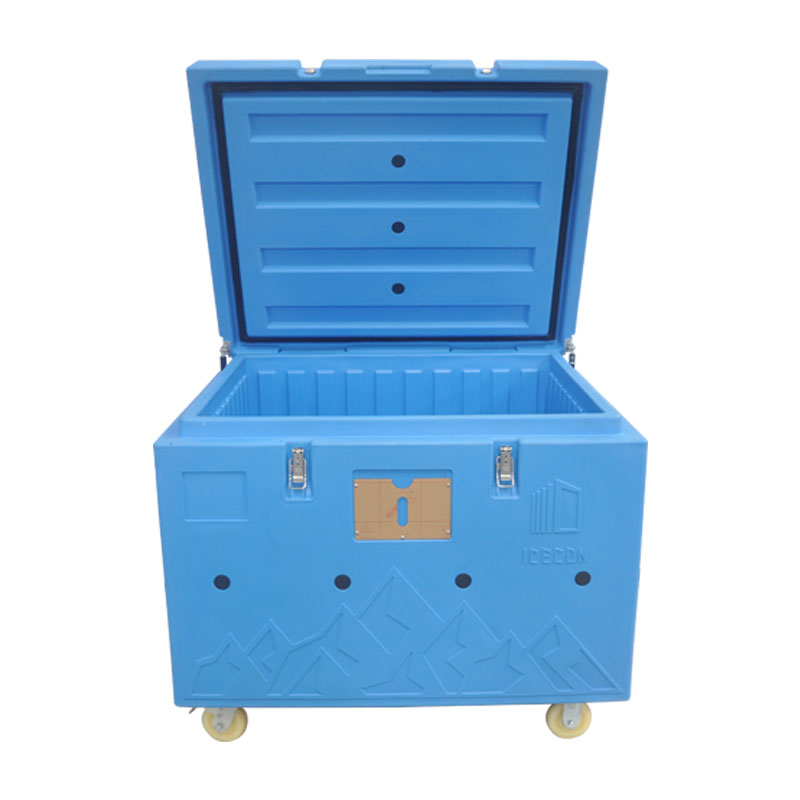
3. Are there reusable options that are cost-effective? Absolutely. Rotomolded polyethylene boxes with replaceable liners can last 5+ years. Though upfront costs are 50% higher, they pay back in 18-24 months by eliminating single-use waste—ideal for high-volume shippers.
4. What certifications should I look for in insulated boxes? Key ones include ISTA 7D for temperature control, ASTM F2097 for venting safety, and IATA/ICAO compliance for air transport. HORECO2 boxes meet these, and we provide documentation to streamline your audits.
5. How can I test my current boxes' performance? Conduct a sublimation test: weigh dry ice before and after a simulated shipment in controlled environments. If loss exceeds 10-15% per day, it's time to upgrade. We offer lab testing services to benchmark against industry standards.
Wrapping Up and Next Steps
Insulated shipping boxes might seem like simple containers, but as we've seen, they're linchpins in the cold chain—where failure means more than lost goods; it means lost trust and revenue. By addressing thermal inefficiency, safety risks, and cost traps with engineered solutions, businesses can turn dry ice shipping from a gamble into a reliable process. HORECO2's expertise bridges this gap, blending material science with real-world logistics know-how. If this sparked questions about your own setup, don't leave it to chance. Download our detailed technical whitepaper on advanced insulation materials or reach out to our sales engineers for a personalized consultation. Because in shipping, the right box isn't just a detail—it's your first line of defense.
