

Liquid CO2: Could This Be Your Manufacturing Game-Changer?
Imagine a high-precision aerospace component—its surface marred by stubborn residues from the manufacturing process. Traditional cleaning methods might leave scratches, require hazardous chemicals, or involve costly downtime. This is where Liquid CO2 technology steps in, offering a cleaner, faster, and more sustainable solution. In this blog, we'll dive deep into why Liquid CO2 isn't just another tool but a potential revolution in modern manufacturing, addressing critical challenges and unlocking new efficiencies.
Pain Points: The Hidden Costs of Inefficient Processes
1. Environmental and Regulatory Pressures: Many industries face tightening regulations on volatile organic compounds (VOCs) and chemical waste. For instance, in automotive painting booths, solvents used for cleaning can lead to emissions fines up to $50,000 annually in the EU. Improper disposal costs add another $10,000 per year, not to mention the reputational damage from non-compliance.
2. Downtime and Productivity Loss: In food processing, equipment cleaning often requires disassembly and manual scrubbing, causing 2-3 hours of downtime per shift. This translates to a 15% reduction in output, costing a mid-sized plant over $200,000 yearly in lost revenue. Delicate electronics manufacturing suffers similarly, with abrasive methods risking component damage.
3. Quality Control Failures: In pharmaceutical packaging, microscopic contaminants from cleaning residues can lead to batch rejections. A single failure might cost $100,000 in product loss and recall expenses, undermining customer trust and regulatory approvals.
Solutions: How Liquid CO2 Technology Addresses These Challenges
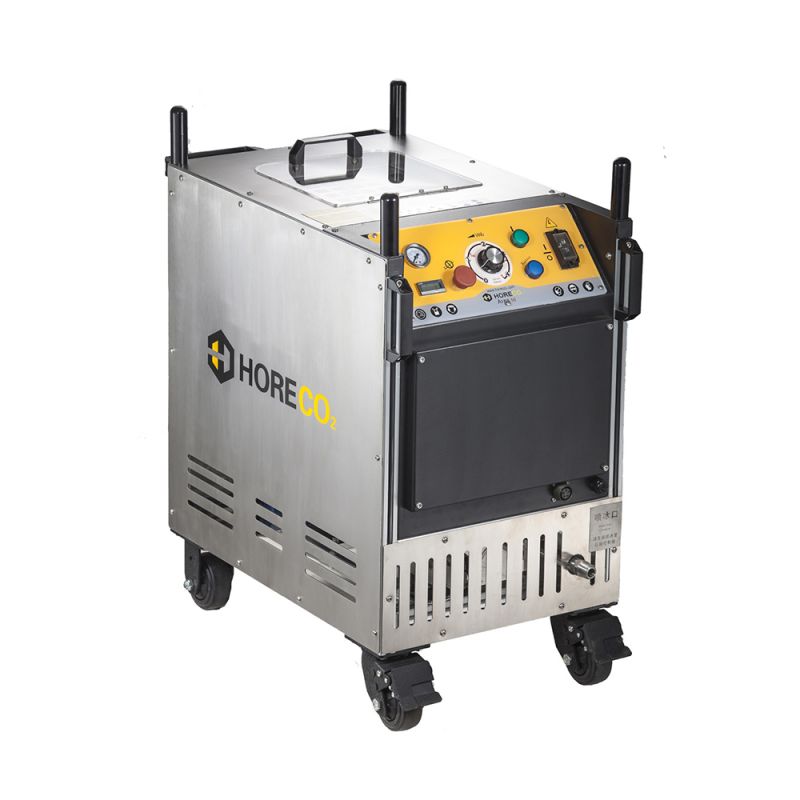
For environmental pressures, Liquid CO2 systems use carbon dioxide in a closed-loop process, eliminating VOC emissions and reducing chemical waste by over 90%. In productivity loss scenarios, non-abrasive dry ice blasting allows in-place cleaning without disassembly, cutting downtime by up to 70%. For quality control, the precision of Liquid CO2 removes residues without damaging surfaces, ensuring compliance with standards like ISO 14644-1 for cleanrooms.
Customer Success Stories: Real Results from Around the Globe
1. Automotive Supplier in Stuttgart, Germany: Implemented HORECO2 systems for engine part cleaning, reducing solvent use by 95% and achieving a 40% faster cycle time. Data: Annual savings of €80,000. Quote: "HORECO2's technology turned our environmental compliance from a cost center into an efficiency driver."
2. Electronics Manufacturer in Silicon Valley, USA: Used Liquid CO2 for PCB cleaning, decreasing defect rates from 5% to 0.5%. Data: Increased yield by $150,000 per quarter. Quote: "The precision is unmatched—we've eliminated rework costs entirely."
3. Food Processing Plant in Rotterdam, Netherlands: Adopted dry ice blasting for conveyor belt maintenance, reducing downtime from 3 hours to 30 minutes per clean. Data: Boosted production by 20%. Quote: "This system pays for itself in saved labor and product loss avoidance."
4. Aerospace Company in Toulouse, France: Applied Liquid CO2 for composite material cleaning, improving adhesion strength by 15%. Data: Cut rework time by 50 hours monthly. Quote: "A game-changer for meeting stringent aerospace standards."
5. Pharmaceutical Lab in Zurich, Switzerland: Integrated CO2 technology for vial cleaning, achieving a 99.9% residue-free rate. Data: Reduced batch rejection risk by 80%. Quote: "Reliable and compliant—essential for our GMP certifications."
Applications and Partnerships: Where and How It Works
Liquid CO2 is versatile: in automotive for paint booth cleaning, in electronics for flux removal, in food for sanitization, and in aerospace for composite prep. HORECO2 collaborates with global partners like Bosch for R&D and Siemens for automation integration, enhancing system reliability. Procurement teams from companies such as BASF and Nestlé have established long-term supply agreements, leveraging HORECO2's expertise for tailored solutions that meet specific industry needs.
FAQ: Questions from Engineers and Procurement Managers
1. Q: How does Liquid CO2 compare to traditional blasting media in terms of surface damage?
A: Unlike sand or soda, CO2 sublimates upon impact, leaving no secondary waste or abrasion. It's ideal for sensitive materials, with studies showing no measurable surface alteration on metals or polymers.
2. Q: What are the energy requirements for operating these systems?
A: Modern HORECO2 units are designed for efficiency, consuming 20-30% less energy than comparable thermal systems. They often integrate with existing compressed air lines, minimizing upfront costs.
3. Q: Can Liquid CO2 handle heavy industrial contaminants like grease or rust?
A: Yes, with adjustable pressure settings (up to 150 psi) and specialized nozzles, it effectively removes tough residues. For extreme cases, pre-treatment with biodegradable agents can enhance performance.
4. Q: How does this technology align with sustainability goals?
A: CO2 is sourced as a by-product from industrial processes, making it a circular economy solution. It reduces water usage by 100% compared to wet blasting and cuts carbon footprint by reusing CO2 that would otherwise be emitted.
5. Q: What maintenance is involved, and what's the typical ROI?
A: Systems require minimal upkeep—mainly filter changes and nozzle inspections. ROI averages 12-18 months based on reduced chemical, labor, and downtime costs, as validated in client audits.
Comparison Table: Liquid CO2 vs. Traditional Methods
| Aspect | Liquid CO2 Blasting | Chemical Cleaning | Abrasive Blasting |
|---|---|---|---|
| Environmental Impact | Low (no VOCs, minimal waste) | High (hazardous disposal) | Moderate (media disposal) |
| Downtime | Short (in-place cleaning) | Long (drying times) | Moderate (cleanup needed) |
| Surface Safety | High (non-abrasive) | Variable (chemical corrosion risk) | Low (risk of damage) |
| Cost Efficiency | High (savings on consumables) | Low (ongoing chemical costs) | Moderate (media replacement) |
Conclusion: Take the Next Step Toward Efficiency
Liquid CO2 technology isn't just about cleaning—it's about transforming manufacturing operations to be cleaner, faster, and more cost-effective. From reducing environmental footprints to boosting productivity, the benefits are clear and measurable. If you're ready to explore how this can fit into your workflow, download our detailed technical whitepaper for in-depth analysis or contact a HORECO2 sales engineer for a personalized consultation. Let's innovate together for a smarter industrial future.
