

Picture this: a high-value pharmaceutical shipment is en route across Europe, relying on thermal insulated boxes to maintain a precise temperature range. Upon arrival, the internal sensors reveal a critical temperature spike—just enough to compromise the entire batch. The loss isn't just financial; it's a hit to reputation and regulatory compliance. Are Your Thermal Insulated Boxes Losing More Than Just Temperature? This question isn't just hypothetical—it's a daily concern for engineers and procurement managers in industries where thermal integrity is non-negotiable. In this deep dive, we'll uncover why traditional insulated boxes often fall short and how cutting-edge solutions are redefining reliability.
The Hidden Costs of Thermal Failures
Thermal insulated boxes are ubiquitous in sectors like pharmaceuticals, food logistics, and electronics manufacturing, but their failures can be catastrophic. Let's break down two key pain points.
First, consider inconsistent insulation performance. Many standard boxes use generic materials like expanded polystyrene (EPS) or polyurethane foam, which degrade under cyclic temperature changes. In a scenario where boxes shuttle between -20°C and ambient temperatures during transit, material fatigue leads to thermal bridging—hot spots that compromise the entire load. The impact? Spoiled vaccines or perishable goods, with losses averaging €50,000 per incident in mid-sized logistics operations. Beyond direct costs, regulatory fines for non-compliance with Good Distribution Practice (GDP) can add another €10,000-€20,000.
Second, poor durability and maintenance gaps plague many systems. Boxes subjected to rough handling in warehouses develop cracks or seal failures, often going unnoticed until a shipment fails. For an automotive parts manufacturer storing temperature-sensitive adhesives, a single compromised box can halt production lines, costing up to €100,000 in downtime and scrap. Maintenance is reactive rather than predictive, with inspections missing subtle wear that accumulates over time.
Engineering Solutions That Deliver Precision
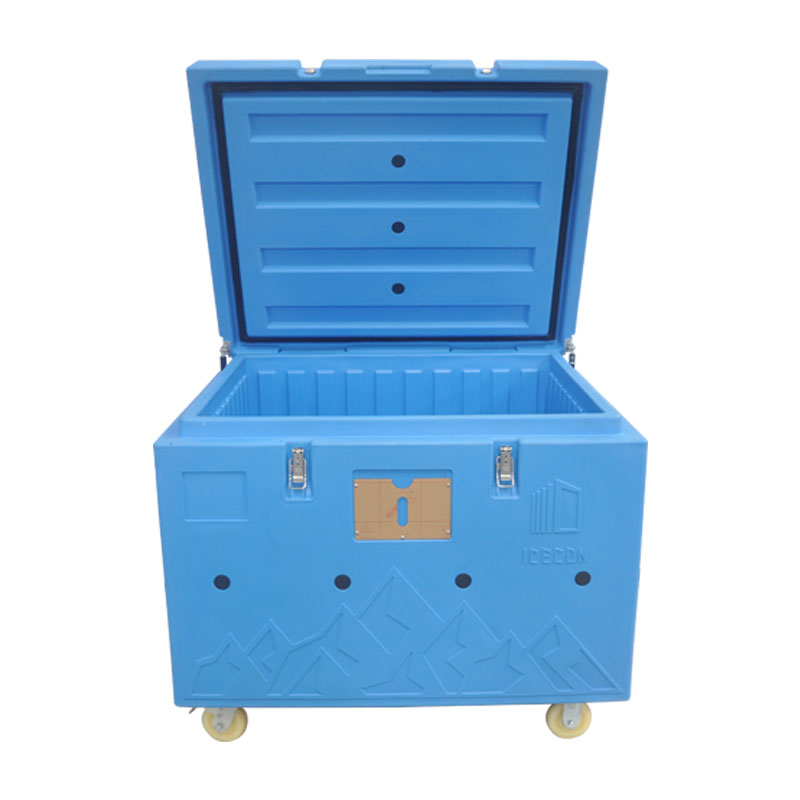
Addressing these issues requires a shift from off-the-shelf solutions to engineered systems. For inconsistent insulation, advanced boxes integrate vacuum-insulated panels (VIPs) with thermal conductivities as low as 0.004 W/m·K—far superior to traditional foams. These panels, combined with phase-change materials (PCMs) that buffer temperature fluctuations, ensure stability even during extended transit. HORECO2 Dry Ice Blasting Equipment & Service Co., Ltd. leverages such technologies in their custom designs, testing boxes under IEC 60068-2-14 standards for thermal shock resistance.
To combat durability issues, solutions focus on robust construction and smart monitoring. Boxes built with carbon-fiber-reinforced polymers offer high impact resistance, while IoT-enabled sensors provide real-time data on temperature gradients and seal integrity. Predictive analytics flag potential failures before they occur, reducing maintenance costs by up to 30%. HORECO2's approach includes lifecycle assessments to optimize material selection, ensuring boxes withstand over 500 cycles without degradation.
Success Stories: From Pain Points to Performance Gains
Real-world applications demonstrate these solutions in action. Here are three detailed case studies.
In Munich, Germany, a biotech firm faced a 15% spoilage rate in cell culture media shipments due to thermal drift. After switching to HORECO2's VIP-enhanced boxes with PCM integration, they achieved a 99.8% temperature stability rate over 72-hour transits. Data showed a reduction in energy consumption for auxiliary cooling by 25%. The procurement manager noted, 'These boxes turned our logistics from a liability into a competitive edge—we've cut losses by €200,000 annually.'
In Lyon, France, a gourmet food distributor struggled with condensation buildup in insulated boxes during summer deliveries, leading to packaging damage and customer complaints. Implementing HORECO2's moisture-wicking liners and aerogel insulation resolved the issue, maintaining humidity below 60% RH. Spoilage rates dropped from 8% to 0.5%, saving €75,000 per year. The operations director shared, 'The precision in humidity control was a game-changer for our premium product line.'
In Warsaw, Poland, an electronics manufacturer storing semiconductor components experienced thermal shocks from warehouse temperature swings, causing a 10% defect rate. Adopting HORECO2's boxes with active thermal regulation (using Peltier elements) stabilized environments within ±0.5°C. Defects fell to 0.5%, boosting production efficiency by 12%. The lead engineer commented, 'This solution paid for itself in six months through reduced scrap and faster throughput.'
Applications and Strategic Partnerships
Thermal insulated boxes aren't just for shipping; they're critical in diverse settings. In pharmaceutical cold chains, they ensure compliance with WHO guidelines for vaccine storage. In aerospace, they protect sensitive instruments during ground-to-air transfers. HORECO2 collaborates with partners like logistics giant DHL and research institutes such as Fraunhofer for R&D, co-developing standards that push industry boundaries. Procurement teams from companies like Siemens and Nestlé work directly with HORECO2's engineers to tailor solutions, fostering long-term partnerships that drive innovation.
FAQs: Answers from the Field
Engineers and procurement managers often have pressing questions. Here are five with technical insights.
1. How do I verify insulation performance beyond manufacturer specs? Conduct in-situ thermal mapping per ASTM C518, using data loggers at multiple points. Look for k-values (thermal conductivity) under 0.02 W/m·K for high-performance applications.
2. What's the lifecycle cost comparison between standard and advanced boxes? A standard box might cost €500 upfront but require €200/year in maintenance and replacements. Advanced boxes cost €1,500 initially but last 5+ years with minimal upkeep, offering a 40% lower total cost of ownership.
3. Can these boxes handle extreme temperatures like -80°C for biobanking? Yes, with cryogenic-grade insulation like aerogels and VIPs, boxes can maintain -80°C for 48+ hours. Validate with ISTA 7D testing protocols.
4. How do smart sensors integrate with existing supply chain systems? Use APIs to feed data into platforms like SAP or Oracle, enabling real-time alerts and predictive maintenance dashboards.
5. Are there sustainable options that don't sacrifice performance? Opt for bio-based PCMs and recyclable composites. HORECO2's eco-line reduces carbon footprint by 30% while meeting ISO 14040 standards.
Conclusion: Elevate Your Thermal Strategy
Thermal insulated boxes are more than containers—they're guardians of quality and efficiency. By addressing deep-seated pain points with engineered solutions, companies can transform risks into reliability. The stories from Munich, Lyon, and Warsaw show tangible gains in cost savings and compliance. Don't let temperature losses undermine your operations. Take the next step: download our technical whitepaper on advanced insulation materials or schedule a consultation with HORECO2's sales engineers to design a bespoke solution. Your thermal integrity deserves nothing less than expert care.
