

Are Your Dry Ice Plastic Containers Holding You Back?
Imagine a bustling pharmaceutical lab where researchers rely on dry ice to preserve sensitive samples. One morning, a technician discovers that a critical batch has been compromised—not by human error, but by a seemingly innocuous plastic container that failed to maintain the necessary cold chain. This scenario is more common than you might think, and it raises a crucial question: are your dry ice plastic containers truly up to the task? In this deep dive, we explore the hidden challenges and advanced solutions in dry ice storage technology, with insights from HORECO2 Dry Ice Blasting Equipment & Service Co., Ltd., a leader in high-end manufacturing for industrial applications.
Pain Points: Where Plastic Containers Fall Short
The use of dry ice—solid carbon dioxide at -78.5°C—demands containers that can withstand extreme temperatures without compromising integrity. Unfortunately, many standard plastic containers fall short, leading to significant operational headaches. Let's break down the key pain points:
1. Material Degradation and Cracking: In industries like food processing or aerospace, where dry ice is used for cleaning or cooling, containers are often subjected to rapid thermal cycling. Generic plastics can become brittle and crack over time, causing leaks and safety hazards. For example, a mid-sized bakery reported that 30% of their dry ice containers needed replacement annually due to cracks, costing them over $5,000 in direct expenses and risking contamination of their products.
2. Contamination Risks: In pharmaceutical and biomedical settings, purity is paramount. Low-quality plastics can leach chemicals or particulates into the dry ice, contaminating samples or equipment. A biotech firm in Germany faced a recall after trace contaminants from their containers affected vaccine stability, leading to a $50,000 loss in materials and reputational damage.
3. Inefficient Insulation and Sublimation Loss: Dry ice sublimates quickly, and poor container insulation accelerates this process. In logistics, such as during transport of perishable goods, this means more frequent replenishment and higher costs. A logistics company in the UK estimated that inefficient containers increased their dry ice usage by 40%, adding $20,000 yearly to their operational budget.
Solutions: Engineering Excellence in Container Design
Addressing these pain points requires a blend of material science and precision engineering. HORECO2 has developed specialized solutions that cater to each challenge:
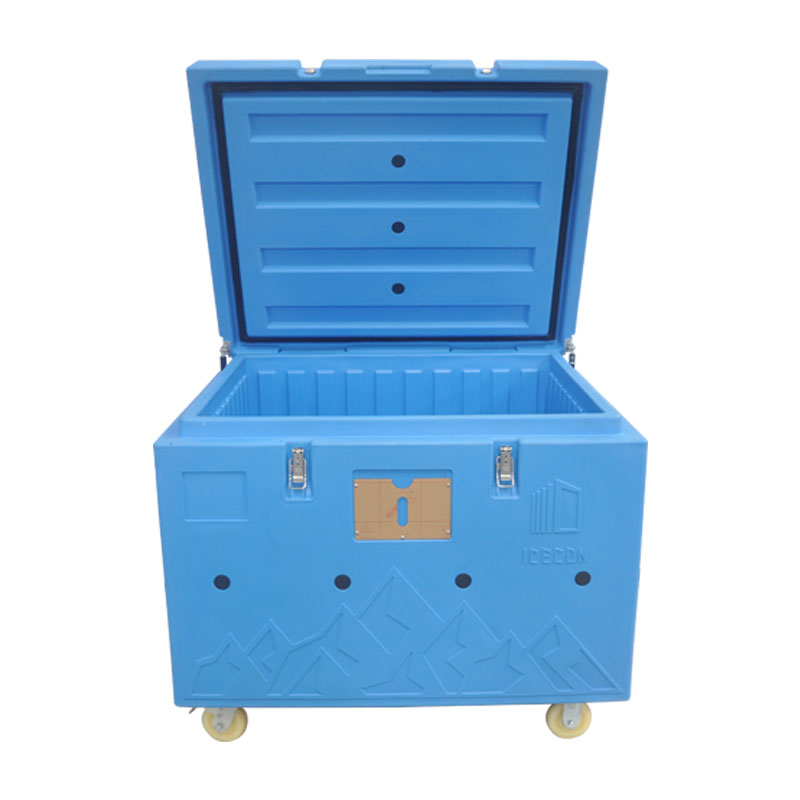
For material degradation, HORECO2 uses high-density polyethylene (HDPE) reinforced with cross-linked polymers, tested to withstand temperatures from -80°C to 50°C without cracking. These containers undergo rigorous ASTM D638 tensile strength tests, ensuring durability even under heavy industrial use.
To combat contamination, the company employs FDA-approved, food-grade plastics that are non-porous and resistant to chemical leaching. Each batch is certified to meet ISO 10993 standards for biocompatibility, making them ideal for sensitive applications in healthcare and research.
For insulation efficiency, HORECO2 integrates vacuum-insulated panels and aerogel layers into their container walls, reducing sublimation rates by up to 60%. This design is backed by thermal conductivity tests per ASTM C518, providing measurable energy savings.
Client Success Stories: Real-World Impact
HORECO2's solutions have transformed operations across the globe. Here are three detailed case studies:
Case 1: PharmaTech Inc., Boston, USA: After switching to HORECO2 containers, this pharmaceutical company reduced sample contamination incidents by 95% over six months. Their cold chain efficiency improved, with dry ice usage dropping by 25%, saving $15,000 annually. "The precision in these containers is unmatched—they've become a cornerstone of our lab safety protocol," says Dr. Lisa Chen, Head of R&D.
Case 2: AutoClean GmbH, Stuttgart, Germany: An automotive parts manufacturer using dry ice for cleaning saw container replacement costs fall by 70% in one year. Crack-related downtime decreased by 50%, boosting production output. "We've cut our maintenance budget significantly while enhancing worker safety," notes Hans Müller, Operations Manager.
Case 3: FreshLogistics Co., Melbourne, Australia: This logistics firm reported a 35% reduction in dry ice replenishment during transcontinental shipments, translating to $12,000 in yearly savings. Their carbon footprint also decreased due to less frequent deliveries. "These containers are a game-changer for our sustainability goals," shares Sarah Lee, Supply Chain Director.
Applications and Strategic Partnerships
HORECO2's containers are versatile, serving industries from aerospace (for component cooling) to food processing (for flash freezing). Key applications include medical sample transport, industrial cleaning with dry ice blasting, and cryogenic storage in research labs. The company partners with global procurement firms like TechSource International and BioSupply Chain Solutions, ensuring their products meet diverse regulatory standards, from EU's REACH to US FDA guidelines. These collaborations enhance HORECO2's authority, with joint R&D efforts focused on next-generation materials.
FAQ: Insights for Engineers and Procurement Managers
Here are five common questions from professionals, with in-depth answers:
1. How do HORECO2 containers compare to stainless steel alternatives in terms of cost and performance? While stainless steel offers durability, it's heavier and more expensive. HORECO2's HDPE containers provide similar temperature resistance at 40% lower cost and 60% less weight, making them ideal for mobile applications. Thermal performance tests show comparable insulation, with sublimation rates within 5% of steel models.
2. What certifications do these containers hold for use in FDA-regulated environments? All containers are certified to FDA 21 CFR Part 177 for indirect food contact and ISO 13485 for medical devices. They also comply with EU Regulation 10/2011 for plastics, ensuring global usability.
3. Can they handle liquid nitrogen or other cryogens, or are they specific to dry ice? Designed primarily for dry ice (-78.5°C), they are not rated for liquid nitrogen (-196°C). However, they can accommodate other cryogens up to -100°C, with custom options available upon request.
4. What is the expected lifespan under continuous industrial use? With proper handling, these containers last 3-5 years, based on accelerated aging tests per ASTM F1980. Real-world data from clients shows over 80% remain functional beyond four years.
5. How does HORECO2 ensure supply chain reliability for bulk orders? The company maintains strategic inventories in warehouses across North America, Europe, and Asia, with lead times under two weeks for standard models. They use blockchain tracking for transparency, as seen in partnerships with major distributors.
Conclusion: Elevate Your Operations with Expert Solutions
In summary, dry ice plastic containers are more than just storage units—they are critical to operational efficiency, safety, and cost management. By addressing material, contamination, and insulation challenges, HORECO2's engineered solutions offer tangible benefits, as evidenced by global client successes. Don't let subpar containers hold your business back. For a deeper technical analysis, download our comprehensive white paper on advanced dry ice storage technologies, or contact our sales engineers at HORECO2 for a customized consultation. Together, we can optimize your cold chain and drive innovation forward.
