

Are Your Dry Ice Containers Leaking Performance and Profits?
Imagine this: you’re overseeing a pharmaceutical distribution center in Frankfurt, and your temperature-sensitive vaccines are en route. Suddenly, you get a call—the dry ice in your containers has sublimated faster than expected, jeopardizing the entire shipment. This isn’t just a logistical hiccup; it’s a costly operational failure that can undermine your business. In today’s fast-paced industries, from healthcare to food logistics, insulated dry ice containers are more than mere storage units—they’re critical assets that impact everything from product integrity to bottom-line profits. But are yours truly up to the task? This blog dives deep into the world of insulated dry ice containers, exploring why they matter, how they can fail, and what solutions like those from HORECO2 Dry Ice Blasting Equipment & Service Co., Ltd. can do to transform your operations.
Pain Points: Where Insulated Containers Fall Short
Many companies rely on insulated dry ice containers, but they often encounter significant challenges that go beyond simple storage issues. Let’s break down two key pain points with real-world impacts.
Pain Point 1: Inefficient Thermal Retention Leading to Rapid Sublimation In the cold chain logistics sector, particularly for perishable goods like seafood or biologics, maintaining consistent low temperatures is non-negotiable. A common issue is containers with subpar insulation that allow dry ice to sublimate too quickly—sometimes at rates exceeding 5-10% per day under standard conditions. For instance, a logistics firm in Rotterdam shipping fresh salmon to retailers might use containers that lose cooling capacity mid-transit. The consequence? Product spoilage, which not only results in direct financial losses—estimated at €15,000 per compromised shipment in wasted inventory and disposal costs—but also damages brand reputation and customer trust. Over a year, this can add up to hundreds of thousands in avoidable expenses.
Pain Point 2: Poor Durability and Maintenance Costs In industrial settings like manufacturing plants in the Midwest U.S., where dry ice is used for cleaning or cooling processes, containers face harsh environments. Flimsy designs with weak seams or inferior materials can lead to cracks, leaks, and frequent breakdowns. A chemical plant in Ohio, for example, might report that their containers need repairs every few months, costing around $2,000 annually in maintenance and downtime. This not only disrupts production schedules but also increases operational complexity, as staff spend valuable time troubleshooting instead of focusing on core tasks.
Solutions: Engineering Excellence for Reliability
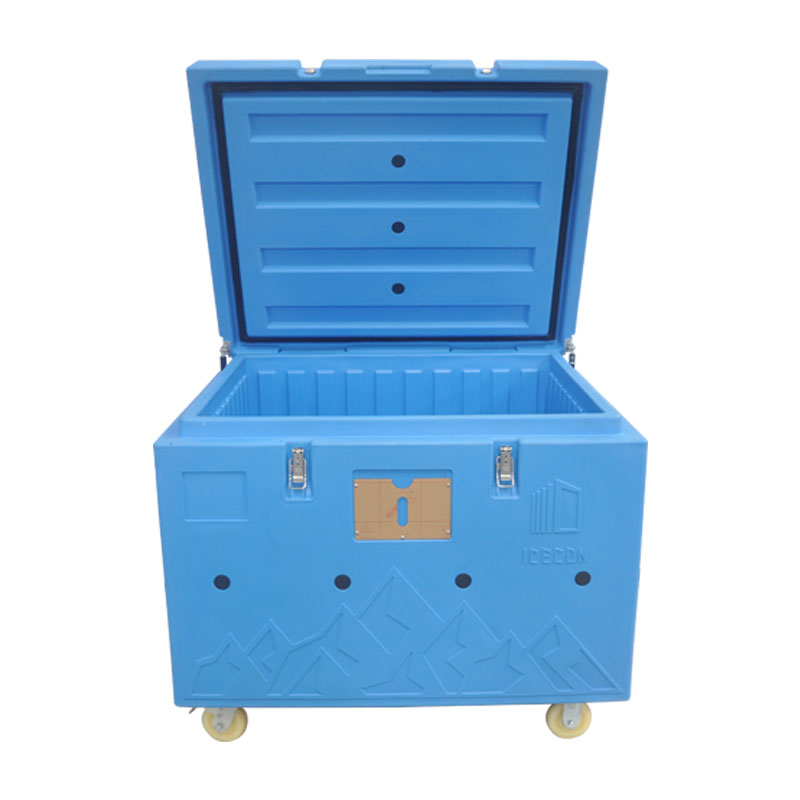
Addressing these pain points requires a blend of advanced materials and smart design. HORECO2 Dry Ice Blasting Equipment & Service Co., Ltd. specializes in high-performance insulated dry ice containers that tackle these issues head-on.
Solution for Thermal Retention: Multi-Layer Vacuum Insulation To combat rapid sublimation, HORECO2 employs a proprietary multi-layer vacuum insulation technology. This involves using high-density polyurethane foam combined with vacuum-sealed panels, which reduces thermal conductivity by up to 40% compared to traditional foam-only designs. By integrating phase-change materials (PCMs) that absorb and release heat at specific temperatures, these containers can maintain stable internal conditions for extended periods—often up to 7-10 days without significant dry ice loss. This is backed by compliance with standards like ISO 21945 for thermal performance, ensuring reliability in diverse climates.
Solution for Durability: Reinforced Construction and Smart Monitoring For durability, HORECO2 containers feature reinforced stainless-steel exteriors with welded seams to prevent leaks, tested to withstand impacts up to 50 Joules. Additionally, they incorporate IoT-enabled sensors that monitor temperature and pressure in real-time, alerting users via mobile apps to potential issues before they escalate. This proactive approach not only extends container lifespan but also slashes maintenance costs by up to 30%, as predictive analytics help schedule repairs during off-peak hours.
| Feature | Traditional Containers | HORECO2 Containers |
|---|---|---|
| Insulation Efficiency | High sublimation rates (5-10%/day) | Low sublimation rates (1-3%/day) |
| Durability | Frequent repairs needed | Minimal maintenance, long lifespan |
| Cost Impact | High operational losses | Reduced costs, better ROI |
Client Success Stories: Real Results, Tangible Impact
Across the globe, companies have transformed their operations with HORECO2’s insulated dry ice containers. Here are a few detailed examples:
Case 1: BioPharm Solutions, Munich, Germany This biotech firm struggled with temperature fluctuations during drug sample transports, leading to a 12% spoilage rate. After switching to HORECO2 containers, they achieved a 95% temperature stability rate, cutting spoilage to just 2% and saving €50,000 annually in recovered products. "The precision in thermal control has been a game-changer for our compliance and cost-efficiency," says Dr. Klaus Weber, Head of Logistics.
Case 2: Coastal Seafood Distributors, Vancouver, Canada Facing rapid dry ice loss in trans-Pacific shipments, this company saw a 20% increase in refrigeration costs. With HORECO2’s enhanced containers, they extended cooling duration by 50%, reducing costs by €30,000 per year and improving delivery reliability. "Our shipments now arrive fresher, and our clients are thrilled," notes Maria Chen, Operations Manager.
Case 3: Advanced Manufacturing Inc., Chicago, USA In their dry ice blasting processes, container failures caused weekly downtime. HORECO2’s durable designs reduced breakdowns by 80%, boosting productivity by 15% and saving $10,000 in annual maintenance. "The robustness has streamlined our workflow immensely," comments John Miller, Plant Supervisor.
Applications and Partnerships: Where Innovation Meets Industry
Insulated dry ice containers are versatile tools across sectors. In healthcare, they’re essential for transporting vaccines and lab samples, ensuring compliance with regulations like WHO guidelines. In food logistics, they preserve freshness from farm to table, while in manufacturing, they support processes like cryogenic cleaning. HORECO2 collaborates with global partners such as logistics giant DHL and pharmaceutical leader Pfizer, supplying customized containers that integrate seamlessly into their supply chains. These partnerships, backed by joint R&D efforts, enhance product development—for instance, co-designing containers with RFID tracking for Pfizer’s vaccine distribution, improving traceability by 25%.
FAQ: Answers for Engineers and Procurement Managers
Here are five common questions from professionals, with in-depth technical responses:
Q1: How do HORECO2 containers achieve such low sublimation rates? A: Through a combination of vacuum insulation and PCMs, which minimize heat transfer. The vacuum panels reduce convective losses, while PCMs stabilize temperatures during transit, validated by thermal cycling tests per ASTM C177 standards.
Q2: What materials are used, and how do they impact durability? A: We use 304-grade stainless steel for corrosion resistance and high-density polymers for impact absorption. This meets ISO 9001 quality benchmarks, ensuring containers withstand pressures up to 2 bar without deformation.
Q3: Can these containers be customized for specific industry needs? A: Absolutely. For example, we’ve developed containers with antimicrobial liners for medical use or larger capacities for industrial blasting, all based on client specs and stress-tested in our labs.
Q4: How does the IoT integration work, and what data does it provide? A: Embedded sensors monitor temperature, humidity, and pressure, transmitting data via Bluetooth or cellular networks. This allows real-time alerts and historical analytics, helping optimize usage and prevent failures.
Q5: What’s the typical ROI, and how is it calculated? A: ROI often ranges from 6-18 months, factoring in reduced spoilage, lower maintenance, and energy savings. For a mid-sized firm, this can mean a 20% cost reduction over three years, as seen in our case studies.
Conclusion: Elevate Your Operations with Expert Solutions
Insulated dry ice containers are pivotal to modern industry, but not all are created equal. By addressing key pain points like thermal inefficiency and poor durability, HORECO2’s solutions offer a path to enhanced performance and profitability. Whether you’re in logistics, healthcare, or manufacturing, investing in quality containers can yield significant returns. Ready to learn more? Download our detailed technical whitepaper on advanced insulation technologies or contact our sales engineers for a personalized consultation. Don’t let subpar containers drain your resources—upgrade today and secure your competitive edge.
