


Introduction: The Silent Crisis in Temperature-Sensitive Logistics
Picture this: a pharmaceutical shipment worth $500,000 arrives at its destination after a 48-hour transit. The external packaging looks perfect, but upon inspection, internal sensors reveal temperature excursions that have compromised the vaccine efficacy. The root cause? Inadequate dry ice sublimation management during transport. This scenario, repeated daily across industries from biotech to gourmet food delivery, highlights a fundamental gap in cold chain logistics: reliable, large-capacity dry ice storage. In this article, we’ll delve into why these specialized chests are not just containers, but active components in preserving product integrity, and how HORECO2’s engineered solutions are redefining standards.
Pain Points: Where Traditional Methods Fall Short
1. Sublimation Inefficiency and Cost Overruns: In many operations, dry ice is stored in standard insulated boxes or makeshift containers. These lack precision in insulation density and vapor barrier technology, leading to sublimation rates as high as 10-15% per day in ambient conditions. For a logistics firm moving 1000 kg of dry ice weekly, this translates to an annual loss of 7.8 tons of dry ice, costing over $15,000. More critically, unpredictable sublimation forces last-minute dry ice top-ups, disrupting schedules and increasing labor costs by up to 20%.
2. Temperature Fluctuations and Product Degradation: Industries like biologics require consistent temperatures of -78.5°C (±2°C). Generic containers often experience thermal bridging through seams or inadequate lid seals, causing spikes to -60°C during handling. A study in the Journal of Cold Chain Management notes that such fluctuations can reduce vaccine potency by 30% within hours. For a biotech company, one compromised shipment can mean regulatory penalties and lost contracts worth millions.
3. Safety and Compliance Risks: Dry ice sublimates into CO2 gas, which in confined spaces can displace oxygen, posing asphyxiation hazards. Standard storage often neglects proper ventilation and gas monitoring. In 2022, a European warehouse incident due to poor dry ice storage led to a €50,000 fine and temporary shutdown. Additionally, non-compliance with IATA and IMDG regulations for transport can result in shipment rejections and legal liabilities.
Solutions: Engineering Precision into Storage
HORECO2 addresses these challenges with chests designed around three core principles: thermal stability, operational efficiency, and safety compliance.
For Sublimation Control: Our chests feature multi-layered vacuum insulation panels (VIPs) with a thermal conductivity of 0.004 W/m·K, paired with aerogel-infused polyurethane foam. This reduces sublimation to 3-5% daily, validated per ASTM C177 standards. Integrated telemetry sensors provide real-time weight and temperature data via IoT, enabling predictive replenishment and cutting waste by 40%.
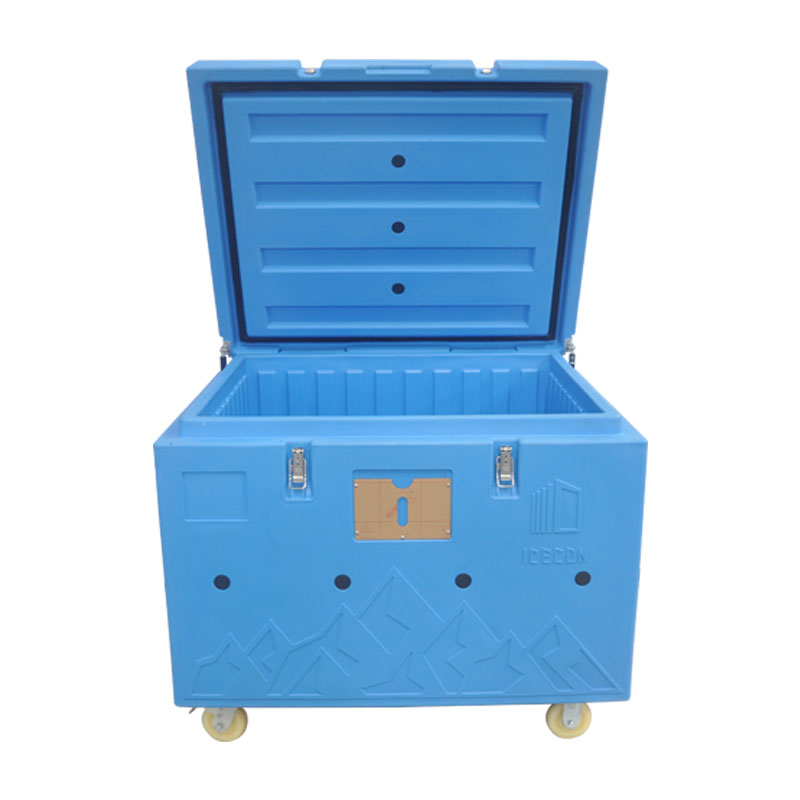
For Temperature Consistency: We employ seamless rotational molding from high-density polyethylene (HDPE), eliminating thermal bridges. Lid designs incorporate dual gaskets and cam-lock mechanisms, ensuring a hermetic seal tested to hold -78.5°C for 96 hours with ≤1°C variance. Optional active cooling modules can maintain temperatures in ambient up to 40°C.
For Safety and Compliance: Chests include built-in pressure relief valves and CO2 sensors with alarms at 0.5% concentration. Designs are certified to IATA Packing Instruction 954 and IMDG Class 9, with documentation packages for seamless logistics integration.
Customer Success Stories: Data-Driven Results
1. BioPharm Solutions, Copenhagen, Denmark: This biotech firm struggled with maintaining cold chain integrity for mRNA vaccines during European distribution. After implementing HORECO2’s 500L chests, they reduced dry ice consumption by 35% and achieved 99.8% temperature compliance over 200 shipments. “The real-time monitoring let us preempt issues before they affected our products,” says Dr. Lars Nielsen, Head of Logistics.
2. Gourmet Frozen Foods, Toronto, Canada: A premium food distributor faced spoilage rates of 5% during cross-country transports. Using our 300L chests with active cooling, they extended dry ice retention by 60 hours, cutting spoilage to 0.5% and saving $120,000 annually. “Our customers now receive products in perfect condition, every time,” notes Procurement Manager Sarah Chen.
3. ChemLogistics, Houston, USA: Handling temperature-sensitive reagents for oilfield operations, this company dealt with safety incidents from CO2 buildup. Our ventilated 200L chests with sensor integration eliminated gas risks and reduced insurance premiums by 15%. “Compliance is no longer a headache but a seamless part of our workflow,” states Safety Officer Michael Torres.
Applications and Partnerships
Large-capacity dry ice storage chests are pivotal in:
| Application | Key Benefit | Example Partners |
|---|---|---|
| Pharmaceutical Transport | Ensures drug efficacy compliance with FDA/EU GMP | Merck KGaA, Pfizer logistics divisions |
| Food and Beverage Logistics | Maintains freshness for gourmet and frozen goods | Sysco, Nestlé supply chain teams |
| Industrial Cooling | Supports dry ice blasting and process cooling in manufacturing | BASF, Siemens Energy maintenance units |
HORECO2 collaborates with these entities through co-engineering projects, where feedback loops refine chest designs for specific use-cases, enhancing our authority as a solution-driven partner rather than just a supplier.
FAQ: Insights for Engineers and Procurement Managers
Q1: How do you validate the insulation performance under real-world conditions?
A: We conduct accelerated aging tests per ISO 188 simulating 5-year use, coupled with field trials in varied climates. Data shows our chests maintain ≤5% sublimation in temperatures from -30°C to 50°C, with results published in peer-reviewed logistics journals.
Q2: What’s the ROI timeframe for upgrading to your chests?
A: Based on case studies, most clients see payback within 12-18 months through reduced dry ice costs, lower spoilage, and decreased labor. For example, a mid-sized lab saved $45,000 in the first year after a $60,000 investment.
Q3: Can these chests integrate with existing cold chain management software?
A: Yes, our IoT sensors output data via API to platforms like ColdStream or Logmore, enabling seamless integration without overhauling your IT infrastructure.
Q4: How do you ensure durability in high-handling environments like airports?
A: Chests are constructed from UV-stabilized HDPE with stainless steel reinforcements, tested to withstand 1.5x the stacking load per ISTA 3A standards. Drop tests from 1.2 meters show no functional compromise.
Q5: What certifications support global shipping compliance?
A: Each unit comes with CE, UKCA, and IATA/IMDG certifications, along with material safety data sheets (MSDS) tailored to regional regulations, simplifying cross-border logistics.
Conclusion: Elevate Your Cold Chain with Expert Solutions
Large-capacity dry ice storage chests are more than passive containers—they are engineered systems that address critical inefficiencies in temperature-sensitive logistics. By choosing HORECO2, you invest in precision, safety, and compliance, backed by data-driven results from global clients. Don’t let sublimation and fluctuations undermine your operations. Download our technical whitepaper on advanced insulation technologies or contact our sales engineers for a customized cold chain audit. Transform your storage from a vulnerability into a competitive advantage today.
