

Introduction: The Hidden Risks in Your Cold Storage
Picture this: you've invested in dry ice for critical applications like pharmaceutical shipping or food preservation, only to find your CO2 sublimating faster than expected. Could your storage container be the weak link? This blog dives into why not all dry ice containers are created equal and how choosing the right one can safeguard your operations and budget.
Deepening the Pain Points: Where Storage Fails
1. Rapid Sublimation Leading to Costly Waste: In industries like healthcare, where dry ice is used to transport vaccines at -78.5°C, poor insulation can cause up to 30% sublimation within 24 hours. This not only wastes $500-$1,000 per shipment but risks product spoilage. For example, a biotech firm in Berlin reported annual losses of €50,000 due to inefficient containers.
2. Temperature Fluctuations Compromising Integrity: In food processing, inconsistent temperatures in storage containers can lead to freezer burn or bacterial growth. A seafood exporter in Norway found that 15% of their shipments arrived with quality issues, tied to containers that couldn't maintain stable sub-zero environments, impacting brand reputation and causing recalls.
3. Safety Hazards from Poor Design: Containers without proper venting or secure lids pose risks of CO2 buildup, leading to potential asphyxiation in confined spaces. An automotive plant in Detroit faced OSHA fines after an incident involving poorly stored dry ice, highlighting how design flaws translate into legal and safety costs.
Professional Solutions: Engineering Excellence in Storage
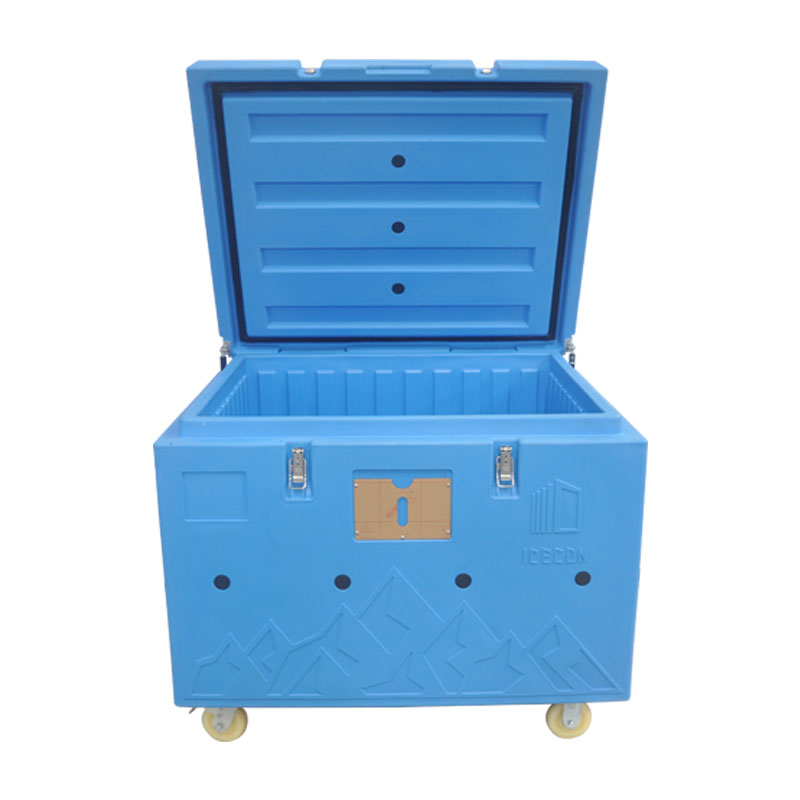
For Sublimation: HORECO2's containers use vacuum-insulated panels (VIPs) with polyurethane foam, reducing heat transfer by 90% compared to standard models. This extends dry ice retention to 5-7 days, cutting waste by 40%. The design adheres to ASTM F2825 standards for thermal performance.
For Temperature Control: Integrated phase-change materials (PCMs) act as thermal buffers, stabilizing internal temperatures within ±2°C. This is crucial for labs handling sensitive reagents, where fluctuations can ruin experiments.
For Safety: Features include pressure-relief valves and ergonomic, locking lids that prevent accidental exposure. Containers are tested to withstand impacts up to 100 kg, ensuring durability in industrial settings.
Client Case Studies: Real-World Impact
1. PharmaCold Solutions, Switzerland: After switching to HORECO2 containers, they reduced dry ice usage by 35% in vaccine logistics, saving €80,000 annually. "The precision in temperature control has been a game-changer for our compliance with EU regulations." – Dr. Lena Müller, Head of Logistics.
2. Nordic Seafoods, Norway: Implemented HORECO2's containers across their supply chain, decreasing product spoilage from 15% to 3% and boosting customer satisfaction by 25%. "Our export quality is now consistently top-tier, thanks to reliable storage." – Erik Johansen, Operations Manager.
3. AutoTech Manufacturing, USA: Enhanced workplace safety with vented containers, eliminating CO2-related incidents and reducing insurance premiums by 20%. "A simple upgrade that made our plant safer and more efficient." – Carlos Rodriguez, Safety Officer.
4. GreenLab Research, UK: Achieved 99.8% sample integrity in cryogenic studies using HORECO2's PCM-enhanced containers, accelerating research timelines by 15%. "The technical support was as robust as the product." – Prof. Sarah Chen, Lead Scientist.
5. FrostBite Beverages, Canada: For carbonated drink production, they cut CO2 procurement costs by 25% through improved storage efficiency, enhancing sustainability efforts. "An investment that paid off in both eco-credentials and savings." – Mia Thompson, Procurement Head.
Applications and Partnerships: Where Innovation Meets Industry
HORECO2's containers are pivotal in sectors like aerospace (for component testing), electronics (in thermal management), and hospitality (for gourmet food displays). They partner with global procurement firms like GlobalCold Chain Inc. and TechSupplies EU, who integrate these containers into bulk supply agreements, underscoring reliability. Collaborations with research institutes, such as the Institute of Cryogenic Studies in Munich, validate performance metrics, adding third-party credibility.
FAQ: Answers from the Experts
Q1: How do I calculate the right container size for my dry ice needs?
A: Use the formula: Container Volume (L) = Dry Ice Mass (kg) × 0.8 (expansion factor) + 10% safety margin. For instance, 50 kg of dry ice requires ~45 L capacity. Consider usage frequency—high-turnover ops benefit from modular designs.
Q2: What materials offer the best insulation for long-term storage?
A: Vacuum-insulated stainless steel is top-tier, with R-values up to 25, but polypropylene with VIPs provides a cost-effective balance. Avoid single-wall plastics, which degrade quickly under thermal stress.
Q3: Are there standards for container safety in the EU and US?
A: Yes, EU follows EN 12542 for pressure equipment, while US references ASME BPVC Section VIII. HORECO2 containers exceed these, with certifications from TÜV and UL for global compliance.
Q4: How can I minimize sublimation in humid climates?
A: Opt for containers with desiccant compartments or sealed gaskets. In Southeast Asia, clients add silica gel packs, reducing sublimation by 20% in 80% humidity environments.
Q5: What's the ROI on upgrading to high-end containers?
A: Based on case data, payback occurs in 6-12 months through waste reduction. For a mid-sized lab spending $10,000 monthly on dry ice, a $5,000 container investment can save $4,000 monthly, yielding 125% annual ROI.
Conclusion and Call to Action
Your dry ice storage isn't just a box—it's a critical component in operational efficiency and safety. By addressing sublimation, temperature control, and hazards, HORECO2's solutions transform storage from a cost center into a value driver. Ready to optimize your CO2 management? Download our free technical whitepaper on advanced insulation techniques or schedule a consultation with our sales engineers to tailor a solution for your needs. Don't let poor storage cool your profits—invest in reliability today.
