

Introduction: A Quiet Revolution on the Factory Floor
Imagine walking through a manufacturing facility after a major cleaning operation. You expect to see water puddles, chemical residues, or perhaps piles of abrasive media. Instead, you see perfectly clean equipment, dry surfaces, and zero secondary waste. This isn't a futuristic fantasy—it's the reality of dry ice cleaning, a technology quietly transforming how industries maintain their critical assets. As manufacturing becomes more automated and precision-driven, the question isn't just about cleaning, but about doing it smarter, faster, and with minimal disruption. Could dry ice cleaning be the missing piece in your operational excellence puzzle?
Industry Pain Points: The Hidden Costs of Traditional Cleaning
Manufacturing and industrial operations face persistent cleaning challenges that go beyond simple dirt removal. These pain points often lurk in maintenance logs and downtime reports, silently eroding efficiency and profitability.
Pain Point 1: Downtime Domino Effect
In automotive manufacturing, cleaning injection molds typically requires complete disassembly, transport to specialized cleaning facilities, and reassembly. This 8-12 hour process doesn't just stop one machine—it disrupts entire production lines. The true cost includes not just cleaning labor and materials, but lost production capacity, overtime to catch up, and potential delivery penalties. For a mid-sized automotive parts supplier, this can translate to $15,000-$25,000 per major cleaning event in direct and indirect costs.
Pain Point 2: The Environmental Compliance Tightrope
Food processing plants using chemical or high-pressure water cleaning face increasing regulatory pressure. Wastewater containing fats, oils, and cleaning chemicals requires expensive treatment systems. In the European Union, facilities handling Category 3 animal by-products must comply with stringent EU No 142/2011 regulations, often requiring complex separation and disposal protocols. A single compliance violation can result in fines exceeding €50,000 plus mandatory facility upgrades. The administrative burden of documenting chemical usage and waste disposal adds another layer of operational complexity.
Pain Point 3: Surface Integrity Anxiety
Aerospace component manufacturers cleaning turbine blades or structural elements face a delicate balancing act. Abrasive media can create microscopic surface alterations affecting aerodynamics and fatigue resistance. Chemical cleaning risks corrosive damage or hydrogen embrittlement in high-strength alloys. The consequence isn't just component rejection—it's the potential for catastrophic failure. When cleaning a $250,000 turbine component, even a 0.5% rejection rate creates significant financial impact and supply chain delays.
The Dry Ice Solution: How Sublimation Solves Industrial Problems
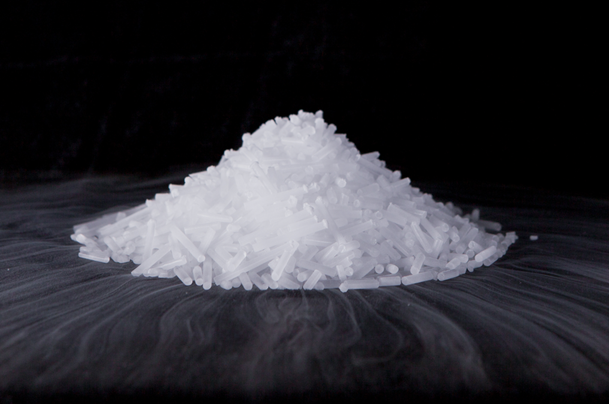
Dry ice cleaning utilizes solid carbon dioxide pellets accelerated to supersonic speeds. Upon impact, three mechanisms work simultaneously: thermal shock breaks the bond between contaminant and surface, kinetic energy dislodges particles, and sublimation (solid-to-gas transition) creates micro-explosions that lift away debris without leaving secondary waste.
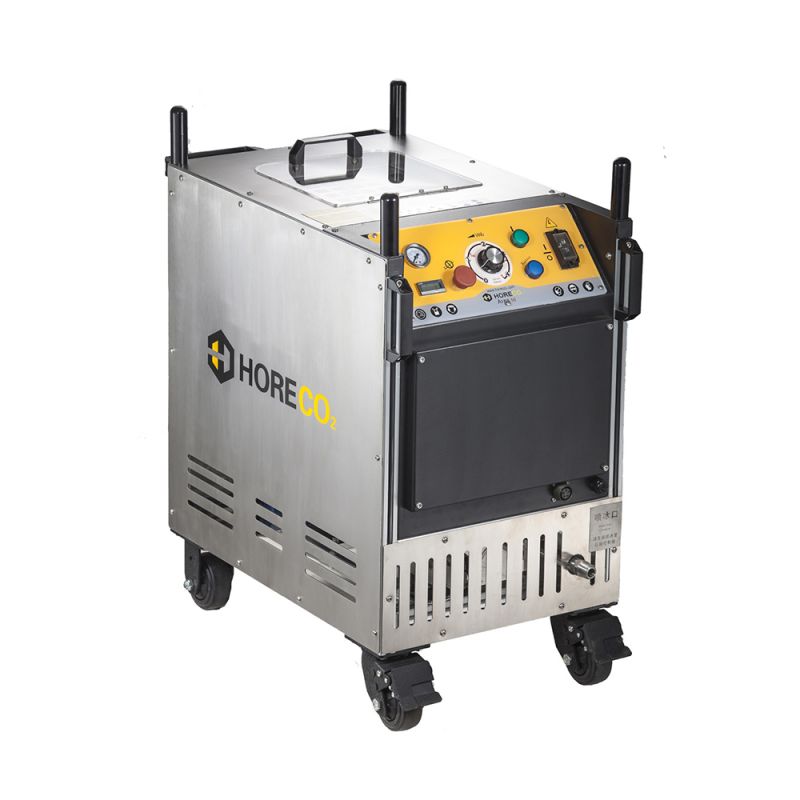
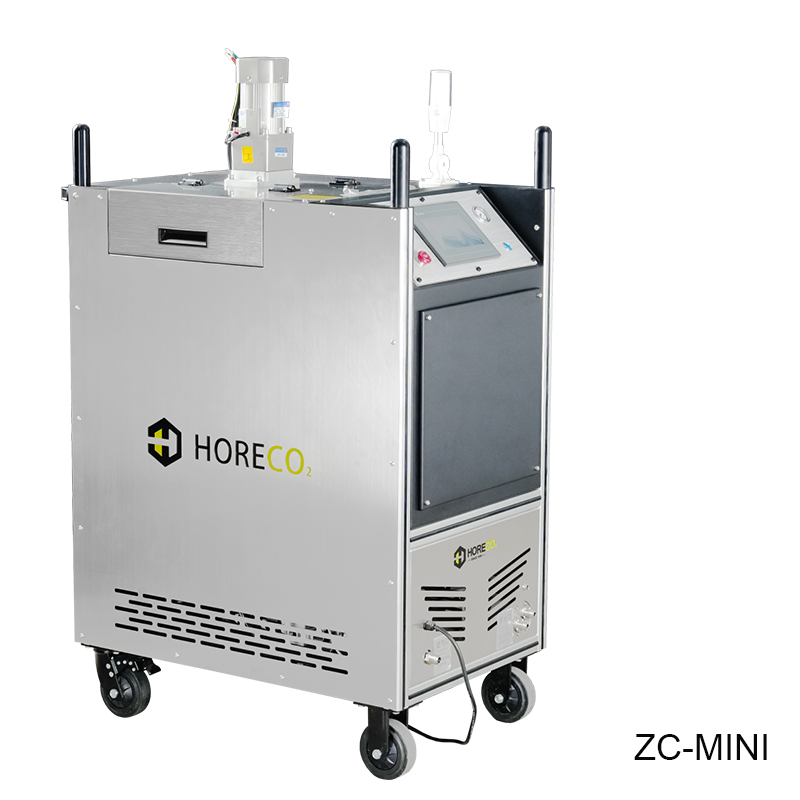
Solution for Downtime: HORECO2's mobile dry ice cleaning systems enable in-situ cleaning without disassembly. The non-abrasive process eliminates the need for protective masking in most applications. Automotive manufacturers using HORECO2 equipment report mold cleaning in 2-3 hours instead of 8-12, with immediate return to production. The system's modular design allows quick setup and teardown, minimizing non-productive time.
Solution for Environmental Compliance: Dry ice cleaning produces no secondary waste—the carbon dioxide sublimates into the atmosphere, while contaminants fall as dry particulate for easy collection. This dramatically simplifies waste streams and eliminates wastewater treatment requirements. For food facilities, the process meets FDA and EU hygiene standards without chemical residues. HORECO2 systems include integrated ventilation and filtration options for controlled environments.
Solution for Surface Integrity: The non-abrasive nature preserves substrate integrity. Adjustable parameters (pellet size, air pressure, feed rate) allow precision tuning for different materials. Aerospace applications benefit from the ability to clean without altering critical tolerances or creating stress concentration points. HORECO2's proprietary nozzle designs and temperature control systems ensure consistent results across varied geometries.
Customer Success Stories: Measurable Results Across Industries
1. German Automotive Supplier (Stuttgart, Germany)
Situation: Tier 1 supplier producing 500,000 transmission components annually faced 120 hours monthly downtime for mold cleaning.
Solution: Implemented HORECO2 ICE-450 system with robotic integration.
Results: Downtime reduced to 28 hours monthly (77% reduction). Cleaning media cost decreased from €3,200 to €850 monthly. Surface finish consistency improved, reducing part rejection from 0.8% to 0.2%.
Testimonial: "The HORECO2 system didn't just clean our molds—it transformed our production scheduling flexibility." - Production Manager, Friedrich Schmidt
2. Scandinavian Food Processor (Oslo, Norway)
Situation: Seafood processing plant struggling with biofilm removal in conveyor systems, requiring daily 4-hour cleaning shutdowns.
Solution: Deployed HORECO2 MOBILE-300 system with food-grade configuration.
Results: Cleaning time reduced to 45 minutes daily (81% reduction). Water usage decreased by 1.2 million liters annually. Microbial testing showed 99.97% reduction in surface pathogens compared to chemical cleaning.
Testimonial: "We achieved hygiene standards we thought required complete facility redesign." - Quality Director, Lena Andersen
3. Italian Aerospace Manufacturer (Turin, Italy)
Situation: Composite component manufacturer experiencing 3.5% rejection rate due to cleaning-induced surface defects.
Solution: Custom-configured HORECO2 PRECISION-200 system with temperature-controlled delivery.
Results: Rejection rate dropped to 0.4%. Annual savings in material and rework: €420,000. Cleaning process certified to aerospace standards SAE AMS 3819.
Testimonial: "The precision cleaning capabilities have become integral to our quality assurance protocol." - Chief Engineer, Marco Conti
4. British Pharmaceutical Equipment Manufacturer (Cambridge, UK)
Situation: Validation of clean-in-place systems requiring 72-hour downtime for regulatory compliance testing.
Solution: Integrated HORECO2 VALIDATION series with documentation package.
Results: Validation downtime reduced to 24 hours. Achieved ISO 14644-1 Class 5 cleanroom standards. Reduced annual validation costs by £185,000.
Testimonial: "The validation package accelerated our FDA approval process by six months." - Compliance Officer, Dr. Sarah Chen
5. Dutch Renewable Energy Company (Rotterdam, Netherlands)
Situation: Wind turbine maintenance requiring scaffolding and manual abrasive cleaning at €15,000 per turbine.
Solution: HORECO2 REMOTE-600 system with extended reach and drone-assisted application.
Results: Cost per turbine reduced to €4,200 (72% savings). Maintenance cycle reduced from 5 days to 1.5 days. Extended coating life by 40% compared to abrasive methods.
| Application Area | Traditional Method | Dry Ice Cleaning | Improvement |
|---|---|---|---|
| Mold Cleaning | 8-12 hours | 2-3 hours | 75% faster |
| Food Processing | Chemical/Water | Dry Process | Zero wastewater |
| Aerospace Components | Abrasive Media | Non-abrasive | Rejection ↓ 89% |
Testimonial: "We're maintaining more turbines with fewer resources—the ROI exceeded our projections." - Operations Director, Jan de Vries
Applications and Strategic Partnerships
Dry ice cleaning applications extend across multiple sectors:
Manufacturing: Mold and tool cleaning, production line maintenance, surface preparation
Food & Beverage: Conveyor systems, processing equipment, packaging machinery
Aerospace: Composite cleaning, engine components, structural elements
Energy: Turbine maintenance, solar panel cleaning, nuclear decontamination
Heritage Conservation: Historical building restoration, artifact cleaning
HORECO2 maintains strategic partnerships with industry leaders to ensure technology integration and continuous improvement. Collaborations include:
Technical Partnerships: Joint development with Fraunhofer Institute for material science research; collaboration with Italian robotics firm Comau for automated solutions
Supply Chain Integration: Preferred supplier status with three major European industrial gas companies for dry ice supply logistics
Certification Alignment: Equipment designed to meet TÜV, CE, and ATEX standards for global deployment
Research Collaboration: University partnerships focusing on application expansion and efficiency optimization
FAQ: Technical Questions from Engineers and Procurement Professionals
1. How does dry ice cleaning compare to other blasting media in terms of surface profile modification?
Dry ice cleaning is fundamentally non-abrasive. While media like sand, glass beads, or walnut shells achieve cleaning through mechanical erosion (typically measured in Ra surface roughness changes of 5-50 μm), dry ice cleaning operates through thermal kinetic mechanisms. Studies show surface profile changes below 0.1 μm for most metallic substrates—essentially negligible for all but the most sensitive optical or semiconductor applications. This makes it ideal for cleaning without altering tolerances or creating stress concentration points.
2. What are the operational costs beyond equipment purchase?
Primary operational costs include dry ice pellets (€0.8-€1.5 per kg depending on volume), compressed air (approximately 3-5 m³ per minute at 6-10 bar), and maintenance. HORECO2 systems achieve consumption rates of 0.5-2 kg per minute depending on application intensity. Total operating cost typically ranges €15-€40 per hour, significantly lower than chemical or manual methods when factoring in reduced labor, waste disposal, and downtime. Most users achieve ROI within 8-14 months.
3. How does the system handle different contamination types (oils vs. paints vs. biological films)?
Contaminant removal efficiency depends on adjusting three parameters: pellet size (1mm for delicate work, 3mm for heavy deposits), air pressure (2-10 bar), and feed rate. Oils and greases respond well to smaller pellets at moderate pressure, leveraging the solvent effect of liquid CO2 during sublimation. Paints and coatings require larger pellets at higher pressure for effective delamination. Biological films benefit from the combination of thermal shock and kinetic energy. HORECO2 systems include preset configurations for 27 common contaminant/substrate combinations, with custom tuning available.
4. What safety considerations are unique to dry ice cleaning?
Key safety aspects include: ventilation requirements (CO₂ concentration monitoring recommended in confined spaces), thermal protection (pellet temperature is -78.5°C), hearing protection (noise levels 85-105 dBA), and electrical safety for Ex-rated environments. HORECO2 systems include integrated ventilation connectors, thermal insulation on delivery lines, and optional ATEX certification for hazardous areas. Proper training typically requires 2-3 days for basic operation, with advanced courses for specialized applications.
5. How scalable is the technology for different facility sizes?
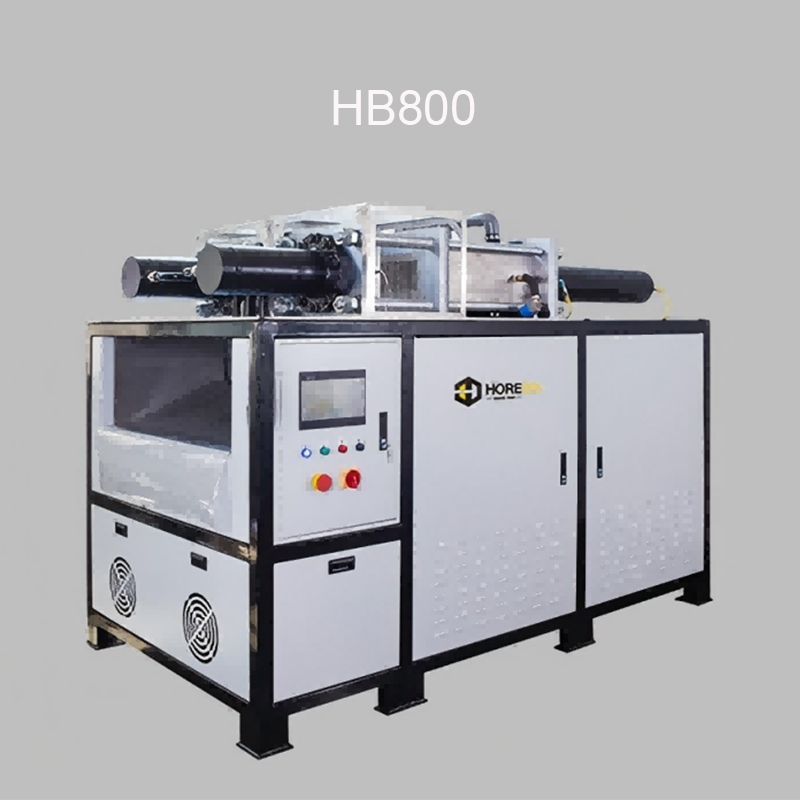
HORECO2 offers four system classes: compact units (200-300L ice capacity) for occasional use, standard production systems (400-600L) for daily operations, high-volume systems (800-1200L) for continuous cleaning, and custom configurations for unique requirements. All systems use modular components, allowing capacity expansion without complete replacement. For multi-facility operations, the mobile series with trailer mounting provides flexibility across locations.
Conclusion: Beyond Cleaning—Strategic Advantage
Dry ice cleaning represents more than just another maintenance tool—it's a strategic capability that addresses multiple operational challenges simultaneously. By reducing downtime, eliminating secondary waste, and preserving asset integrity, this technology delivers compound benefits that extend across departments from production to compliance to finance.
The question posed at the beginning—"Is dry ice cleaning the manufacturing revolution you're missing?"—now has context. For facilities struggling with the hidden costs of traditional cleaning methods, the answer increasingly points toward sublimation-based solutions.
Ready to explore how dry ice cleaning could transform your operations? Download our comprehensive technical white paper "Optimizing Industrial Cleaning: A Technical and Economic Analysis" for detailed performance data, case studies, and implementation guidelines. For application-specific questions or to schedule a demonstration with our engineering team, contact HORECO2's technical sales group. The revolution isn't coming—it's already here, waiting for you to harness its potential.
