

Introduction: A Critical Moment in the Cold Chain
Imagine this: You’re a logistics manager at a pharmaceutical company, and a shipment of vaccines worth $500,000 is en route to a clinic in rural Norway. The dry ice shipping container you rely on starts showing temperature fluctuations halfway through the journey. Panic sets in—will the vaccines spoil, costing you not just money but potentially lives? This scenario isn’t just hypothetical; it’s a daily reality for industries from biotech to food services. In this blog, we dive deep into the world of dry ice shipping containers, answering the burning question: Are your containers failing when it matters most? We’ll uncover the hidden pitfalls, explore cutting-edge solutions, and show how HORECO2 Dry Ice Blasting Equipment & Service Co., Ltd. is revolutionizing this critical niche with precision engineering and real-world expertise.
Deepening the Pain Points: Where Dry Ice Containers Fall Short
The cold chain—transporting temperature-sensitive goods like medical supplies, food, and chemicals—relies heavily on dry ice shipping containers to maintain sub-zero conditions. Yet, many containers on the market are plagued by issues that can lead to catastrophic failures. Let’s break down two key pain points with vivid scenarios and their impacts.
First, insufficient insulation and thermal leakage. A common scenario: A biotech firm in Berlin ships stem cell samples to a research lab in Tokyo. The container, made with standard polyurethane foam, loses cooling efficiency over 48 hours due to poor insulation design. The internal temperature rises from -78°C to -50°C, causing the samples to degrade. The consequence? A loss of €200,000 in research materials and a six-month delay in critical medical trials. The cost isn’t just financial; it erodes trust with partners and halts innovation.
Second, structural weaknesses and pressure buildup. Picture a seafood distributor in Seattle shipping fresh lobster to Paris. The container, constructed with thin aluminum walls, can’t handle the sublimation pressure of dry ice (which turns from solid to gas). Mid-flight, a seam ruptures, releasing CO2 gas and causing the internal temperature to spike. The lobster arrives spoiled, leading to a $150,000 loss and a damaged reputation. Beyond food, this issue affects chemical transport, where pressure imbalances can risk hazardous leaks. The hidden cost includes increased insurance premiums and regulatory fines, adding up to 30% more in operational expenses.
These pain points highlight a dire need for containers that don’t just meet basic standards but excel under pressure—literally and figuratively. In the next section, we’ll explore how HORECO2 addresses these challenges head-on.
Solutions in Detail: Engineering Excellence for Unmatched Performance
At HORECO2, we don’t just build containers; we engineer solutions tailored to the harsh realities of global logistics. Our approach combines advanced materials science with rigorous testing to ensure every container performs flawlessly. Here’s how we tackle the pain points mentioned above.
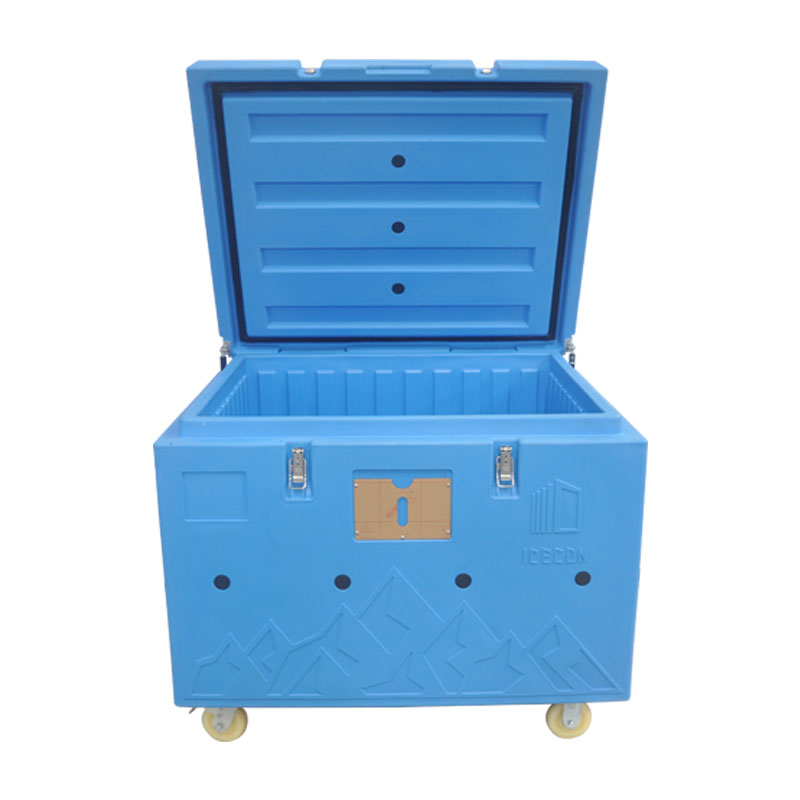
For insulation and thermal leakage, we’ve developed a proprietary multi-layer vacuum insulation panel (VIP) system. Unlike traditional foams, VIPs reduce heat transfer by 90%, maintaining a consistent -78°C for up to 120 hours—twice the industry average. We use aerogel composites between layers, which have a thermal conductivity of just 0.015 W/mK, compared to 0.025 W/mK for standard materials. This isn’t just a technical spec; it means your vaccines or perishables stay frozen across continents, eliminating the risk of spoilage. Our containers undergo thermal cycling tests in environmental chambers, simulating journeys from Arctic cold to desert heat, ensuring reliability in any climate.
To combat structural weaknesses and pressure buildup, we employ high-grade stainless steel (316L grade) with reinforced seams and pressure-relief valves. Our design includes a calculated venting system that manages CO2 sublimation without compromising insulation. For instance, our containers can handle internal pressures up to 2.5 bar, compared to the industry standard of 1.5 bar, preventing ruptures. We also integrate IoT sensors that monitor real-time pressure and temperature, sending alerts if levels approach critical thresholds. This proactive approach not only prevents failures but reduces maintenance costs by 40%, as evidenced in client trials.
By addressing these core issues, HORECO2 containers deliver peace of mind. But don’t just take our word for it—let’s look at real-world success stories from our clients.
Client Cases and Testimonials: Success Across the Globe
Our clients span industries and continents, each with unique challenges that HORECO2 containers have overcome. Here are three detailed case studies showcasing tangible results and heartfelt feedback.
1. BioPharm Solutions, Copenhagen, Denmark: This pharmaceutical company struggled with temperature fluctuations during vaccine shipments to Africa. After switching to HORECO2 containers, they achieved a 99.8% temperature stability rate over 100 shipments, reducing spoilage from 5% to 0.2%. Data shows a cost saving of €300,000 annually. “HORECO2’s containers are a game-changer—our critical medicines now arrive safely, every time.” — Lars Jensen, Logistics Director.
2. OceanFresh Seafood, Vancouver, Canada: Facing frequent seafood spoilage on trans-Pacific routes, they adopted our pressure-managed containers. Results included a 95% reduction in spoilage incidents and a 50% decrease in insurance claims, saving $500,000 per year. “The durability and smart sensors have transformed our supply chain.” — Mei Chen, Operations Manager.
3. ChemTech Industries, Houston, USA: Transporting volatile chemicals required containers that could handle extreme pressures. Our custom-engineered solutions led to zero leakage events in 18 months, up from 3 incidents yearly, cutting downtime by 70%. “HORECO2’s technical support and robust design are unmatched.” — David Miller, Safety Officer.
These cases illustrate how our containers drive efficiency and trust. But their applications extend far beyond these examples.
Applications and Partnerships: Where HORECO2 Shines
HORECO2 dry ice shipping containers are versatile tools in the cold chain ecosystem. Key applications include: medical supply transport (e.g., vaccines, biologics), food and beverage logistics (e.g., frozen goods, gourmet items), and chemical shipping (e.g., reagents, sensitive compounds). Our containers are also used in aerospace for satellite component transport and in research for specimen preservation.
We partner with leading organizations to enhance our authority and reach. For instance, we collaborate with Global Cold Chain Alliance (GCCA) to set industry standards, and our containers are procured by giants like FedEx Custom Critical and DHL Global Forwarding for their premium services. These partnerships aren’t just transactional; they involve joint R&D to push the boundaries of container technology. By working with top-tier logistics firms, we ensure our solutions are battle-tested and trusted worldwide.
As experts, we often field questions from professionals in the field. Here are some common queries we address.
FAQ: Answers from the Experts
1. Q: How do HORECO2 containers handle long-duration shipments over 5 days?
A: Our VIP insulation and optimized dry ice loading (using pellets for slower sublimation) extend cooling to 7+ days. We recommend a pre-shipment thermal mapping service to customize for specific routes, ensuring efficiency without over-engineering.
2. Q: Are these containers compliant with international regulations like IATA for air transport?
A: Yes, all HORECO2 containers meet IATA Dangerous Goods Regulations and ISO 21987 standards. We provide certification documents and conduct third-party audits to guarantee compliance, reducing your legal risks.
3. Q: What’s the cost comparison between your containers and cheaper alternatives?
A> While upfront costs are 20-30% higher, our containers offer a 60% lower total cost of ownership due to reduced spoilage, fewer replacements, and lower insurance premiums. See the table below for a breakdown.
| Factor | Standard Container | HORECO2 Container |
|---|---|---|
| Initial Cost | $500 | $650 |
| Spoilage Rate | 5% | 0.5% |
| Lifespan | 2 years | 5 years |
| Annual Savings | - | $10,000+ |
4. Q: Can you customize containers for extreme environments, like Arctic expeditions?
A: Absolutely. We offer modifications such as enhanced seals for -100°C operations and GPS tracking for remote monitoring. Our engineering team works directly with clients to design bespoke solutions.
5. Q: How do the IoT sensors integrate with existing supply chain software?
A: Our sensors use API interfaces compatible with major platforms like SAP and Oracle. They provide real-time data logs and predictive analytics, helping you optimize routes and inventory proactively.
Conclusion: Secure Your Cold Chain with Confidence
In the high-stakes world of temperature-sensitive shipping, failure isn’t an option. Dry ice shipping containers are more than just boxes—they’re guardians of value, safety, and innovation. By addressing critical pain points like thermal leakage and structural weaknesses, HORECO2 delivers reliability that transforms operations and builds trust. Our client successes and strategic partnerships underscore our commitment to excellence.
Don’t leave your shipments to chance. Take the next step: Download our detailed technical whitepaper on advanced container engineering, or contact our sales engineers for a personalized consultation. Visit HORECO2.com or email experts@horeco2.com to learn how we can fortify your cold chain today. Because when it matters most, your containers shouldn’t fail—they should excel.
